Key takeaways
- When choosing between a foam cannon and a pressure washer sprayer, the real decision is not simply which one makes more suds. It is whether you want a washing tool that helps loosen dirt before rinsing or a more direct,…
What's inside
When choosing between a foam cannon and a pressure washer sprayer, the real decision is not simply which one makes more suds. It is whether you want a washing tool that helps loosen dirt before rinsing or a more direct, versatile spray system for everyday outdoor cleanup. A foam cannon is an attachment that mixes car soap with water and pressure to blanket a surface in foam. A pressure washer sprayer—usually a spray gun, wand, and nozzle set—delivers a focused stream, fan spray, or low-pressure rinse.
For many homes, the best answer is not either-or. A foam cannon can make vehicle washing and gentle surface cleaning easier, while a standard pressure washer gun remains the more useful tool for patios, furniture, fences, and other jobs. The right choice depends on your storage space, water supply, cleaning habits, and how much control you want over spray intensity.
As an Amazon Associate we earn from qualifying purchases at no extra cost to you. Product prices and availability are accurate as of the date shown and are subject to change.


Quick Verdict
Choose a foam cannon if your priority is washing cars, SUVs, motorcycles, outdoor cushions, or other surfaces where pre-soaking helps lift grime. Foam can reduce the need for aggressive scrubbing, provided you use the correct soap and rinse thoroughly. It is compact, relatively inexpensive, and easy to add to an existing pressure washer with a compatible quick-connect fitting.
Choose a pressure washer sprayer if you want one tool for a broad range of household tasks. A gun and wand with interchangeable nozzles can rinse siding, clean patio furniture, wash decks, clear mud from tools, and handle heavier buildup. It is generally the better first purchase for a homeowner who does not already own pressure-washing accessories.
For the most complete setup, use the sprayer for rinsing and the foam cannon for pre-treatment. Just remember that foam is not a substitute for safe pressure settings, adequate dwell time, or a final rinse.
Side by Side
| Factor | Foam Cannon | Pressure Washer Sprayer |
|---|---|---|
| Primary job | Applies diluted soap as a thick or light foam layer | Rinses, loosens, and removes dirt with pressurized water |
| Comfort | Usually used for short application sessions; a 1-liter bottle can add about 2.5 pounds when full | Longer sessions may cause hand and arm fatigue, especially with a wand and high-pressure hose |
| Durability | Brass or stainless-steel fittings generally handle regular use better than lightweight plastic fittings | Depends on the gun, hose, wand, seals, and nozzle materials; more parts mean more potential wear points |
| Typical price range | About $15-$45 for an attachment or short-gun kit | About $30-$80 for a gun, hose, wand, and basic nozzles |
| Maintenance | Flush with clean water after every use; soap residue can clog the mesh or adjustment valve | Rinse nozzles, drain the hose, and inspect O-rings and threaded fittings |
| Space needed | Often 8-12 inches long and easy to store on a shelf | A hose, wand, gun, and nozzles may require a 2- to 3-foot storage area |
| Look of the process | Creates visible foam coverage that helps show where soap has been applied | Produces a less dramatic but more direct spray pattern |
| Resale value | Low standalone resale value, though a clean, complete kit can be easy to bundle | Complete, compatible kits tend to be easier to resell than a single attachment |
| Best for | Vehicle washing, pre-soaking, light grime, and minimizing contact scrubbing | General home maintenance, rinsing, surface cleaning, and varied nozzle work |
Where Foam Cannon Wins
A foam cannon’s biggest advantage is coverage. Instead of directing a narrow stream at one section, you can apply diluted detergent across a car panel, patio chair, or outdoor toy in a relatively even layer. The soap helps soften road film, pollen, dust, and oily residue before you rinse or use a wash mitt.
It can also reduce unnecessary contact with delicate finishes. A pre-soak may loosen dirt so you do not have to press a sponge or brush as hard against paint, sealed stone, or plastic. That does not eliminate the risk of scratches—loose grit still needs to be rinsed away—but it can make the cleaning sequence gentler.
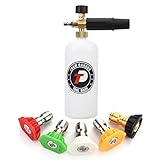
Foam cannons are also easy to store. Most use a bottle around 1 liter, and many attach directly to a pressure washer gun through a 1/4-inch quick connector. The Tool Daily Foam Cannon with 1/4 Inch Quick Connector, 1 Liter, and five pressure washer nozzle tips is listed at $18.99. The AstroAI Foam Cannon for Pressure Washer with a 1/4-inch quick-connect plug and 1-liter bottle is listed at $22.99. These price points illustrate why a cannon is often an affordable add-on rather than a major equipment purchase.
There are limits. Foam quality depends on the pressure washer’s flow rate, the detergent, water hardness, dilution ratio, and the cannon’s adjustment settings. A small electric pressure washer may produce a wetter, thinner layer than a higher-flow machine. Thick foam also does not necessarily clean better; dwell time and rinsing technique matter more than appearance.
Where Pressure Washer Sprayer Wins
A standard sprayer is the more versatile option. With the right nozzle, you can switch from a wide fan for patio furniture to a stronger, narrower pattern for muddy garden tools. Low-pressure settings are useful for rinsing soap, while higher-pressure patterns can remove embedded dirt from durable surfaces. Always follow the surface manufacturer’s guidance, because high pressure can damage wood, paint, mortar, window seals, and soft plastics.
Sprayers are also better for jobs where foam is unnecessary. Rinsing a dusty porch, clearing grass clippings from a mower deck, or washing soil from a wheelbarrow usually calls for water control rather than a detergent blanket. A basic sprayer can work with multiple detergents and water-only settings without changing the entire cleaning system.
For buyers who need a complete replacement setup, the Pressure Washer Gun and Hose Kit 25FT, with a spray gun, wand extension, five nozzle tips, M22-14mm fittings, and a stated 3,600 PSI rating, is listed at $44.99. The Tool Daily Short Pressure Washer Gun with Foam Cannon and a 1/4-inch quick connect is listed at $36.99, combining a shorter gun format with soap application. Compatibility remains essential: fitting size, pressure rating, hose connection, and the pressure washer’s flow must all match.
Compared with a foam cannon alone, a gun-and-hose kit takes more space and can feel heavier during extended work. However, it gives you a working spray system rather than a single cleaning accessory.
Cost Over 5 Years
Over five years, the price difference is usually less important than compatibility and maintenance. A foam cannon costing $19-$30 may be the least expensive path if you already own a pressure washer and gun. Add a bottle of suitable detergent every several washes, and your practical five-year ownership cost might land around $45-$100, depending on how frequently you clean.
A more complete sprayer setup typically costs about $35-$80 initially. With normal care, a hose or a set of O-rings may eventually need replacement. A reasonable five-year planning range is approximately $60-$150, including occasional replacement parts but excluding the pressure washer itself, electricity, water, and cleaning chemicals.
Electric pressure washers commonly draw roughly 1,300-2,000 watts while running. A 30-minute cleaning session may use about 0.65-1 kilowatt-hour, though actual consumption varies with the machine’s cycling and load. Water use also varies widely by flow rate; check the manufacturer’s gallons-per-minute specification before estimating utility costs. Flushing a foam cannon after every use costs little compared with replacing a clogged injector or hardened seal.
Which One for Your Home
Small apartment
Choose a foam cannon only if you already have access to a compatible pressure washer and a place where vehicle or outdoor cleaning is allowed. Its small footprint—often roughly 8-12 inches in length—makes it easier to store than a full hose-and-wand kit. If you do not own the pressure washer, buying a complete sprayer may be unnecessary; a bucket, hose, and appropriate hand-cleaning tools may be more practical.
Family with kids and pets
A sprayer is usually the better all-purpose choice for rinsing toys, outdoor furniture, play areas, and muddy equipment. A foam cannon is useful for vehicles and washable outdoor items, but select a detergent labeled for the intended surface and keep children and pets away from concentrated soap. Rinse thoroughly so residue does not remain where paws, hands, or bare skin will make contact.
Rental
Renters should favor compact accessories and avoid storing equipment that duplicates what can be rented when needed. A foam cannon can make sense for occasional car care if you already have a compatible washer. For periodic move-out cleaning, a rental pressure washer with a standard sprayer is typically more flexible. Do not use high pressure on siding, painted trim, windows, or a deck without permission and suitable guidance.
Long-term home
For a homeowner who expects regular maintenance, start with a quality pressure washer sprayer and compatible nozzle set. Add a foam cannon if you wash vehicles, outdoor cushions, or other surfaces often. This two-tool approach provides direct rinsing power and controlled soap coverage without forcing one accessory to handle every task.
FAQ
Can a foam cannon replace a pressure washer sprayer?
No. A foam cannon normally needs a pressure washer gun or lance to supply water and pressure. It applies detergent but does not provide the same range of spray patterns or the same convenient water-only control as a standard sprayer.
Does thicker foam mean better cleaning?
Not necessarily. Thick foam can improve coverage and help a detergent remain on a surface, but cleaning results also depend on the product, dwell time, temperature, agitation, rinsing, and surface type. Avoid letting soap dry on the surface.
Will any foam cannon fit any pressure washer?
No. Check the connector, pressure range, flow requirement, and gun compatibility. Many consumer accessories use a 1/4-inch quick connect, but some systems use different fittings. Adapters can help, though every connection must be rated for the washer’s operating pressure.
Which is safer for siding, wood, and outdoor furniture?
Either tool can be safe when used at an appropriate distance, pressure, nozzle angle, and detergent concentration. Start with a wide spray and low pressure on an inconspicuous area. A foam cannon can help pre-soak grime, while a sprayer offers more direct control over the final rinse.