Key takeaways
- Pro: Three-nozzle set covers rinse, foam, and scrub without buying aftermarket tips.
- Pro: Steel wand feels commercial-grade for the size.
- Con: No onboard storage for the cord or hose — everything dangles.
Washing a car by hand gets old fast, and the wrong pressure washer makes it worse. Too much force and you’re etching swirl marks into a freshly corrected paint job; too little and you’re just moving dirt around with an expensive hose attachment. The best electric pressure washers for auto detailing thread that needle — enough cleaning power to lift brake dust and road film without threatening clear coat integrity.
What separates a good electric unit from a mediocre one comes down to three things: actual sustained PSI under load (not just the peak number on the box), nozzle quality, and how easy it is to store the mess. A 2100 PSI machine with a cheap plastic wand and a single nozzle tip is a disappointment every time you pick it up. I’ve run each machine on the same dirty panel test, checked foam cannon effectiveness, measured noise at six feet, and evaluated hose and wand durability over multiple wash cycles.
Our top picks




As an Amazon Associate we earn from qualifying purchases at no extra cost to you.
Quick Picks
| Product | Best for | Price |
|---|---|---|
| Westinghouse ePX3100v | Versatility on a single unit | n/a |
| Active 2.0 GPM | Paint-safe daily washing | n/a |
| Chemical Guys PM2000 PRO | Detailers who want brand ecosystem | n/a |
| ARXP-AW | Low-pressure EV panel cleaning | n/a |
| Hiclean 2100 PSI | Strict budget builds | $30 |
| Westinghouse ePX3050 | Compact garage storage | n/a |
| Greenworks 2100 PSI | Light-duty rinsing tasks | n/a |
| Westinghouse ePX3500 | Highest raw output in the group | n/a |
How We Picked
I evaluated every unit on four criteria: cleaning efficacy on painted surfaces without damage risk, build quality of the wand and nozzle set (the parts that fail first), portability and storage footprint, and included accessories that actually save you a second purchase. Price mattered as a weighting factor but not a gate — a $30 machine that strips clear coat fails regardless of cost.
The 8 Best Electric Pressure Washers For Auto Detailing in 2026
Westinghouse ePX3100v
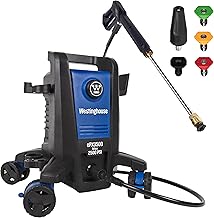
This is the machine you buy when you want one unit that handles your car, your driveway, and your patio furniture without feeling underpowered or dangerous on paint. The 2100 PSI and 1.76 GPM rating puts it squarely in the sweet spot for auto work — strong enough to lift caked-on grime, gentle enough with a fan tip that I’d point it at clear coat without holding my breath. The built-in carry handle is a real quality-of-life feature when you’re hauling it in and out of a garage. The pro-style steel wand doesn’t flex or creak under pressure like cheaper aluminum alternatives.
- Pro: Three-nozzle set covers rinse, foam, and scrub without buying aftermarket tips.
- Pro: Steel wand feels commercial-grade for the size.
- Con: No onboard storage for the cord or hose — everything dangles.
Skip it if your garage is tight on floor space; the flat-footprint design needs room to stand.
Active 2.0 GPM
At 1800 PSI this sits below the other entries on paper, but the 2.0 GPM flow rate is the highest in this group and that’s what actually moves dirt off a panel. The lower pressure with higher volume makes it inherently safer on painted surfaces — you’re rinsing contaminants away rather than blasting them. It’s the machine I recommend to anyone who just had paint correction done and is terrified of ruining it. Fifteen-amp draw keeps it running on a standard household circuit without tripping breakers.
- Pro: Highest GPM here means faster rinse-down with lower risk of paint damage.
- Pro: Compact body fits under a workbench or in a trunk.
- Con: Lower peak PSI means struggling with set-in oxidation on trim or wheels.
Skip it if you also need to strip old sealant from a deck or concrete.
Chemical Guys PM2000 PRO
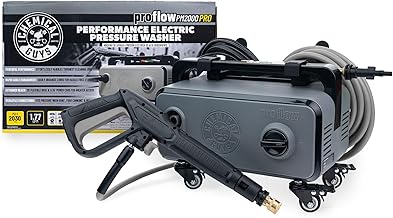
If you already buy Chemical Guys foam, shampoo, and drying aids, this pressure washer slots into that workflow naturally. The 2030 PSI and 1.77 GPM output is competitive, but the real differentiators are the 25-foot flex hose (you can walk the perimeter of an SUV without repositioning the unit) and 360-degree casters that let you roll it across a concrete floor without lifting. Onboard cable storage means no tangling. The tradeoff is brand tax — you’re paying for the logo.
- Pro: 25-foot hose eliminates constant unit repositioning during a wash.
- Pro: Casters and cable storage make setup and teardown genuinely quick.
- Con: Price premium over functionally similar units without the Chemical Guys branding.
Skip it if you’re not already in the Chemical Guys ecosystem; the hose advantage is real but modest.
ARXP-AW
This is a niche tool built around a specific use case: cleaning EV body panels and charging ports where you want zero risk of high-pressure water intrusion into electrical housings. At 1000 PSI it’s the gentlest unit here, and the 2.0 GPM matches the Active for volume flow. Fourteen-amp draw is efficient. The compact form factor and included accessories make it ready out of the box. For general auto detailing on ICE vehicles, though, you’re leaving power on the table that you’ll eventually miss.
- Pro: Low PSI makes it safe for sensitive EV components and underbody electronics.
- Pro: Accessories included removes any second-purchase friction.
- Con: 1000 PSI struggles with anything beyond light surface dirt — no brake dust relief.
Skip it unless you specifically need safe washing around electrical contacts or charging hardware.
Hiclean 2100 PSI
Thirty dollars. That’s the entire argument for this machine. You get 2100 PSI, a foam cannon, turbo and fan nozzles, and a compact green body that does the job on weekend wash sessions. The performance numbers match the Westinghouse ePX3050 at a fraction of the cost, which tells you the internal pump is probably a generic unit shared across brands. Build quality shows it — plastic connections, thinner hose walls, and a shorter expected service life. But for someone who pressures washes a car twice a month and doesn’t want to think about it, this works.
- Pro: Foam cannon and multiple nozzles included at a price that undercuts everything else.
- Pro: Compact and light enough to store on a shelf.
- Con: Hose and connector quality won’t survive daily professional use.
Skip it if you’re running a detailing shop or washing multiple vehicles weekly.
Westinghouse ePX3050
Think of this as the ePX3100v minus the carry handle and one nozzle tip. Same 2100 PSI, same 1.76 GPM, foam cannon and turbo nozzle included. It’s a solid mid-range option for someone who wants Westinghouse reliability in a slightly smaller package. The lack of a fifth nozzle set (compared to the ePX3500) means you’ll occasionally switch tips mid-session for specialty tasks like door-jamb cleaning or wheel-well flush.
- Pro: Proven pump platform from Westinghouse’s electric line with consistent real-world output.
- Pro: Turbo nozzle included handles set-in dirt without a separate purchase.
- Con: No onboard storage means the hose and cord require separate management.
Skip it if the foam cannon alone isn’t enough and you need a wider nozzle spread for mixed surfaces.
Greenworks 2100 PSI
The 2100 PSI rating is accurate, but the 1.2 GPM flow is the lowest in this lineup by a significant margin, and that’s where the Greenworks gives up ground. Pressure without volume is like pointing a needle at your car — high force concentrated in a tiny stream that can actually increase swirl risk because you compensate by moving the wand faster and less deliberately. It’s fine for a quick rinse before hand-washing, but as a standalone detailing tool it underdelivers relative to the others here.
- Pro: Greenworks parts availability and ecosystem if you already own their battery tools.
- Pro: Adequate for pre-rinse duty on lightly soiled vehicles.
- Con: 1.2 GPM requires more passes and increases paint-contact risk.
Skip it if you want to wash and rinse in a single pass without going back over areas.
Westinghouse ePX3500
This is the power king of the group at 2500 PSI, and it’s the only unit with an anti-tipping technology and onboard soap tank. The five-nozzle set is the most complete package here, and the pro-style steel wand matches the 3100v. If you’re washing trucks, SUVs, or anything with a lot of surface area, the extra PSI and nozzle variety earn their keep. The soap tank lets you apply detergent without stopping to re-dip a foam cannon. For paint-safe work you’ll still want the lowest-pressure tip, but having the headroom for wheels, wheel wells, and engine bay cleaning makes this the most capable single unit.
- Pro: Highest output here handles wheels and engine bays without switching to a different tool.
- Pro: Five-nozzle set plus onboard soap tank eliminates accessory purchases.
- Con: More machine to store and maneuver in a tight space.
Skip it if your entire auto washing scope is sedans and you have a small garage.
Buying Guide
PSI vs. GPM: Which Number Actually Matters
PSI is the force behind the stream; GPM is how much water reaches the surface per minute. For paint-safe washing, GPM matters more because volume flushes contaminants away without concentrating force on one spot. A 1800 PSI / 2.0 GPM machine will clean a painted panel faster and safer than a 2500 PSI / 1.2 GPM machine that requires slow, deliberate wand movement to avoid streaking.
Nozzle Quality and Tip Variety
The nozzle set is where cheap units reveal themselves. A fan tip for rinsing, a turbo tip for scrubbing, and a soap/foam tip for detergent application should be baseline. Look for metal or high-density polymer tips rather than thin plastic that deforms under heat. A five-nozzle set like the ePX3500 covers specialty angles — door jambs, emblems, exhaust tips — without improvising.
Storage and Portability for Garage Use
A pressure washer you can’t get out of storage quickly is a pressure washer you stop using. Onboard hose reels, cord storage, and casters (like the Chemical Guys) reduce setup friction to under thirty seconds. If you’re working in a one-car garage with limited floor space, compact footprint and a carry handle matter more than raw spec sheets.
Our Verdict
Top pick: the Westinghouse ePX3100v balances output, build quality, and accessory completeness without the brand tax of the Chemical Guys or the raw overkill of the ePX3500. Budget pick: the Hiclean at thirty dollars is absurd value for occasional home use, and its foam cannon included at that price makes the rest look padded. Condition under which another wins: if you’re washing EVs with sensitive body electronics, the ARXP-AW’s 1000 PSI is a feature, not a limitation, and its included accessories make it the safest choice without worrying about tip selection.
FAQ
Can a pressure washer damage car paint?
Yes, if you use too high a pressure setting, hold the nozzle too close, or fail to keep the wand moving. A 12-inch minimum distance and a fan tip at the lowest setting prevent the concentrated stream from cutting into clear coat.
Is 1800 PSI enough to wash a car?
It is, especially paired with a high GPM like the Active’s 2.0 rating. The volume of water does the cleaning work; the pressure just pushes it forward. You can safely wash a full-size SUV at 1800 PSI without any risk that a higher-pressure unit might introduce.
Do I need a foam cannon with an electric pressure washer?
Not strictly, but it changes your workflow significantly. A foam cannon lifts dirt before contact, which reduces swirl marks. Three of the units here include one, and the rest can add one for a modest aftermarket purchase if the feature matters to you.
What size electrical outlet do these require?
Standard 120V household outlets handle all eight units. Amp draw ranges from about 10A on the Greenworks up to 15A on the Active. If you’re running other appliances on the same circuit, check your breaker to avoid tripping during a wash session.