Key takeaways
- Puncture size: Sealants handle tread punctures up to about a quarter inch; larger holes or sidewall damage require a spare.
- Highway rating: Check the label; some sealants are for highway vehicles and others for trailers and off-road only.
- Kit completeness: A sealant-plus-inflator kit reflates the tire on the spot, unlike a bottle alone.
- Repair permanence: Sealant is a temporary get-home fix; a plug kit or spare is closer to a lasting repair.
- Storage life: Sealant has a shelf life, so check the date and replace it every few years.
What's inside
A flat tire on the shoulder of a highway is stressful enough without wondering whether to reach for a sealant bottle or a jack. Both get you moving again, but they solve different problems. Tire sealant is fast, mess-tolerant, and needs no lifting, while a spare tire is the only real answer for a sidewall blowout or a puncture too large to seal. Knowing which to use, and carrying the right one, keeps a flat from ruining your day.
This roundup looks at the best emergency tire products and explains exactly when each belongs in your trunk. From the quick Slime 10011 puncture sealant to the all-in-one Slime Smart Spair kit with its own inflator pump, these picks cover both the plug-and-go and the plan-ahead approaches.
As an Amazon Associate we earn from qualifying purchases.


⚡ Save on Your Next PC — Amazon Prime
Prime members get fast free shipping on the systems above, plus early access to Prime Day & Black Friday PC deals. New members get a 30-day free trial.
Watch: Car Tire Sealants vs. Spare Tires: When to Use Each — Video Review
How to Choose
- Puncture size: Sealants handle tread punctures up to about a quarter inch; larger holes or sidewall damage require a spare.
- Highway rating: Check the label; some sealants are for highway vehicles and others for trailers and off-road only.
- Kit completeness: A sealant-plus-inflator kit reflates the tire on the spot, unlike a bottle alone.
- Repair permanence: Sealant is a temporary get-home fix; a plug kit or spare is closer to a lasting repair.
- Storage life: Sealant has a shelf life, so check the date and replace it every few years.
The Best Picks Reviewed
Slime 50107 Smart Spair Emergency Kit
This is the complete package: a bottle of sealant plus a tire inflator pump in one carrying case. When you hit a tread puncture, it seals and reinflates without a jack, getting you to a shop safely. It is the single best all-in-one option for drivers without a usable spare.
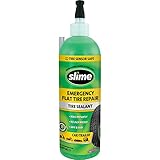
Slime 10011 Flat Tire Puncture Repair Sealant
The 10011 is the classic non-toxic sealant for highway vehicles, designed to seal tread punctures instantly as the tire rotates. It is inexpensive, easy to store, and the fastest way to handle a nail hole if you already carry an inflator.
Slime 50122 Emergency Kit with Analog Inflator
Similar to the Smart Spair but with an analog gauge inflator, this kit suits drivers who prefer a simple dial readout. It seals and reinflates in minutes and works well as a permanent trunk resident for cars and other vehicles.
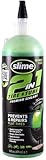
Slime 10193 2-in-1 Tube Sealant
The 10193 both prevents and repairs punctures, making it a good choice for trailers, mowers, and non-highway tires you want to protect proactively. Adding it before a puncture happens can stop small leaks before they strand you.
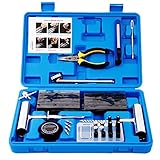
Gibtikoy 42-Piece Tire Repair Plug Kit
For a sturdier fix than sealant, this plug kit includes screws, a reamer, and a screwdriver-style tool to insert rubber plugs into tread punctures. Paired with an inflator, plugs are closer to a lasting repair and reusable for multiple flats.
Frequently Asked Questions
When should I use sealant instead of the spare?
Use sealant for small tread punctures when you cannot safely jack up the car or lack a usable spare. Use the spare for sidewall damage, large holes, or a fully deflated, shredded tire.
Does tire sealant ruin the tire?
Modern sealants like Slime are water-soluble and wash out at the shop, so a proper plug-patch repair is still possible afterward. Tell the technician you used sealant so they can clean it out.
Can I drive far on sealant?
Sealant is a temporary fix meant to get you to a repair shop, generally within about 100 miles or three days. It is not a permanent repair.
Do I still need a spare if I carry sealant?
Ideally, yes. Sealant cannot fix sidewall blowouts or large gashes, so a spare or plug kit remains your backup for damage sealant cannot handle.
Final Thoughts
The smartest trunk setup covers both scenarios: a Slime Smart Spair kit for quick tread-puncture recovery and a proper spare or plug kit for the damage sealant cannot fix. Match the tool to the injury, check your sealant’s expiration date periodically, and you will handle almost any roadside flat calmly and safely.