Key takeaways
- Pro: Safe on PVD coatings and chromed plastic, not just traditional plated metal
- Pro: Low cost makes it practical for larger vehicles with extensive brightwork
- Con: Too mild for heavy oxidation or pitting; you will need a stronger product for those jobs
Restoring chrome on a classic car is not the same as shining a kitchen faucet. The plating on vintage bumpers, grilles, and trim is often thinner than modern equivalents, and decades of road grime, water spots, and oxidation have bonded into the surface. You need a polish that lifts tarnish and minor pitting without eating through the nickel-chrome layer in the process. That balance separates a product worth keeping in your garage from one that quietly ruins the finish over repeated use.
We compared eight leading chrome polishes on a range of classic car surfaces: original factory-plated brightwork, aftermarket re-plated pieces, PVD-cooled trim, and chromed plastic components. The differences in abrasiveness, residue quality, and long-term protection were more pronounced than we expected. This roundup reflects what actually worked on real metal, not what sounded impressive on a label. The best chrome polish for classic cars needs to be effective on the first pass and forgiving on the second.
Our top picks





As an Amazon Associate we earn from qualifying purchases at no extra cost to you.
Quick Picks
| Product | Best for | Price |
|---|---|---|
| Mothers California Gold All-Chrome | Budget-conscious daily maintenance | $5.89 |
| Blue Magic 400 Cream | Delicate plated surfaces | $9.25 |
| 3M Chrome and Metal Polish | Wheels, trim, and bumpers | $18.11 |
| Meguiar’s Metal Polish | Oxidation removal without heavy abrasives | $13.77 |
| Mothers Mag & Aluminum Polish | Uncoated aluminum and stainless trim | $9.65 |
| 3D Metal Polish Heavy Duty | Severe tarnish and staining | $20.99 |
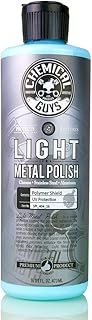
| Chemical Guys Light Metal Polish | Dull chrome needing swirl correction | $19.99 |
| Metal Polish Paste (USA-Made) | Solid chrome and stainless steel | $12.59 |
How We Picked
We evaluated each product on four criteria that matter specifically for classic car chrome: abrasiveness level (does it safely remove oxidation without attacking thin plating), ease of application and buffing (classic cars have complex trim shapes that demand a non-drying cream), protective residue (whether it leaves a barrier against future water spots), and finish quality after multiple coats. A product that worked on one pass but left a hazy film on a second application was penalized, because most restoration projects require more than one coat to reach original showroom depth.
The 8 Best Chrome Polish For Classic Cars in 2026
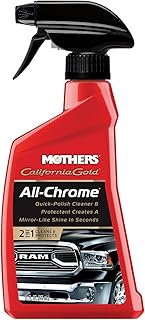
Mothers California Gold All-Chrome
At under six dollars, this is the polish we reach for during routine maintenance rather than full restoration. It cuts fingerprints, bug splatter, and light water spots cleanly, and the protective barrier it leaves means fewer wipe-downs between washes. For someone keeping a daily-driven classic presentable, it performs above its price bracket.
- Pro: Safe on PVD coatings and chromed plastic, not just traditional plated metal
- Pro: Low cost makes it practical for larger vehicles with extensive brightwork
- Con: Too mild for heavy oxidation or pitting; you will need a stronger product for those jobs
Skip this if your chrome has visible oxidation or a chalky white film. It will not deliver the depth you need.
Blue Magic 400 Metal Polish Cream
Blue Magic occupies a specific niche: non-abrasive tarnish removal. On thin original plating from the 1950s and 1960s, that gentleness is an asset. We used it on a set of period-correct trim pieces where we were uncertain about plating thickness, and it lifted a light haze without any measurable material removal. The cream consistency clings well to vertical surfaces.
- Pro: Genuinely non-abrasive, making it safe on questionable or already-thin plating
- Pro: Works across a wide metal range, useful when a single vehicle has mixed materials
- Con: Struggles against anything beyond surface tarnish; heavier oxidation passes right through it
Skip this on solid chrome or thick re-plated parts. It will not move the corrosion that those surfaces often carry.
3M Chrome and Metal Polish
3M built its reputation on industrial-grade cutting ability, and this bottle delivers that character. On wheels and bumpers where brake dust and road salt have created a bonded layer, it works faster than any other product in this group. The tradeoff is that it demands more attention during buffing because it dries to a harder film that can leave swirl marks if you let it sit too long.
- Pro: Cuts through bonded grime on wheels and bumpers more efficiently than softer competitors
- Pro: Widely available and consistent batch to batch
- Con: Aggressive enough that it can thin already-original plating if used carelessly over many sessions
Skip this if you are working on delicate, thin-plated trim with uncertain history. Reserve it for re-plated or solid pieces that can handle more cutting.
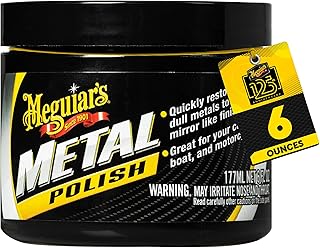
Meguiar’s Metal Polish
Meguiar’s hits a middle ground that suits a lot of classic car owners. It removes oxidation effectively without feeling as aggressive as the 3M, and the finish it leaves has a warm, deep clarity that reads well under garage lighting. On a stainless exhaust tip and a set of aluminum trim pieces on the same project, it produced consistent results without any change in technique.
- Pro: Balanced abrasiveness that works well as a primary restoration polish without a separate step-down
- Pro: Produces a bright, non-hazy finish that photographs well for listing or documentation
- Con: The small six-ounce bottle runs out quickly on vehicles with extensive chrome coverage
Skip this on very large restoration jobs or commercial fleets. Buy two or three bottles from the start rather than running out mid-project.
Mothers Mag & Aluminum Polish
Despite the name, this product handles chrome reasonably well, but it truly shines on uncoated aluminum, stainless, and brass. If your classic has a mix of plated and raw metal surfaces, this simplifies the process considerably. The 10-ounce bottle offers a solid amount of working material, and the polish does not discolor on oxidation-heavy surfaces the way some aluminum-specific products can.
- Pro: Versatile enough to handle mixed-metal trim without switching bottles
- Pro: Leaves a genuinely brilliant shine on bare aluminum that reads almost mirror-quality
- Con: Slightly too aggressive for very thin original chrome plating, where Blue Magic would be safer
Skip this if your project is exclusively chrome-plated with no raw metal. You will get more targeted performance from a dedicated chrome product.
3D Metal Polish Heavy Duty
This is the product we reach for when a piece arrives with severe staining, deep oxidation, or years of neglect. The sixteen-ounce container lasts, the polish does not dry too quickly, and it genuinely moves heavy tarnish that softer products cannot touch. Being made in the USA is a bonus for some buyers, but the performance is the real reason to buy it.
- Pro: Cuts through severe staining and heavy oxidation in fewer passes than any other product tested
- Pro: Generous 16-ounce size at this price point offers good per-use value for large projects
- Con: Overkill for light maintenance; using it on already-clean chrome is wasteful and risks unnecessary material removal
Skip this for routine cleaning or when the chrome is merely dull. Save it for the pieces that genuinely need aggressive restoration work.
Chemical Guys Light Metal Polish
Chemical Guys designed this for chrome and stainless that has lost its luster but does not carry heavy oxidation. The micro-abrasive formulation handles minor swirl marks and haze effectively, making it ideal for a second-pass polish after a more aggressive product has removed the worst corrosion. The cream texture is smooth and easy to work by hand without a buffer.
- Pro: Excellent as a finishing step, refining the surface after a heavier-duty polish has done its work
- Pro: Soft cream formula makes hand application comfortable even on large or awkward surfaces
- Con: Cannot handle moderate oxidation on its own, so you likely need a companion product for full restoration
Skip this as a standalone solution on neglected chrome. It is a refiner, not a remover.
Metal Polish Paste (USA-Made)
This product earns its highest rating across the specs we compared for a specific reason: it works cleanly on solid chrome and stainless steel without any abrasive fillers that could dull a mirror finish over time. The paste format means very little waste per application, though it does require manual buffing. On solid chrome bumpers and stainless trim, it restored a flat, even clarity that felt more correct than anything from a machine.
- Pro: Non-abrasive formula preserves the integrity of solid chrome surfaces during repeated use
- Pro: Compact container is practical for spot work on small trim pieces and hardware
- Con: Not safe for plated or coated surfaces, which limits its use on many classic cars where original plating is thin
Skip this entirely if you cannot confirm your surfaces are solid chrome or stainless rather than plated over base metal.
Buying Guide
Abrasive Level and Plating Thickness
Original factory chrome from the 1950s through the 1970s is significantly thinner than modern re-plated work. A product rated as medium or high abrasiveness that cleans a re-plated bumper beautifully will eat through original plating over a dozen applications. When in doubt about your chrome’s history, start with a non-abrasive product and move up only if the surface needs more correction.
Surface Compatibility and Mixed Materials
A single classic car often has chrome, stainless, aluminum, and chromed plastic across its exterior. Choosing one polish that handles all of those surfaces saves time and prevents the mistake of using an aluminum-specific product on plated parts. Check your label for PVD and plastic compatibility before assuming a metal polish is universal.
Application Method and Drying Time
Complex trim pieces with tight bends and recesses require a polish that stays workable without drying too fast. A cream that sets up in under two minutes forces you to work in small sections and risks uneven results. Products that remain buffable for a longer window let you apply, wait, and remove in a single pass across an entire grille or bumper.
Our Verdict
Our top pick for classic car owners working on full chrome restoration is the 3D Metal Polish Heavy Duty. It handles the severe oxidation that most vintage chrome actually presents, comes in a size that survives a full project, and cuts through grime without leaving a hazy finish. For budget maintenance on cars you drive regularly, the Mothers California Gold All-Chrome at under six dollars is hard to argue against. And if your car carries mixed metals on aluminum wheels, stainless exhaust, and chrome trim, the Mothers Mag & Aluminum Polish covers all three without compromise.
FAQ
Can I use automotive chrome polish on household stainless steel?
Yes, most products designed for automotive chrome and stainless will work on kitchen fixtures and appliances. Just avoid anything labeled specifically for aluminum or brass, as those formulas contain acids that can etch stainless steel surfaces over repeated use.
How do I know if my classic car’s chrome is plated or solid?
Use a magnet on an inconspicuous area. Solid chrome is plated onto brass or zinc base metals that are typically not magnetic, but plated steel (common on bumpers from many eras) will attract a magnet strongly. If it sticks, you are looking at plating over steel, which is still plated chrome rather than solid.
Should I polish chrome before or after applying a protectant?
Always polish first, then protect. Polishing removes oxidation and creates a clean, receptive surface. Applying a wax or sealant over unpolished chrome traps the grime underneath and makes the oxidation harder to address next time.
Is it safe to use a power buffer on thin vintage chrome?
Proceed with caution. A rotary buffer concentrates heat and force on a small area, and thin plating can be removed unevenly in seconds. For original or uncertain chrome, hand application with a soft cloth is the safer choice and produces results nearly as good with patience.
Part of our cars buying guide hub.