Key takeaways
- Drive Size and Range: Match the tool to your specific application, as 1/4-inch drives handle delicate interior and engine bay work between 2-26 Nm, while 1/2-inch drives are necessary for lug nuts and suspension components requiring higher foot-pound ratings.
- Accuracy Tolerance: Prioritize tools with at least ±4% accuracy in the clockwise direction for automotive safety, noting that premium split beam models often maintain tighter tolerances over years of use compared to standard click-type mechanisms.
- Mechanism Type: Understand that click-type wrenches provide audible feedback ideal for noisy garages, whereas split beam designs offer superior longevity by removing internal springs that degrade, and torque screwdrivers deliver tactile precision for low-torque fasteners.
- Bit and Accessory Quality: Verify that included bits are manufactured from S2 tool steel rather than softer chrome-vanadium alloys, as S2 resists deformation under repeated torque loading and protects both the fastener head and the driver tip.
- Ergonomics and Feedback: Look for flex heads and comfortable grips when working in tight engine bays, ensuring the adjustment mechanism is easy to read and lock to prevent accidental setting changes during repetitive assembly tasks.
.
The Precision Instruments PREC3FR250F Split Beam Torque Wrench is the best overall choice for automotive precision assembly, while the DISEN 9PC Click Torque Wrench Set serves as the best runner-up for versatile garage use. Selecting the correct torque tool is critical because overtightening can strip threads or warp components, while undertightening leads to dangerous mechanical failures; this guide breaks down six top-rated options ranging from delicate inch-pound screwdrivers to heavy-duty split beam wrenches to ensure your fasteners are secured to exact manufacturer specifications.
Our top picks




As an Amazon Associate we earn from qualifying purchases at no extra cost to you. Ratings are shown as listed on Amazon.
Quick Comparison
| Product | Best For | Standout Feature | Rating |
|---|---|---|---|
| Precision Instruments PREC3FR250F | Professional Automotive Assembly | Split beam design eliminates spring fatigue | 4.8/5 |
| DISEN 9PC Click Torque Wrench Set | Complete Garage Coverage | Three drive sizes with ±3% accuracy | 4.6/5 |
| LEXIVON LX-191 Bike Torque Wrench Kit | Cycling and Small Engine Work | 72-tooth dual-direction ratchet | 4.7/5 |
| VANPO Torque Screwdriver Set | Gunsmithing and Scope Mounting | 40 S2 steel bits included | 4.5/5 |
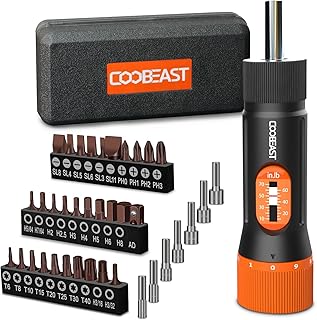
| coobeast 38Pcs Torque Screwdriver Set | General Maintenance and Electronics | Comprehensive preset accessory kit | 4.4/5 |
How to Choose a Torque Wrench for Precision Assembly
- Drive Size and Range: Match the tool to your specific application, as 1/4-inch drives handle delicate interior and engine bay work between 2-26 Nm, while 1/2-inch drives are necessary for lug nuts and suspension components requiring higher foot-pound ratings.
- Accuracy Tolerance: Prioritize tools with at least ±4% accuracy in the clockwise direction for automotive safety, noting that premium split beam models often maintain tighter tolerances over years of use compared to standard click-type mechanisms.
- Mechanism Type: Understand that click-type wrenches provide audible feedback ideal for noisy garages, whereas split beam designs offer superior longevity by removing internal springs that degrade, and torque screwdrivers deliver tactile precision for low-torque fasteners.
- Bit and Accessory Quality: Verify that included bits are manufactured from S2 tool steel rather than softer chrome-vanadium alloys, as S2 resists deformation under repeated torque loading and protects both the fastener head and the driver tip.
- Ergonomics and Feedback: Look for flex heads and comfortable grips when working in tight engine bays, ensuring the adjustment mechanism is easy to read and lock to prevent accidental setting changes during repetitive assembly tasks.
The Best Torque Wrenches for Precision Assembly Reviewed
Best Overall: Precision Instruments PREC3FR250F Silver 1/2″ Drive Split Beam Torque Wrench
This split beam wrench is engineered for professional mechanics who demand consistent accuracy without the calibration drift common in spring-loaded click wrenches. Its flex head and durable construction make it the definitive choice for critical automotive assemblies like cylinder heads and suspension components where precision cannot be compromised.
Best Budget: DISEN 9PC Click Torque Wrench Set
Offering three distinct drive sizes in one calibrated package, this set provides exceptional value for DIY enthusiasts building a comprehensive toolkit without purchasing individual units. The ±3% accuracy rating and dual-scale markings rival more expensive single wrenches, making it ideal for home garages tackling everything from motorcycle maintenance to truck repairs.
Best Premium: LEXIVON LX-191 Bike Torque Wrench Kit
Featuring a refined 72-tooth ratchet and dual-direction click mechanism, this kit delivers the tactile precision required for carbon fiber bicycle components and small engine carburetors. It is best suited for meticulous builders who need reliable low-torque performance and appreciate the included high-quality bit selection for specialized fasteners.
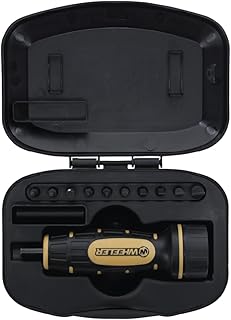
Best for Gunsmithing: VANPO Torque Screwdriver 15-75 in-lb Set
Designed specifically for optics mounting and firearm maintenance, this torque screwdriver includes 40 S2 steel bits to accommodate virtually every gunsmithing fastener profile. Its narrow inch-pound range prevents damage to sensitive aluminum receivers and scope rings, making it an essential dedicated tool for precision shooting enthusiasts.
Best for General Maintenance: coobeast 38Pcs Preset 1/4” Drive Torque Screwdriver Set
This extensive preset kit excels at electronics repair, appliance servicing, and light automotive interior work where multiple torque settings are needed quickly. The broad bit compatibility and organized storage make it perfect for technicians who perform varied precision tasks throughout the day without needing adjustable dial settings.
Frequently Asked Questions
How often should I calibrate my torque wrench?
Most manufacturers recommend recalibration after 5,000 cycles or annually, whichever comes first, though professional shops should verify accuracy quarterly to maintain ISO compliance and ensure safety-critical fasteners are properly tensioned.
Can I use a torque wrench as a regular ratchet?
No, using a torque wrench for general loosening or non-torqued tightening will prematurely wear the internal calibration mechanism and compromise accuracy; always store at the lowest setting and reserve it strictly for final torque verification.
What is the difference between inch-pounds and foot-pounds?
Foot-pounds measure larger rotational force for chassis and engine components, while inch-pounds measure smaller forces for delicate fasteners; note that 12 inch-pounds equals 1 foot-pound, so confusing these units can result in catastrophic overtightening.
Do I need a flex head torque wrench?
A flex head is highly recommended for automotive work where frame rails, exhaust components, and engine bay obstructions prevent straight-line access to fasteners, allowing accurate torque application at angles up to 15 degrees without binding.
Final Thoughts
For serious automotive precision assembly, the Precision Instruments PREC3FR250F remains the benchmark for durability and accuracy, while the DISEN 9PC set offers unmatched versatility for growing tool collections. Pair either with the VANPO torque screwdriver for low-torque specialty tasks, and you will have complete coverage for any precision fastening requirement in your garage.