Key takeaways
- Running Boards: Flat, continuous stepping surfaces that mount flush against the rocker panel. They offer the widest foot placement area—typically 4 to 7 inches wide—making them the safest option for families, pets, and work boots. Because they fit snug against the body, they also offer excellent lower-body stone guard protection.
- Nerf Bars (Oval or Round Step Bars): Tubular bars originally designed for off-road racing to deflect obstacles. Today’s oval and round step bars feature dedicated non-slip plastic pads aligned with each door. Oval bars (4 to 6 inches wide) provide a wider stepping area than traditional 3-inch round bars, striking a balance between rugged off-road style and daily practicality.
- Drop Steps and Hoop Steps: Feature individual stepping pads that extend lower than the main bar frame. These are popular on lifted trucks where a standard side bar still sits too high for easy entry. However, keep in mind that drop steps reduce your breakover angle and ground clearance during off-road driving.
Selecting the right side steps for your pickup truck seems simple until you start browsing hundreds of options across dozens of brands. In 2026, modern full-size and heavy-duty trucks feature factory ride heights that make entering and exiting the cab genuinely difficult for passengers, kids, and even drivers. Beyond basic accessibility, the right set of steps shields your lower rocker panels from road debris, gravel spray, and parking lot door dings while complementing your truck’s overall stance.
However, making a buying decision purely based on appearance often leads to frustration. Low-quality powder coating flaking off after a single winter, steps that flex under normal foot pressure, or brackets that interfere with frame components are all common headaches. To help you navigate the specifications that actually matter, this guide breaks down body styles, material trade-offs, weight ratings, and mounting configurations so you get the ideal setup for your vehicle the first time around.
As an Amazon Associate we earn from qualifying purchases at no extra cost to you.
Style Breakdown: Running Boards, Nerf Bars, and Drop Steps
Before comparing materials or finishes, you need to select the design style that aligns with your truck’s usage and overall vehicle height:
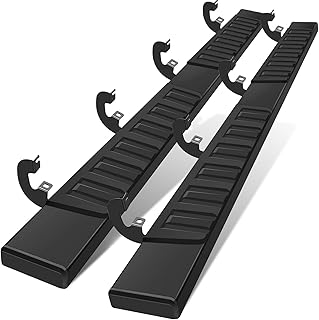
- Running Boards: Flat, continuous stepping surfaces that mount flush against the rocker panel. They offer the widest foot placement area—typically 4 to 7 inches wide—making them the safest option for families, pets, and work boots. Because they fit snug against the body, they also offer excellent lower-body stone guard protection.
- Nerf Bars (Oval or Round Step Bars): Tubular bars originally designed for off-road racing to deflect obstacles. Today’s oval and round step bars feature dedicated non-slip plastic pads aligned with each door. Oval bars (4 to 6 inches wide) provide a wider stepping area than traditional 3-inch round bars, striking a balance between rugged off-road style and daily practicality.
- Drop Steps and Hoop Steps: Feature individual stepping pads that extend lower than the main bar frame. These are popular on lifted trucks where a standard side bar still sits too high for easy entry. However, keep in mind that drop steps reduce your breakover angle and ground clearance during off-road driving.
Material Selection: Weight, Corrosion, and Real-World Durability
The underlying metal and surface treatment dictate how long your side steps will last, especially in regions that use aggressive chemical road salts during winter months.
Mild steel with e-coating and powder coating is the most cost-effective option. It provides superior structural rigidity, but if the outer powder coat gets chipped by flying gravel, moisture will penetrate and rust will eventually form underneath. Aluminum is lightweight, inherently rustproof, and ideal for coastal environments or snow belts, though high-end extruded aluminum boards carry a price premium. Stainless steel offers high corrosion resistance and high strength; polished stainless finishes resist pitting, while black powder-coated stainless steel provides double-layer protection against harsh environmental conditions.
Cab Size and Mounting Types: Getting the Fit Right
Vehicle fitment is strict when purchasing side steps. You must match the exact cab configuration of your truck (such as Crew Cab, SuperCab/Double Cab, or Regular Cab) as total length and bracket spacing vary substantially between cab styles across model years.
Additionally, pay close attention to the mounting method. Rocker panel mounting attaches the brackets directly to the pinch weld and factory-threaded holes on the inner rocker panel. This is standard for most light-duty trucks and offers simple installation. Frame mounting bolts directly to the truck’s frame rails, offering maximum strength and rigid support for heavy-duty applications or rock sliders, though it may require specific clearance around fuel tanks and exhaust lines.
Weight Capacity and Tread Surface: Safety First
Step bars are functional safety components that need to support adult weight reliably, often while carrying heavy gear or wearing muddy work boots. Standard weight ratings range from 300 to 500 pounds per side. Look for steps tested to dynamic loads rather than static-only ratings, as stepping down onto a bar exerts far more force than standing still on it.
Tread texture is equally critical for safety. Smooth metal becomes slick when coated in ice, rain, or mud. Seek out molded polymer treads with deep channeling, textured rubber pads, or stamped metal traction louvers that allow water, slush, and dirt to drain off the stepping surface easily.
Power vs. Manual Steps: When Is the Upgrade Worth It?
Electric motorized running boards automatically deploy downward and outward when a door opens, then retract flush beneath the rocker panel when closed. This delivers the lowest step height available without sacrificing ground clearance when driving.
While power steps provide an unmatched sleek look and superior step ergonomics on tall or lifted trucks, they come at significantly higher costs and require wiring into the vehicle’s electrical system or OBD-II port. In contrast, fixed manual bars have no moving parts or electric motors to maintain, making them virtually maintenance-free and far more durable for severe off-roading and work site use.
Key Installation Pitfalls to Avoid
Most modern running boards feature direct bolt-on installation using factory-drilled mounting holes, eliminating the need to drill into your truck’s sheet metal. However, simple installation mistakes can still cause squeaks, sagging, or premature corrosion:
- Mixing Up Bracket Positions: Left, right, front, center, and rear mounting brackets often look nearly identical but feature slight angle offsets. Always sort and label brackets before starting.
- Overtightening Fasteners: Always use a torque wrench to meet manufacturer torque specs, especially on body mounts or aluminum threads, to prevent stripping threads or crushing rubber isolators.
- Skipping Anti-Seize or Galvanic Protection: When bolting steel brackets to aluminum truck bodies, use coated hardware and protective plastic isolator washers to prevent galvanic corrosion between dissimilar metals.
Related Guides
Complete your truck build with our comprehensive testing and buying guides. If you are ready to make a purchase decision, check out our roundup of the best step bars and running boards for trucks. If you want to protect your cargo bed from weather and theft, explore the best tonneau covers for pickup trucks. For front-end protection against brush and trail hazards, browse our picks for the best grille guards for pickup trucks.
FAQ
Do running boards lower a truck’s ground clearance?
Standard fixed running boards and nerf bars drop about 2 to 4 inches below the rocker panel, slightly reducing side ground clearance and breakover angle. If off-road clearance is a priority, consider flush-mounted slider-style steps or retractable electric running boards that fold up when doors are closed.
Can I install running boards myself at home?
Yes, most bolt-on side steps can be installed in 1 to 2 hours using basic hand tools like a socket set and torque wrench. Having a second person or jack stands to hold the bar in position while tightening brackets makes the process much easier.
How do I prevent my step bars from rusting?
Wash your side steps regularly during winter to remove corrosive road salts and mag-chloride. Touch up any small chips in powder-coated steel promptly with rust-inhibiting touch-up paint, and apply a spray-on wax or corrosion inhibitor to metal brackets twice a year.
Will running boards for an Extended Cab fit a Crew Cab?
No, running boards are engineered specifically for precise cab lengths and door dimensions. An Extended Cab step bar is shorter than a Crew Cab bar and features different bracket mounting locations, so always verify your truck’s exact cab style before purchasing.