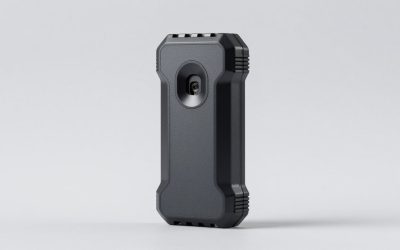
Parking a modern car, truck, or SUV inside a tight residential garage is often a nerve-wracking exercise. With wider vehicle profiles, reduced rear-window visibility, and garages cluttered with storage shelves and equipment, hitting the exact stopping mark is essential. Laser guided smart parking assistants eliminate this guesswork by projecting a targeted beam of light onto a specific point on your vehicle’s dashboard or hood. When the laser hits your predetermined target spot, you know your vehicle is positioned safely inside the door threshold without threatening your storage cabinets or home entryway.
Selecting the right parking assistant requires looking beyond basic product marketing and understanding the core engineering components that dictate real-world performance. Lower-quality units are plagued by weak beams, jittery motion sensors, and delicate mounts that lose alignment every time a garage door vibrates. In 2026, finding a reliable system comes down to evaluating laser visibility, motion detection response times, mounting stability, and auxiliary power options. This guide breaks down the critical specifications and features you should prioritize to ensure perfect alignment every time you pull in.
As an Amazon Associate we earn from qualifying purchases at no extra cost to you.

Laser Wavelength and Beam Visibility
The core component of any parking guide is its laser diode, and beam visibility varies drastically depending on the light wavelength and ambient lighting in your garage. Most standard parking assistants utilize red laser diodes operating around the 650-nanometer wavelength. While red lasers are cost-effective and sufficient for dark, windowless garages, they often become washed out if sunlight streams in through open garage doors or side windows.
Green laser diodes, which typically operate around the 520-to-532-nanometer range, offer significantly higher visual contrast to the human eye under identical power constraints. If your garage receives high ambient daylight or uses bright overhead LED lighting, spending extra for a green laser system ensures the target dot remains crisp and clear. Look for units that use Class 2 or Class 3R lasers, as these provide maximum visibility while adhering to standard consumer eye-safety regulations.
Motion Sensor Precision and Detection Angles
A laser guide is only useful if it activates immediately when your vehicle approaches and turns off reliably after you park. Basic units use passive infrared (PIR) thermal sensors that can struggle to detect approaching vehicles in ambient temperatures that match engine heat. Advanced units combine PIR with ultrasonic proximity sensors or micro-radar detection, triggering the laser the instant your bumper crosses the garage threshold.
Pay close attention to the sensor’s detection field and delay specifications. Ideal sensors feature a wide detection cone of at least 110 degrees and a range extending 15 to 20 feet from the sensor body. Additionally, verify that the module includes an adjustable shut-off timer. A system that stays illuminated for 30 to 90 seconds after motion stops provides ample time to verify your parking position without wasting electricity or degrading the laser diode over prolonged operation.
Single vs. Dual-Beam Configurations
Deciding between a single-beam and dual-beam parking assistant depends entirely on your garage layout and vehicle count. Single-beam units are designed for single-car garages or designated individual bays. They mount directly above one parking spot and track one vehicle. While you can install two separate single-beam units in a two-car garage, doing so requires double the power outlets and independent mounting adjustments.
Dual-beam smart assistants use a single housing equipped with two independently adjustable laser heads and dual motion sensors. This design allows one overhead unit to manage two adjacent vehicle bays independently. When choosing a dual-beam system, ensure that each laser head rotates on a full 360-degree ball joint with independent tilt tension. This flexibility is essential for aiming beams simultaneously at vehicles of differing heights, such as a low-slung sedan and a tall pickup truck.
Power Delivery and Emergency Battery Backups
Power delivery determines both the installation location and long-term reliability of your setup. The vast majority of consumer laser guides run on low-voltage direct current supplied by a standard wall AC adapter. Ensure the included power cable is long enough—ideally 8 to 10 feet—to reach ceiling-mounted outlets commonly shared with automatic garage door openers without requiring unsightly extension cords.
Because power outages often accompany severe weather when you most need to park safely inside, battery architecture matters. Units that rely solely on disposable batteries tend to dim quickly as voltage drops, resulting in inaccurate tracking dots. The most dependable models use main AC wall power backed by secondary internal lithium-ion batteries or standard AA/AAA failover slots. This dual-source configuration ensures the laser maintains full output intensity even during total home power failures.
Structural Mounting and Vibration Isolation
Garage ceilings endure continuous structural movement and vibration caused by heavy overhead doors opening and closing. A laser guide mounted with cheap adhesive pads or flimsy plastic brackets will gradually shift out of position, throwing off your calibrated parking mark by several inches over time.
Opt for hardware kits that include rigid metal mounting plates, mechanical screw anchors, or ceiling-joist fasteners. The housing attachment mechanism should feature locking gear teeth or heavy-gauge thumb screws rather than smooth friction hinges. Locking mechanisms prevent micro-vibrations from altering the laser’s tilt angle over months of daily use, ensuring your reference point stays fixed exactly where you set it during initial installation.
Evaluating Smart Connectivity and Customization Features
Modern parking guides often feature smart home connectivity, adding extra convenience for tech-focused drivers. Smart units connect to home Wi-Fi networks, allowing users to adjust motion sensitivity, customize delay timers, or receive alerts through smartphone apps. Some advanced systems sync directly with smart garage door controllers, ensuring the laser activates the instant the door opening cycle begins.
While app control simplifies initial tuning, determine whether these features add true functional value to your routine. If your garage layout rarely changes and you park a single primary vehicle, a standard sensor-activated laser without Wi-Fi offers unmatched simplicity and fewer points of failure. Smart connectivity is most valuable in multi-driver households or smart homes where automated garage routines are already integrated.
Related Guides
If you want to see how top-performing units hold up under real-world testing conditions across different garage environments, check out our evaluation of the compared and ranked laser guided smart parking assistants to find the ideal match for your vehicle setup.
FAQ
Are laser parking assistants safe for home use around children and pets?
Yes, consumer laser parking assistants utilize low-power Class 2 or Class 3R lasers that are safe for general residential use. While direct prolonged eye exposure should always be avoided, brief accidental glances will not cause eye damage. Position the overhead module so the laser aims downward toward your vehicle’s hood rather than outward toward walkways.
Why does my laser parking assistant turn on when no car is moving?
False triggers are usually caused by high thermal drafts, floating debris near sensitive motion sensors, or insects crawling across infrared lenses. You can resolve this issue by lowering the sensor’s sensitivity dial or repositioning the unit away from heating vents and direct sunlight drafts.
Can I install a laser parking assistant under an outdoor carport?
Most standard laser parking guides are rated for indoor use only and lack weatherproofing against rain, humidity, and extreme temperature swings. If installing under a carport, you must select an outdoor-rated unit with an IP65 or higher ingress protection enclosure to prevent moisture damage.
How do I re-aim the laser beam if I buy a new vehicle?
To re-aim the beam, park your new vehicle in its ideal final resting position inside the garage with the engine off. Loosen the housing’s adjustment lock, manually pivot the laser head until the beam aligns with a distinct point on your new dashboard or hood seam, and securely tighten the lock in place.