Key takeaways
- Wireless barcode scanners for warehouse receiving compared, covering Bluetooth, 2.4 GHz and storage mode models for dock doors, benches and yard checks.
As an Amazon Associate we earn from qualifying purchases.
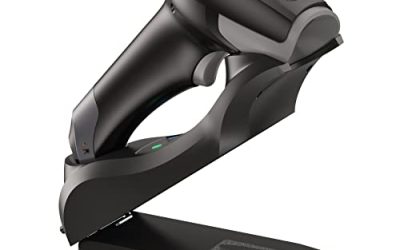
Cutting the cord changes how a receiving department moves. A wireless scanner goes to the pallet instead of the pallet coming to the bench, reads the outer carton code where the truck is unloaded, and walks the yard for container checks. The best warehouse wireless barcode scanners for receiving departments balance three things: a link that holds across a dock, with Bluetooth for phones and tablets or a 2.4 GHz link to a receiver on the receiving PC; a battery that survives the longest shift pattern you run; and an upload safety net, because every warehouse has a corner where the link drops. The four models below are all cordless, all verified on Amazon US, and deliberately different in size and connection style, from a mini Bluetooth imager that pairs with a tablet at the dock door to a pocket laser for overflow and yard work.
Disclosure: This article contains affiliate links. If you buy through these links, we may earn a commission at no additional cost to you.
How to Choose
Start with the scan engine. A 1D laser reads printed linear codes quickly and at longer distances, but it cannot read QR codes, Data Matrix or codes shown on a screen. A 2D area imager reads 1D and 2D codes on paper and on screens, handles damaged or poorly printed labels better, and is the safer long term choice for mixed label stock. Next, separate two distances that are often confused: scanning range is how far the scanner sits from the code, while transmission range is how far the operator can walk from the host computer or cradle. A receiving dock may need neither in extreme form, while a stockroom may need one or both. Connectivity follows the workflow: corded USB is simple and never needs charging, 2.4 GHz links to a receiver or cradle, and Bluetooth pairs with phones, tablets and computers. Finally, match the housing to the floor. Sealed housings described with codes such as IP65 or IP67 resist dust and water, and drop resistance to concrete matters anywhere pallets, forklifts and ladders are in daily use. Check the symbology list against your labels too, including Code 128, Interleaved 2 of 5 and any GS1 formats your suppliers use.
For wireless receiving, choose the link by the host, not by habit. If receiving staff book goods in on a tablet or phone, Bluetooth pairing is the direct route. If they scan into a fixed receiving PC, a 2.4 GHz receiver or a cradle link is simpler and avoids pairing lists filling with old devices. Then check what happens out of range: storage mode, where the scanner holds codes in memory and uploads them when the link returns, is the difference between a dead spot being an inconvenience and being lost stock. Battery figures should be read as shift planning, not gospel; a scanner that shows its remaining charge, or that charges in a cradle at the bench, prevents the mid shift flat battery that stops a delivery being booked in.
The Picks in Detail
1. NETUM CS8501 Wireless 2D Barcode Scanner

ASIN: B0FF9N4CNM
Amazon US: https://www.amazon.com/dp/B0FF9N4CNM
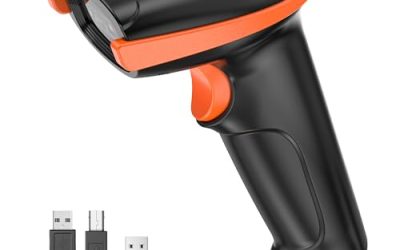
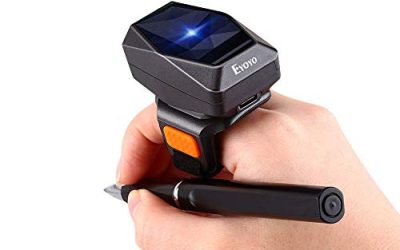
The CS8501 is a mini portable 2D imager that connects by Bluetooth, 2.4 GHz wireless and USB cable, and reads 1D and 2D codes for inventory work with tablets, phones and computers. A physical mode switch on the base toggles connection types without scanning setup codes, which helps when one scanner moves between a dock tablet and a bench PC in the same shift. Feedback is by beeper and vibration, useful on a loud dock where a beep alone gets lost, and the scan modes include trigger, continuous and auto sensing.
Who it suits: Receiving points where a tablet or phone is the booking in device, and the scanner needs to be small, quick to pair and easy to hand between operators.
Considerations: The maker notes plainly that it is not built for long range scanning or complex direct part marking codes, so keep it at carton and label distance. Mini format also means a smaller battery than the full size handhelds here.
2. NetumScan Bluetooth 1D Barcode Scanner

ASIN: B0DHXCWRK8
Amazon US: https://www.amazon.com/dp/B0DHXCWRK8
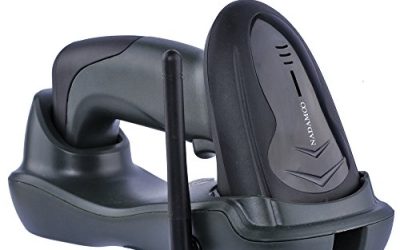
This NetumScan model is the linear code specialist of the group, a 3-in-1 CCD scanner connecting by Bluetooth, 2.4 GHz wireless and USB. It reads the standard printed 1D set used on carton and pallet labels, works with store, warehouse and checkout (POS) hosts, and supports instant upload plus a stored upload pattern for work away from the host. For receiving teams whose supplier labels are uniformly linear, a CCD engine also reads codes from some screens, which helps with phone based delivery notes.
Who it suits: High volume receiving where every label is a printed linear code and a simple, light cordless scanner is all the dock needs.
Considerations: It is a 1D device, so the first supplier who switches to QR or Data Matrix labels ends its usefulness at that door. Check your label mix before choosing it over a 2D imager.
3. Symcode Mini 2D Portable Barcode Scanner

ASIN: B086YHQ7H4
Amazon US: https://www.amazon.com/dp/B086YHQ7H4
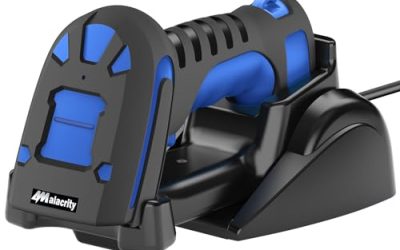
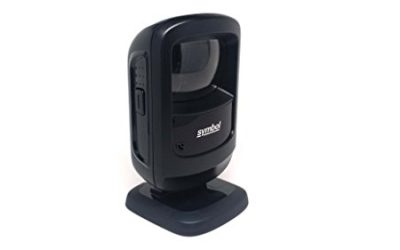
The Symcode mini is a pocket 2D imager with Bluetooth, 2.4 GHz and USB wired modes, reading 1D and 2D codes from paper and screens, including blurred and incomplete codes according to the maker. Its standout receiving trait is offline storage for up to 150,000 barcodes, which turns yard checks and container unloading, the classic wireless dead spots, into scan now and upload later work. Configuration options include auto detection, prefix and suffix settings and character hiding for matching a warehouse system’s expected format.
Who it suits: Receiving teams that regularly scan away from the host, in yards, containers and overflow storage, and need stored upload they can trust.
Considerations: Pocket size means pocket battery and a smaller scan window feel than a pistol grip handheld during very long sessions. The storage workflow needs a clear upload routine, or held scans can be forgotten on the device.
4. Tera 1100L Mini 1D Laser Barcode Scanner

ASIN: B07T82BGQY
Amazon US: https://www.amazon.com/dp/B07T82BGQY
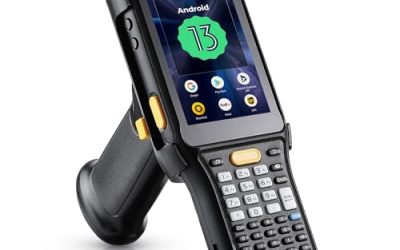
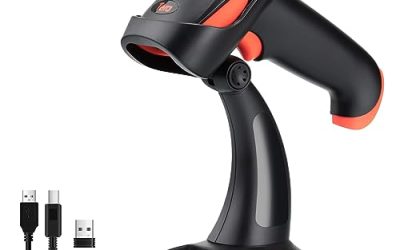
The 1100L is a mini laser scanner with Bluetooth 5.0, 2.4 GHz wireless and USB wired connections in one pocket body. Its laser engine is built for printed 1D codes, the classic carton label format, and the three connection modes let it pair with phones and tablets for dock door checks or plug into the receiving PC for bench work. Volume levels are adjustable, and the maker positions it for supermarket, logistics and warehouse use where a small scanner is carried all shift rather than parked at a bench.
Who it suits: Overflow receiving, yard checks and smaller sites where staff carry one small scanner all day and scan printed linear labels only.
Considerations: The maker is explicit that it reads printed 1D codes only, not 2D codes and not codes on screens, so it cannot be the only scanner at a modern receiving door. Treat it as the carried spare alongside a 2D imager.
Comparison Table
| Product | Type and connection | Standout trait | Best for |
|---|---|---|---|
| NETUM CS8501 Wireless 2D Barcode Scanner | Mini cordless 2D imager | Bluetooth pairing with phones | Receiving with a tablet |
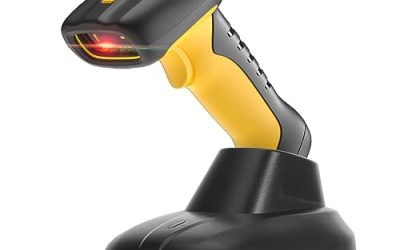
| NetumScan Bluetooth 1D Barcode Scanner | Cordless 1D CCD handheld | Simple 3-in-1 connection | Linear code receiving |
| Symcode Mini 2D Portable Barcode Scanner | Mini cordless 2D imager | Stores up to 150,000 codes offline | Out of range receiving work |
| Tera 1100L Mini 1D Laser Barcode Scanner | Mini 1D laser | Pocket format, three connections | Light receiving and overflow |
Connection style is the deciding column in this group. All four are cordless, but they pair with different hosts in different ways, and that choice shapes the whole receiving workflow.
FAQ
Bluetooth or 2.4 GHz for warehouse receiving?
Bluetooth pairs directly with phones and tablets, which suits app based receiving. A 2.4 GHz link to a USB receiver or cradle suits a fixed receiving PC and avoids managing pairing lists. Many scanners here support both, so the practical answer is to standardise on one per dock to keep training simple.
What happens to scans taken out of wireless range?
On models with storage mode, the codes are held in the scanner memory and uploaded when the link returns. On models without it, the scan is simply not delivered. For yard and container work, storage mode should be treated as a requirement, not a bonus.
How long should a receiving scanner battery last?
Plan around your longest shift pattern plus a margin. Makers quote continuous scanning hours and standby days, and real life sits between them. Cradle charging at the bench and a visible battery level are worth more than a headline figure, because they make a flat battery a rare event instead of a weekly one.
Can one wireless scanner serve several receiving staff?
Yes, if the host setup is simple. A receiver based link makes handover trivial because the scanner talks to the dock, not to a personal device. Bluetooth models are better assigned to one tablet or phone each, so pairing stays stable across shifts.
Conclusion
For tablet based receiving, the NETUM CS8501 is the natural dock door tool. The Symcode mini earns its place wherever receiving work leaves the building’s comfortable link coverage, thanks to its large offline storage. The NetumScan 1D model and the Tera 1100L cover the linear label docks at the simple end, with the Tera as the carried spare rather than the main door scanner. Pick the link by your host device, insist on storage mode for outdoor work, and wireless receiving stops creating reconciliation work at the end of the day.
FAQ
Bluetooth or 2.4 GHz for warehouse receiving?
What happens to scans taken out of wireless range?
How long should a receiving scanner battery last?
Can one wireless scanner serve several receiving staff?
More from Amazon
Programs that pair well with the guide above. Offers and eligibility are set by Amazon and may change.
Free shipping on eligible items, Prime Video and more. Eligible new members can start with a free trial.
Start a Prime free trialA Prime membership for ages 18-24 with a trial period. Eligibility is set by Amazon.
See Prime for Young AdultsAudiobooks and podcasts to listen to on the go. Eligible new members can start with a free trial.
Try Audible freeAd-free music streaming. Eligible new subscribers can start with a free trial.
Try Music Unlimited freeAs an Amazon Associate we earn from qualifying purchases.