Key takeaways
- Find the best RC car tire balancer for 1/10 and 1/8 scale cars. Compare top-rated balancers, learn what to look for, and keep your tires running smooth.
Introduction
Finding the best RC car tire balancer is one of the simplest upgrades a driver can make to improve how a car handles at speed. An unbalanced tire wobbles as it spins, and that wobble shows up as vibration through the chassis, uneven tire wear, and a car that feels nervous on straights. At racing speeds, even a small heavy spot can cost lap time and shorten the life of bearings, drivetrain parts, and the tires themselves.

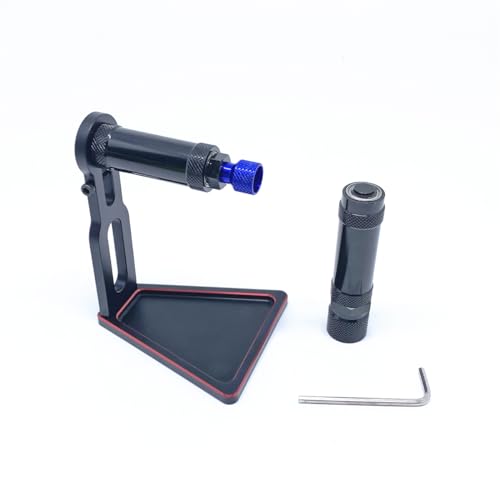
A tire balancer solves this by letting a mounted wheel spin freely on a low-friction hub. The heavy side settles at the bottom, showing exactly where a small amount of balancing clay or tape should go. Repeat the process a few times and the wheel spins true. The tool itself is simple, but the differences between models matter: hex size, scale range, bearing quality, and whether the balancer gives a simple yes-or-no reading or a precise digital measurement.
This guide explains how to choose a balancer, compares the strongest options available on Amazon, and answers the questions most drivers ask before buying one. Every product below is a dedicated RC tire balancer, not a full-size automotive machine, so each one is built for the wheels RC drivers actually run.
How to Choose an RC Car Tire Balancer
Match the Hex Size to Your Wheels
RC wheels mount on hex hubs, and the two most common sizes are 12mm and 17mm. Most 1/10 scale touring cars, buggies, and short course trucks use 12mm hexes, while most 1/8 scale buggies, truggies, and monster trucks use 17mm. Some large-scale cars use 24mm hexes. Before buying, check the hex size on your cars. A balancer that covers both 12mm and 17mm hexes is the safest choice if you run more than one scale, and it avoids buying a second tool later.
Check the Scale Range
Balancers are usually rated for specific scales, most often 1/10 and 1/8. A stand built for 1/10 wheels may not have the clearance or strength for a heavy 1/8 truggy tire, while a balancer made for large wheels can be awkward with small, light touring car wheels. Look for a stated scale range that includes every car you plan to balance, and pay attention to whether larger-scale adapters are included or sold separately.
Look for Smooth, Low-Friction Bearings
The whole job of a balancer is to let the wheel turn with as little resistance as possible. If the hub drags, the heavy spot will not settle in the right place and the reading will be wrong. Quality ball bearings in the hub are the single most important feature of a passive stand balancer. Machined aluminum construction also helps, because a stiff, flat base keeps the hub level and prevents the stand from flexing under a heavy wheel.
Passive Stand or Digital Balancer
There are two main types. A passive stand balancer is a simple metal stand with a bearing hub: mount the wheel, spin it, watch where it stops, and add clay to the light side. It is affordable, needs no power, and is easy to carry to the track. A digital balancer uses a load cell and a motor to measure the imbalance and tell you how much weight to add and where. Digital models are far more precise and faster for race-day work, but they cost much more and need a power supply. Casual drivers and bashers are usually well served by a passive stand, while competitive racers who chase tenths of a second will get more from a digital unit.
Stability and Portability
A balancer that tips over easily is useless. A wide, flat base and enough weight to stay planted matter, especially when balancing large, heavy 1/8 scale wheels. At the same time, many drivers want a tool that fits in a pit bag. Compact stands fold or break down for travel, while digital balancers often come with a carrying case. Think about whether the tool will live on a workbench or travel to the track every weekend.
Balancing Material
Most balancers work with balancing clay, putty, or adhesive wheel weights. Some kits include a small container of clay, which is convenient for a first-time buyer. Clay is easy to press onto the inside of a wheel and easy to remove if the balance changes after a tire wears. Adhesive tape weights are cleaner for on-road cars where clay could shift at high speed. Check what is included so you are not stuck waiting on a second order.
Top Picks
1. SkyRC Precision Digital Tire Balancer — Best Overall for Racers
The SkyRC Precision Digital Tire Balancer is the most advanced option in this roundup, and it is the pick for drivers who want a number instead of a guess. It is a Bluetooth-enabled digital balancer with a 2.8-inch TFT display, a precision stepper motor, and a load cell rated by the manufacturer to 0.35 grams on 1/10 scale wheels and 0.5 grams on 1/8 scale wheels. That level of resolution is far beyond what a passive stand can show, and it is the reason this tool appeals to competitive racers.
The balancer connects to a phone app over Bluetooth, so readings and guidance appear on a screen you can read at a glance. It runs on 12 to 18 volts DC, includes a 1/10 scale adapter, a 10-gram container of balancing putty, a DC power cable, and a carrying case. A 1/8 scale adapter is available separately, which is worth knowing before ordering if your fleet is mostly 1/8 scale.
There are a few practical points to weigh. The unit needs a DC power source, and an AC adapter is not included in the box, so bench use requires a suitable power supply. It is also a larger and heavier tool than a passive stand, at around 800 grams, so it is more of a pit-table instrument than a pocket tool. Some users have also noted that it is sized for 1/10 buggy tires rather than wide short course tires, so checking fitment for your specific tire type is sensible. Even so, for a racer who balances tires often and wants repeatable, measurable results, this is the strongest balancer available in this guide.
Best for: Competitive 1/10 and 1/8 racers who want precise, repeatable digital readings.
View the SkyRC Precision Digital Tire Balancer on Amazon
2. KingVal 12MM 17MM Metal RC Car Wheel Rim Tyre Balancer — Best Value Stand
The KingVal 12MM 17MM Metal RC Car Wheel Rim Tyre Balancer is a straightforward passive stand balancer, and it is the best-value pick for drivers who want a simple, durable tool at a modest cost. It is built from metal, covers both 12mm and 17mm hex wheels, and is listed as compatible with cars from 1/6 to 1/10 scale, including popular models such as the Axial SCX6 and Arrma Kraton. That wide stated range makes it a good single purchase for a mixed fleet.
The design follows the classic stand formula: a stable base, a central hub, and a free-spinning mount that lets the heavy side of the wheel settle at the bottom. At roughly 136 grams it is light enough to toss in a pit bag, and its compact footprint takes up little space on a workbench. There is no assembly beyond mounting the wheel, no power supply to worry about, and nothing to calibrate.
A passive stand cannot tell you exactly how many grams to add, so balancing takes a little patience: spin, mark the heavy spot, add a small amount of clay opposite, and repeat until the wheel stops in random positions. For bashers and club racers, that is usually enough, and the money saved over a digital unit can go toward tires or parts. The main limitation is precision rather than function. If you need gram-level numbers, this is not the tool for that job. But as a first balancer, or as a backup to keep in the track bag, it is hard to fault.
Best for: Bashers, beginners, and drivers who want an affordable, portable stand that covers 12mm and 17mm wheels.
View the KingVal 12MM 17MM Metal RC Car Wheel Rim Tyre Balancer on Amazon
Comparison Table
| Feature | SkyRC Precision Digital Tire Balancer | KingVal 12MM 17MM Metal Tyre Balancer |
|---|---|---|
| Balancer type | Digital, Bluetooth, load cell | Passive stand |
| Hex sizes | 1/10 adapter included; 1/8 adapter sold separately | 12mm and 17mm |
| Scale range | 1/10 and 1/8 | 1/6 to 1/10 |
| Measurement | Digital readout, 0.35 g (1/10), 0.5 g (1/8) | Visual, spin-and-settle |
| Power needed | Yes, 12–18 V DC | No |
| Balancing putty included | Yes, 10 g container | Not listed |
| Carrying case | Yes | Not listed |
| Weight | About 800 g | About 136 g |
| Best for | Competitive racing | Everyday bashing and club racing |
How to Balance an RC Tire
Balancing a tire is simple once the routine is familiar. Start with a clean, dry wheel and mount it on the balancer so it sits level. Give it a gentle spin and let it stop on its own. The heavy side will settle at the bottom. Mark that spot, then add a small amount of balancing clay or a tape weight to the inside of the wheel directly opposite the heavy side. Spin the wheel again. If the same spot still drops to the bottom, add a little more weight. If a different spot drops, you have added slightly too much, so remove a small amount. When the wheel stops in a different random position after several spins, it is balanced.
A few habits make the process easier. Work on a flat, level surface, because a tilted balancer gives false readings. Keep the bearings clean and free of dirt, since grit adds drag and hides small imbalances. Balance tires after gluing and before a race day, not in a rush at the track. And re-check balance after a hard crash or after a tire has worn significantly, because the weight distribution changes as rubber wears away.
Frequently Asked Questions
Do RC car tires really need balancing?
For casual backyard driving, an unbalanced tire is often unnoticeable. At higher speeds, on smooth surfaces, and in racing, imbalance causes vibration, uneven wear, and handling that feels unstable. The faster the car and the smoother the track, the more balancing matters. Most racers balance their tires, while many bashers only bother when vibration becomes obvious.
What is the difference between a tire balancer and a wheel balancer?
In RC use the two terms describe the same tool. The balancer holds a fully assembled wheel and tire, spins it freely, and reveals the heavy spot. Full-size automotive machines are also called wheel balancers, but the RC versions in this guide are small bench or handheld tools made for model wheels.
Can one balancer work for both 1/10 and 1/8 scale cars?
Yes, if it is rated for both scales and includes the right hex adapters. The two picks in this guide both cover 1/10 and 1/8 running, though the SkyRC needs a separate adapter for 1/8 wheels. Always confirm the hex size and the tire diameter your balancer can accept before ordering.
Should I use balancing clay or tape weights?
Both work. Clay is easy to apply, adjust, and remove, which makes it ideal for off-road tires where balance changes as the tire wears. Adhesive tape weights stay put better at very high speeds and give a cleaner finish inside on-road wheels. Many drivers keep both on hand and choose based on the car.
How often should I re-balance my RC tires?
Check balance whenever you mount a new set of tires, after a hard impact that could have shifted a foam insert or torn a glued bead, and whenever you notice new vibration at speed. Tires that are wearing unevenly are also worth re-checking. A quick spin on the balancer takes a minute and can save a set of tires.
Conclusion
The best RC car tire balancer depends on how seriously you race and how much precision you want. The SkyRC Precision Digital Tire Balancer is the strongest choice for competitive drivers, with Bluetooth connectivity, a digital display, and gram-level measurement that takes the guesswork out of balancing. The KingVal 12MM 17MM Metal Tyre Balancer is the smart pick for everyone else: a simple, sturdy, portable stand that covers the two most common hex sizes and handles the job at a modest cost.
Whichever type you choose, match the hex size and scale range to your cars, keep the bearings clean, and balance on a level surface. A few minutes with a balancer before race day means smoother runs, longer tire life, and a car that feels planted when it matters most.
Disclosure: As an Amazon Associate, we earn from qualifying purchases.
FAQ
Do RC car tires really need balancing?
What is the difference between a tire balancer and a wheel balancer?
Can one balancer work for both 1/10 and 1/8 scale cars?
Should I use balancing clay or tape weights?
How often should I re-balance my RC tires?
More from Amazon
Programs that pair well with the guide above. Offers and eligibility are set by Amazon and may change.
Free shipping on eligible items, Prime Video and more. Eligible new members can start with a free trial.
Start a Prime free trialA Prime membership for ages 18-24 with a trial period. Eligibility is set by Amazon.
See Prime for Young AdultsAudiobooks and podcasts to listen to on the go. Eligible new members can start with a free trial.
Try Audible freeAd-free music streaming. Eligible new subscribers can start with a free trial.
Try Music Unlimited freeAs an Amazon Associate we earn from qualifying purchases.