Key takeaways
- Match the charger to the chemistry and voltage. A flooded, AGM, and LiFePO4 battery may require different absorption, float, and cutoff settings.
- Use the correct charger output for the bank. A rough lead-acid guideline is a charger rated around 10–20% of the battery bank’s amp-hour capacity, subject to the battery maker’s specification.
- Install the main fuse close to the positive terminal and size cables for the current and cable run.
- Secure every battery against movement and protect terminals from accidental short circuits.
- Do not use a standard lead-acid charger on lithium unless the lithium manufacturer approves that charging profile.
- For engine alternators and lithium house banks, consider a compatible DC-to-DC charger or alternator-protection system.
The best marine batteries depend on your boat’s electrical demand: choose a starting battery for engine cranking, a deep-cycle battery for sustained electronics and trolling-motor use, or a dual-purpose battery when one battery must do both jobs.
Battery group size, reserve capacity, vibration resistance, chemistry, charging equipment, and available installation space matter more than a brand name alone. The right choice for an occasionally used runabout may be a conventional flooded lead-acid battery, while a frequently used fishing boat or liveaboard can justify AGM or lithium despite the higher purchase price.
Our top picks


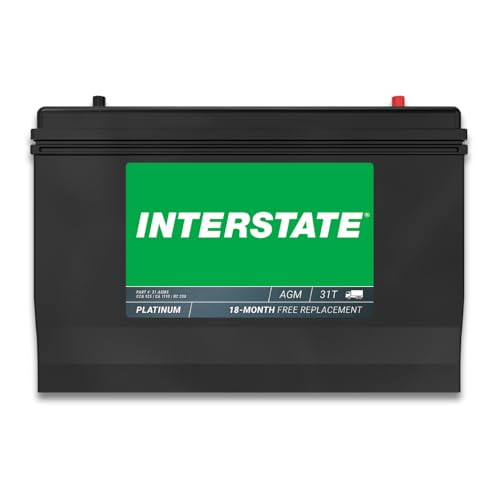
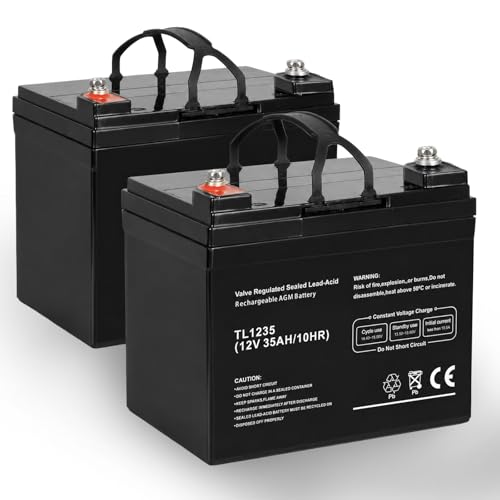
As an Amazon Associate we earn from qualifying purchases at no extra cost to you. Ratings are shown as listed on Amazon.
Quick picks by boating situation
| Boating situation | Best battery type | Useful target | Why it fits |
|---|---|---|---|
| Small outboard with few accessories | Starting, flooded lead-acid | 500–700 MCA; 70–100 minutes reserve capacity | Low initial cost and adequate cranking power |
| Runabout using stereo, chartplotter, and pumps | Dual-purpose AGM | 700–900 MCA; 100–150 minutes reserve capacity | Handles engine starts and moderate accessory loads |
| Trolling motor used for several hours | Deep-cycle AGM or lithium | 100–200Ah, depending on motor voltage and use | Designed for repeated discharge and recharge cycles |
| Frequent angling or tournament use | 12V or 24V lithium iron phosphate | 100–200Ah; battery-management system required | Low weight, high usable capacity, and long cycle life |
| Boat stored for long periods | AGM or flooded lead-acid with a maintainer | Correct charger plus a disconnect switch | Simple storage management and broad charger compatibility |
Starting, deep-cycle, and dual-purpose batteries compared
Starting batteries
A starting battery uses many thin plates to provide a large burst of current for a few seconds. It is the appropriate choice for an outboard or sterndrive engine whose battery primarily starts the motor and runs accessories while the alternator is operating.
Starting batteries are rated using marine cranking amps (MCA), measured at 32°F, rather than only cold-cranking amps (CCA), which are measured at 0°F. Follow the engine manufacturer’s minimum rating. More cranking power is useful in cold weather or with a high-compression engine, but an oversized battery still must physically fit and be compatible with the boat’s cables and hold-down.
Deep-cycle batteries
Deep-cycle batteries use thicker plates and are built to deliver steady current over a longer period. They suit electric trolling motors, refrigerators, lighting, inverters, fish finders, and other loads that can discharge a battery substantially before recharging.
Reserve capacity is especially useful for comparing lead-acid batteries. It indicates how many minutes a fully charged battery can deliver 25 amps before reaching its specified cutoff. It is not the same as amp-hours, and real runtime varies with temperature, battery age, wiring losses, and discharge rate.
Dual-purpose batteries
Dual-purpose batteries compromise between starting power and cycling ability. They are practical when a boat has only one battery compartment or when accessory loads are modest. They are not a substitute for a dedicated house bank on a boat with refrigeration, an inverter, large stereo amplifiers, or a powerful trolling motor.
If reliability is critical, separate the jobs: use a starting battery for the engine and a deep-cycle battery for house loads. A battery switch, automatic charging relay, or compatible DC-to-DC charging system can help keep the starting battery protected.
Group size, capacity, and fit
Battery group numbers describe the case dimensions, terminal arrangement, and sometimes general capacity. Common marine sizes include Group 24, Group 27, and Group 31. Dimensions vary by manufacturer, so treat the group number as a starting point rather than a guarantee of fit.
| Typical group | Approximate dimensions (L × W × H) | Typical lead-acid weight | Common capacity range | Typical use |
|---|---|---|---|---|
| Group 24 | 10.3 × 6.8 × 8.9 in | 40–55 lb | 70–85Ah | Small starting or dual-purpose battery |
| Group 27 | 12.1 × 6.8 × 8.9 in | 50–65 lb | 85–105Ah | Medium house or trolling-motor battery |
| Group 31 | 13.0 × 6.8 × 9.4 in | 60–75 lb | 95–125Ah | Higher-capacity house or deep-cycle battery |
Measure the tray’s length, width, height, terminal clearance, and hold-down position. A battery that fits the compartment but cannot be secured against movement is not a safe installation. Lithium batteries can be substantially lighter, but their dimensions, terminal locations, and required clearance may differ from the lead-acid battery they replace.
AGM versus flooded lead-acid versus lithium
Flooded lead-acid
Flooded batteries generally offer the lowest purchase price, often about $100–$220 for common marine sizes. They tolerate ordinary marine charging systems when properly maintained, but they can vent gas, spill electrolyte, corrode nearby hardware, and require inspection of electrolyte levels if they are serviceable.
AGM
Absorbent glass mat (AGM) batteries immobilize the electrolyte and are sealed for normal use. They resist vibration better than many conventional flooded batteries, have low self-discharge, and can be installed in more positions, subject to the manufacturer’s instructions. Expect roughly $200–$450 for many 12-volt marine AGM batteries.
AGM is often the best middle ground for a boat that sees regular vibration, rough water, or long storage intervals. It still weighs substantially more than lithium and requires a charger with an AGM-appropriate profile.
Lithium iron phosphate
LiFePO4 batteries commonly cost about $700–$1,500 or more for a 100Ah marine-capable unit. They weigh around 25–30 lb at 100Ah, compared with approximately 60–75 lb for a large lead-acid Group 31 battery. Their internal battery-management system should protect against overcharge, over-discharge, excessive current, and unsuitable temperatures.
Lithium capacity is more usable because it can generally be discharged more deeply than lead-acid without the same level of service-life penalty. However, lithium is not automatically a drop-in replacement: verify charger compatibility, alternator protection, low-temperature charging limits, fuse requirements, and the manufacturer’s installation instructions.
A simple runtime calculation
Suppose a 12-volt trolling motor averages 30 amps and runs for four hours:
30 amps × 4 hours = 120Ah required.
A lead-acid deep-cycle battery is commonly sized so that only about half of its rated capacity is regularly used. That suggests approximately a 240Ah lead-acid bank, often two 12V 120Ah batteries in parallel. A lithium bank might use approximately 80% of its rated capacity, so a 150Ah lithium battery would provide about 120Ah of practical energy under these assumptions.
This is an estimate, not a guarantee. Motor speed, wind, current, propeller condition, water temperature, battery age, and actual average draw can change the result substantially. Leave reserve capacity rather than sizing a battery to the exact calculated load.
Charging requirements and installation
- Match the charger to the chemistry and voltage. A flooded, AGM, and LiFePO4 battery may require different absorption, float, and cutoff settings.
- Use the correct charger output for the bank. A rough lead-acid guideline is a charger rated around 10–20% of the battery bank’s amp-hour capacity, subject to the battery maker’s specification.
- Install the main fuse close to the positive terminal and size cables for the current and cable run.
- Secure every battery against movement and protect terminals from accidental short circuits.
- Do not use a standard lead-acid charger on lithium unless the lithium manufacturer approves that charging profile.
- For engine alternators and lithium house banks, consider a compatible DC-to-DC charger or alternator-protection system.
Durability and ownership realities
Vibration and heat usually shorten battery life faster than a lack of advertised peak capacity. Loose hold-downs, corroded terminals, undersized cables, and chronic undercharging are common causes of early failure. Clean terminal corrosion with an appropriate battery-terminal cleaner, keep connections tight, and inspect cables for swollen insulation or green corrosion.
Lead-acid batteries may last roughly three to five years in demanding marine service, while well-managed AGM batteries can last longer. LiFePO4 batteries may deliver many more cycles, but their service life depends on temperature, charging limits, and the quality of the battery-management system. These are broad ownership ranges, not warranties.
For winter storage, fully charge lead-acid or AGM batteries and use a suitable maintainer, or follow the battery maker’s storage instructions. Lithium batteries should be stored at the manufacturer’s recommended state of charge and must not be charged below their specified temperature limit. Disconnecting a battery without first charging it is a common mistake that can leave a lead-acid battery permanently sulfated.
Bottom line
Choose a starting battery when engine cranking is the main job, a deep-cycle battery for sustained electrical loads, and a dual-purpose battery only when space or budget prevents separate banks. Flooded lead-acid is the value choice, AGM adds vibration resistance and convenience, and lithium delivers the lowest weight and greatest usable capacity when the boat’s charging system is compatible. Before buying, verify group-size dimensions, MCA, reserve capacity, terminal layout, charger settings, and the battery’s hold-down requirements.