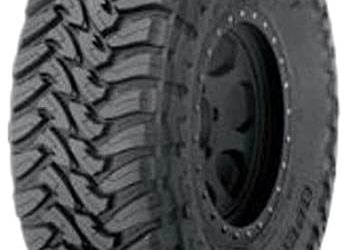
Our Short List of 3

- Best for: Lifted builds already set up for 37-inch tires that want strong load capacity without maximum unsprung weight.
- Size: LT37X12.50R17
- Load index: 124
- Load capacity: 3,527 lb
- Speed rating: Q

- Best for: Trucks on 18-inch wheels that split their off-road time between rock and mud and still tow or commute.
- Size: 35X12.50R18LT
- Load index: 118
- Speed rating: Q
- Construction: Armor Tek3 carcass

- Best for: Trailered, dedicated trail and competition-style rigs where maximum rock grip matters more than road life.
- Size: 40X13.50R17LT
- Load index: 115
- Speed rating: F
- Load range: B
All 3 Picks at a Glance
| Product | Specs | Action |
|---|---|---|
| Milestar Patagonia M/T-02 LT37X12.50R17 124Q |
| Check price on Amazon |
| Cooper Discoverer STT Pro 35X12.50R18LT 118Q |
| Check price on Amazon |
| Mickey Thompson Baja Boss X 40X13.50R17LT 115F |
| Check price on Amazon |
Key takeaways
- Four extreme off-road tires compared for mud, rock and deep ruts, with sizes, load ratings and sidewall specs taken from their Amazon listings.
Extreme off-road tires live past the point where all-terrains give up. They are the mud-terrain and maximum-traction tires built for axle-deep ruts, wet rock ledges and loose climbs, with tall tread blocks, open voids that clear mud instead of packing with it, and sidewalls armored against the sharp edges that end a trail day early. Choosing one is less about the brand on the sidewall and more about matching size, load rating and construction to the rig underneath them.
This roundup is for lifted trucks, Jeeps and dedicated trail builds that see serious terrain on purpose. Every tire below is a genuine extreme off-road tire, and the figures quoted — size, load index, ply rating, weight, sidewall construction — come from each tire’s own Amazon listing, so you can compare the four on hard numbers rather than on reputation.
Quick Picks
As an Amazon Associate we earn from qualifying purchases
| Product | Best for | Key spec from title |
|---|---|---|
| BFGoodrich Mud-Terrain T/A KM3 35×12.50R17/E 121Q | All-round extreme trail use on 17-inch wheels | 35×12.50R17, Load Range E |
| Milestar Patagonia M/T-02 LT37X12.50R17 124Q | 37-inch builds that watch unsprung weight | 37X12.50R17, load capacity 3,527 lb |
| Cooper Discoverer STT Pro 35X12.50R18LT 118Q | Mixed rock and mud on 18-inch wheels | 35X12.50R18LT, Armor Tek3 construction |
| Mickey Thompson Baja Boss X 40X13.50R17LT 115F | Maximum grip for trailered competition-style rigs | 40X13.50R17LT, sticky competition compound |
How to Choose
Tread voids and sidewall lugs do the real work
What separates an extreme tire from a mild mud-terrain is how it behaves once the tread is buried. Wide, open voids let the blocks bite, then fling mud and loose rock clear on the next rotation instead of spinning a slick, packed surface. Shoulder and sidewall lugs matter just as much: aired down, they extend the contact patch onto the sidewall, which is what pulls a rig up a rutted wall or across an off-camber ledge. When you compare listings, look for aggressive shoulder designs and reinforced sidewalls rather than a tread that only looks chunky in the center.
Load range and ply rating decide durability
The load range stamped on a listing is a durability statement as much as a capacity one. A Load Range E tire with a high load index tolerates the sharp rock strikes and low-pressure flexing that extreme trails dish out, and it carries a heavy, armored rig without overheating. Lighter Load Range D and C tires flex more easily at low pressure, which helps grip, but they ask more of the driver on sharp terrain. Match the rating to the vehicle’s actual axle weights, including bumpers, winches, racks and camping gear, not just the curb weight on the door sticker.
Diameter, width and gearing have to agree
Stepping from a 35-inch tire to a 37 or a 40 changes far more than ground clearance. Taller, wider rubber needs lift or trimming to clear at full lock and full flex, and it effectively raises the gearing, which dulls low-speed crawling and adds strain to the drivetrain on steep climbs. Width plays its own role: a 12.50 or 13.50 section width floats better over soft ground and spreads load on rock, but it can wander more on pavement. Pick the diameter your axles, brakes and gearing can honestly support, then choose the width that suits your terrain.
Highway manners are the honest trade-off
Every tire in this roundup gives something back on the road. Mud-terrain blocks hum at speed, wet-pavement grip is weaker than an all-terrain’s, and the Q and F speed ratings on these listings cap how fast the tire should ever be run loaded. Soft, grippy compounds wear faster with every highway mile. None of that makes these tires bad choices; it makes them specialized ones. If the rig drives to the trail, favor the options with stronger carcasses and more moderate sizing. If it arrives on a trailer, you can shop purely for grip and let the tow vehicle handle the road miles.
The 4 Best Options
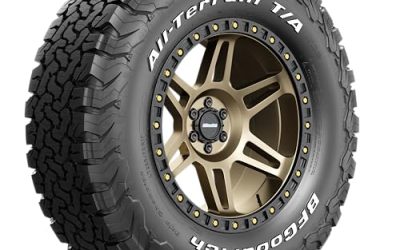
BFGoodrich Mud-Terrain T/A KM3 35×12.50R17/E 121Q
The KM3 is the reference point for this class: a full mud-terrain tire in the most common trail size there is, 35×12.50R17, carrying a Load Range E rating and a 121 load index. That combination suits heavy Jeeps and half-ton trucks that drive to the trail and then work hard on it. The listing weight of 74.3 pounds is honest for a tire with this much carcass, and the 12.5-inch section width gives a broad footprint when aired down. For a rig that needs one set of tires to handle mud, rock and the drive home, this is the balanced pick of the four.
Specs
- Size: 35×12.50R17/E 121Q
- Load index: 121
- Speed rating: Q
- Rim size: 17 inches
- Section width: 12.5 inches
- Item weight: 74.3 lb
- Manufacturer part number: 55079
Best for: Drivers who want one extreme tire for mixed mud and rock on a 17-inch setup, with Load Range E strength for a heavy rig.
Watch out for: The stiff E-rated carcass rides firmly on lighter vehicles, and the Q speed rating limits sustained loaded highway speed.
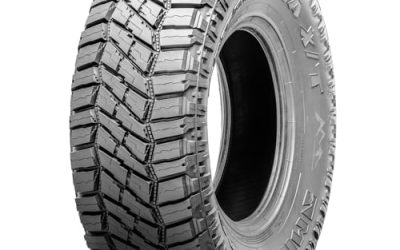
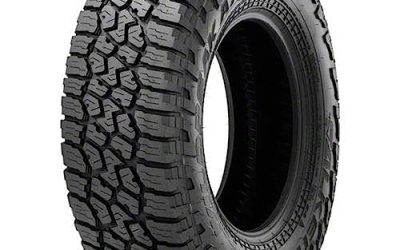
Milestar Patagonia M/T-02 LT37X12.50R17 124Q
- Best for: Lifted builds already set up for 37-inch tires that want strong load capacity without maximum unsprung weight.
- Size: LT37X12.50R17
- Load index: 124
- Load capacity: 3,527 lb
- Speed rating: Q
Lifted builds already set up for 37-inch tires that want strong load capacity without maximum unsprung weight.
The D load range is an 8-ply rating, so heavily loaded overland rigs should confirm it against their axle weights, and 37s demand the lift and gearing to match.
The Patagonia M/T-02 steps up to a 37-inch diameter while keeping weight in check: the listing shows 69 pounds, light for a tire this size, which eases the load on steering and suspension components. Its MILETECH sidewall uses a 3-ply design, and the 124 load index translates to a 3,527-pound load capacity per tire, the highest figure in this roundup. Raised outlined black letters finish a sidewall that is built to be seen working. For a lifted rig already geared for 37s, this is the way to get maximum diameter and capacity without the heaviest carcass in the class.
Watch out for: The D load range is an 8-ply rating, so heavily loaded overland rigs should confirm it against their axle weights, and 37s demand the lift and gearing to match.
Cooper Discoverer STT Pro 35X12.50R18LT 118Q
- Best for: Trucks on 18-inch wheels that split their off-road time between rock and mud and still tow or commute.
- Size: 35X12.50R18LT
- Load index: 118
- Speed rating: Q
- Construction: Armor Tek3 carcass
Trucks on 18-inch wheels that split their off-road time between rock and mud and still tow or commute.
The 118 load index is lower than the KM3 and Patagonia picks, so weigh a fully loaded rig before committing.
The STT Pro covers the 18-inch wheel crowd, a fitment many newer trucks leave the factory with and many owners keep. Cooper builds it around Armor Tek3 carcass construction, with a Rock Climber Sidewall design and the Mud Slingers 2.0 tread pattern named in the listing — a combination aimed squarely at alternating rock shelves and mud holes on the same trail. At 35 inches it asks less of gearing and clearance than the 37 and 40 in this roundup, which makes it the easiest fit here for a truck that tows during the week and climbs on weekends.
Watch out for: The 118 load index is lower than the KM3 and Patagonia picks, so weigh a fully loaded rig before committing.
Mickey Thompson Baja Boss X 40X13.50R17LT 115F
- Best for: Trailered, dedicated trail and competition-style rigs where maximum rock grip matters more than road life.
- Size: 40X13.50R17LT
- Load index: 115
- Speed rating: F
- Load range: B
Trailered, dedicated trail and competition-style rigs where maximum rock grip matters more than road life.
The sticky compound wears quickly on pavement and the F speed rating rules out highway use — plan on trailering, and expect serious clearance work for a 40-inch tire.
The Baja Boss X is the extreme end of extreme: a 40-inch tire with a sticky competition compound, built to grab rock at low pressure rather than to survive highway miles. The listing’s F speed rating and B load range tell the story plainly — this is a specialized tire for dedicated rigs, the kind that arrive at the trailhead on a trailer and spend their lives aired down. The 13.50-inch section width puts a huge footprint on the ground, and the soft compound conforms to ledges in a way a road-rated mud-terrain cannot. Nothing else in this roundup plays the same game.
Watch out for: The sticky compound wears quickly on pavement and the F speed rating rules out highway use — plan on trailering, and expect serious clearance work for a 40-inch tire.
Which One Fits Your Situation
Your rig still commutes on weekdays
Choose the BFGoodrich KM3. Its Load Range E carcass and 121 load index handle a heavy daily-driven Jeep or truck, the 35-inch size keeps gearing and braking close to stock behavior, and the mud-terrain tread still clears mud properly when the weekend comes. It is the least specialized tire here, which is exactly what a dual-purpose rig needs.
You run 37s and watch every pound
Choose the Milestar Patagonia M/T-02. A 37-inch tire at a listed 69 pounds is unusually light, and the 3,527-pound load capacity per tire is the strongest in this group. If your build is already lifted and geared for 37s, it adds diameter and clearance without the steering and braking penalty a heavier 37 would bring.
Your wheels are 18-inch and trails mix rock with mud
Choose the Cooper Discoverer STT Pro. It is the only 18-inch fitment in this roundup, and its Armor Tek3 construction with Rock Climber Sidewalls is aimed at the rock-and-mud mix most regional trails actually serve. At 35 inches it also keeps towing manners and gearing closer to standard than the bigger options.
Your truck is trailered to the trail
Choose the Mickey Thompson Baja Boss X. With a sticky competition compound and a 40-inch carcass, it exists for maximum grip at low pressure on hard terrain. The F speed rating and fast-wearing compound stop mattering the moment the rig never sees highway miles, and on rock it offers traction none of the road-rated picks can match.
Common Mistakes
- Buying diameter before checking gearing: a 37 or 40 on stock gears crawls poorly and strains the transmission on climbs.
- Ignoring load index: a tire rated below the rig’s loaded axle weight runs hot and fails early, whatever its tread looks like.
- Running trail pressure on the highway: low pressure builds heat fast at speed and can destroy a sidewall in miles.
- Mixing one extreme tire with worn all-terrains: mismatched diameters and grip levels confuse traction control and strain the driveline.
- Judging by tread looks alone: carcass construction and sidewall design decide trail survival more than block shape does.
Frequently Asked Questions
Are extreme off-road tires safe to drive on the highway?
They are legal and usable, but they are compromises. The tires here carry Q or F speed ratings, which cap the speed they should sustain under load, and mud-terrain tread grips wet pavement less confidently than an all-terrain. Keep speeds moderate, respect the rating on the sidewall, and treat the Baja Boss X as a trailer-only tire.
What is the difference between a mud-terrain and a maximum-traction tire?
Mud-terrains like the KM3, Patagonia M/T-02 and STT Pro balance trail aggression with some road usability. Maximum-traction tires such as the Baja Boss X push further with softer, stickier compounds and more specialized carcasses. They grip harder on rock, but wear faster and carry lower speed ratings, which is why they suit dedicated rigs.
How low can I air down these tires?
It depends on load, terrain and whether the wheels are beadlocks. Heavy rigs on standard wheels should stay conservative, since very low pressure risks unseating a bead on side loads. Lighter rigs can go lower. Whatever the setup, air back up before any road driving, because low pressure at speed is the fastest way to ruin a sidewall.
Do I need to regear for 37 or 40-inch tires?
In most cases, yes. Taller tires raise the effective gearing, which dulls crawl control, adds heat to the transmission and makes highway grades harder on the engine. Many owners also upgrade brakes and steering at the same time. A 35-inch tire is usually the largest step that stock gearing tolerates without complaint, and even that varies by vehicle.
FAQ
Are extreme off-road tires safe to drive on the highway?
What is the difference between a mud-terrain and a maximum-traction tire?
How low can I air down these tires?
Do I need to regear for 37 or 40-inch tires?
More from Amazon
Programs that pair well with the guide above. Offers and eligibility are set by Amazon and may change.
Free shipping on eligible items, Prime Video and more. Eligible new members can start with a free trial.
Start a Prime free trialA Prime membership for ages 18-24 with a trial period. Eligibility is set by Amazon.
See Prime for Young AdultsAudiobooks and podcasts to listen to on the go. Eligible new members can start with a free trial.
Try Audible freeAd-free music streaming. Eligible new subscribers can start with a free trial.
Try Music Unlimited freeAs an Amazon Associate we earn from qualifying purchases.