Key takeaways
- Searching for the best off road mud tires? Compare four mud-terrain tires for trucks, Jeeps, and SUVs, and learn how to pick the right size and tread.
The best off road mud tires are the difference between driving through a muddy trail and winching your way out of it. A mud-terrain tire uses tall, widely spaced tread blocks that bite into soft ground and shed mud as the wheel turns, while a standard all-terrain tire packs its tread with clay and spins uselessly. If your weekends involve rutted forest roads, clay pits, creek crossings, or gumbo mud after a rainstorm, a dedicated mud tire is the single most effective upgrade you can make to a truck, Jeep, or SUV.


That said, mud tires are a compromise. The same open tread that claws through mud hums on the highway, wears faster on pavement, and grips poorly on ice. This guide explains how to choose a mud tire that matches your vehicle and your driving mix, then compares four proven mud-terrain models that are listed on Amazon: the BFGoodrich Mud-Terrain T/A KM3, the Nitto Trail Grappler M/T, the Toyo Open Country M/T, and the Cooper Discoverer STT Pro. Every Amazon listing below covers one tire size only, so confirming your size, load range, and speed rating before ordering is essential.
How to Choose
1. Match the tire to your real driving mix
Be honest about how much of your driving happens off pavement. A mud tire makes sense when a meaningful share of your miles is on unpaved surfaces, or when getting stuck would strand you far from help. If your truck spends most of its life commuting and only sees a gravel driveway, an aggressive all-terrain tire will serve you better and last longer. Mud tires reward drivers who actually use them in mud, rocks, and loose dirt.
2. Get the size right
Tire size is not a suggestion. Check the size printed on your current tires, the placard on the driver-side door jamb, and your owner’s manual. Going larger changes ground clearance, gearing, speedometer accuracy, and turning clearance, and oversized tires can rub on fenders, suspension parts, and frame rails. If you upsize, confirm that your wheels, lift, and wheel wells can accept the new dimensions. Every pick in this guide is listed in one specific size, and the same model is sold in many other sizes, so match the listing to your vehicle.
3. Understand load range and load index
Load range tells you how much weight a tire can carry and how stiff its construction is. A half-ton pickup and a heavy diesel truck need very different load capacities. The load index number and the letter rating on the sidewall must meet or exceed what your vehicle requires. Underrated tires overheat, wear unevenly, and can fail under load, especially when towing or carrying a full bed.
4. Read the speed rating
Most mud-terrain tires carry a Q speed rating, which corresponds to a maximum sustained speed of 99 miles per hour. That is plenty for trail use and legal highway driving, but it is a real limit, not a decoration. If you regularly cruise at high highway speeds for long stretches, respect the rating and keep your tires properly inflated.
5. Look at tread design and self-cleaning
Mud tires clear mud through wide voids between tread blocks and features such as raised bars between the lugs that push mud out as the tire rolls. Look for chunky, alternating shoulder lugs that dig in when the tire is aired down or the vehicle is leaning, and for stone ejectors that keep rocks from lodging in the tread. A tire that cannot shed mud becomes a slick in short order.
6. Check sidewall strength
Trail hazards live at the sidewall: sharp rocks, stumps, and ruts. A three-ply sidewall resists punctures and cuts better than a two-ply design, and raised sidewall lugs add both protection and extra bite when the tire is aired down in deep ruts. If you run rocky trails, sidewall construction deserves as much attention as tread depth.
7. Accept the on-road trade-offs
Mud tires are louder than highway tires, and the hum grows as the tread wears. They also tend to wear faster on asphalt, ride firmer, and stop longer on wet pavement than a highway tire. Budget for rotation every few thousand miles, keep pressures correct, and get an alignment after installation. If you cannot live with the noise, a hybrid terrain tire is a middle ground worth considering.
Top Picks
BFGoodrich Mud-Terrain T/A KM3, 33×12.50R15
BFGoodrich Mud-Terrain T/A KM3 on Amazon
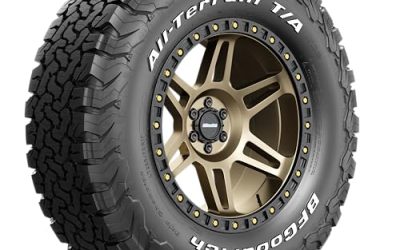
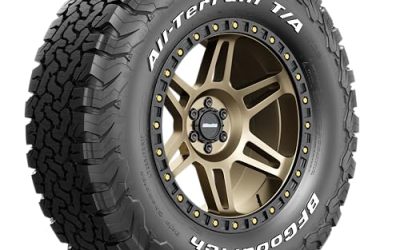
The KM3 is the benchmark mud tire in this group and the one most often recommended by off-road shops for Jeeps and light trucks. Its Terrain-Attack tread uses massive, widely spaced blocks that dig into soft ground, while Mud-Phobic bars between the lugs help throw mud clear so the tread keeps biting instead of packing solid. The sidewall uses CoreGard Technology, a split and bruise resistant rubber compound borrowed from BFGoodrich racing tires, which matters when a rock scrapes the side of a tire at low pressure.
This listing is the 33×12.50R15 size with a C load range and a 108Q rating, a classic fit for a Jeep Wrangler or a light truck running a modest lift. The KM3 is known for holding up well on rocks as well as mud, and its tread is tougher than the previous generation, with less chunking on sharp terrain. On the road it is louder than an all-terrain tire, and like every tire here it gives up some wet-pavement grip, so keep speeds sensible in the rain.
Who it is for: Jeep and light-truck owners who want a proven, hard-wearing mud tire for mixed trail use and who run a common 33-inch size.
Caveats: This listing is for one tire in one size only. Confirm the 33×12.50R15 size fits your wheels and wheel wells before ordering. Tires arrive unmounted, so mounting and balancing are extra, and the KM3 is louder on the highway than a highway or all-terrain tire.
Nitto Trail Grappler M/T, 285/75R17
Nitto Trail Grappler M/T on Amazon
The Trail Grappler is the quieter, more road-mannered member of this group, which is why it shows up on so many daily-driven trucks. Its variable-pitch tread pattern keeps highway hum lower than most mud tires, while the aggressive block pattern and 3-ply sidewall still deliver strong grip in mud and on rocks. Nitto gives the tire two different sidewall designs, so you can choose which look faces outward. The thick rubber and reinforced shoulder lugs help it resist cuts on rocky trails.
This listing is the 285/75R17 size, roughly a 34-inch tire, with a 121Q rating. That size suits full-size trucks and larger SUVs, including many Silverado, F-150, Ram, and 4Runner builds. Owners commonly report that the Trail Grappler lasts longer on pavement than harder-compound mud tires, which helps offset its higher cost per tire over time.
Who it is for: Truck owners who drive to the trail and want a mud tire that stays livable on the highway, and drivers who value tread life alongside off-road grip.
Caveats: This listing covers a single tire in the 285/75R17 size. The Trail Grappler is still a mud tire, so it is noisier than an all-terrain tire and its wet-road grip drops as the tread wears. Verify load rating against your truck’s requirements before ordering.
Toyo Open Country M/T, 37×14.50R15
Toyo Open Country M/T on Amazon
The Open Country M/T is built for big trucks and serious trail rigs. Its hook-shaped tread blocks and open, scalloped shoulder blocks claw through deep mud, while stone ejectors in the tread grooves push out rocks that would otherwise lodge in the tread and chew up the rubber. The over-the-shoulder tread wraps onto the sidewall for extra traction when the tire is aired down and leaning into a rut, and the aggressive sidewall lugs double as protection against rock rash.
This listing is the large 37×14.50R15 size, which is a big tire meant for lifted trucks and Jeeps with substantial clearance, not a stock vehicle. A tire this wide and tall demands a lift, the right wheel width and offset, and a check for rubbing at full steering lock and full suspension compression. If your build supports it, the Open Country M/T is one of the most capable mud tires available, with a long record in both recreational wheeling and competition.
Who it is for: Owners of lifted trucks and trail rigs running 37-inch tires who need maximum mud and rock traction and have the clearance to fit it.
Caveats: This is a very large tire in a single listed size. Do not order it for a stock-height vehicle. Confirm fitment, gearing, and braking with your build, and remember that tires of this size add unsprung weight and rolling resistance that affect fuel use and acceleration.
Cooper Discoverer STT Pro, LT265/75R16
Cooper Discoverer STT Pro on Amazon
The Discoverer STT Pro is Cooper’s most aggressive off-road tire, and it is the value pick of this group. Its Armor-Tek3 carcass construction adds a third ply for puncture resistance, while alternating shoulder lugs and mud scoops on the shoulder help the tire dig and clean itself in soft ground. Stone ejector ribs between the tread blocks keep debris moving out of the grooves. The tread compound is formulated to resist cutting and chunking on rocks, and the tire is known for strong grip in mud, dirt, and loose gravel.
This listing is the LT265/75R16 size with a 123/120Q rating, a common fit for midsize trucks and older full-size trucks, including Tacomas, Colorados, and similar rigs. It is a solid choice for a work truck that also sees weekend trails, since the STT Pro holds up to heavy loads and rough use without the premium cost of some rivals.
Who it is for: Midsize truck owners and budget-conscious buyers who want a tough, aggressive mud tire without paying the highest price in the category.
Caveats: This listing is one tire in the LT265/75R16 size only. The STT Pro is loud on the highway and wears faster than a highway tire if it spends most of its life on pavement. Confirm the load index suits your truck, especially if you tow.
Comparison Table
| Tire | Listed size | Load and speed rating | Sidewall | Best for |
|---|---|---|---|---|
| BFGoodrich Mud-Terrain T/A KM3 | 33×12.50R15 | C, 108Q | CoreGard bruise resistant rubber | Jeeps and light trucks, mixed trails |
| Nitto Trail Grappler M/T | 285/75R17 | 121Q | 3-ply, dual sidewall designs | Daily-driven trucks, quieter highway use |
| Toyo Open Country M/T | 37×14.50R15 | Q rated | Aggressive sidewall lugs | Lifted rigs, maximum mud traction |
| Cooper Discoverer STT Pro | LT265/75R16 | 123/120Q | Armor-Tek3 3-ply carcass | Midsize trucks, value and toughness |
Which One Is Right for You?
Begin with your vehicle and your size. A Jeep on 33s points straight at the BFGoodrich KM3, while a midsize truck on 16-inch wheels points at the Cooper STT Pro. Full-size truck owners who drive to the trail will appreciate the Nitto Trail Grappler’s quieter ride and longer tread life, and owners of lifted rigs with clearance for 37-inch tires will get the most from the Toyo Open Country M/T.
Next, weigh your driving mix. If mud is a weekly event and highway miles are few, pick the most aggressive tire your vehicle can fit. If the truck is a daily driver that wheels on weekends, the Trail Grappler’s road manners are worth more than a small edge in deep mud. If budget matters and you need a tire that can take abuse on a work truck, the STT Pro is hard to beat.
Finally, remember that no mud tire is a substitute for correct size, correct pressure, and regular rotation. Buy the right size, get a professional alignment after installation, and rotate on schedule. A well-maintained mud tire will last longer and grip better than a neglected premium one.
Frequently Asked Questions
Are mud tires safe to drive on the highway?
Yes, mud tires are legal and safe for highway use when they are the correct size and load rating for your vehicle, properly inflated, and in good condition. They are louder than highway tires and their wet-pavement stopping distances are longer, so drive with extra following distance in the rain and respect the Q speed rating.
How long do mud tires last?
Tread life depends on the compound, your driving mix, alignment, and rotation schedule. A mud tire used mostly on pavement wears faster than one used mostly off road, and aggressive driving on asphalt shortens life further. Regular rotation and correct pressure are the two habits that most extend the life of a mud tire.
Can I run mud tires in winter?
Mud tires handle deep snow reasonably well because their open tread digs in, but they grip poorly on ice and packed snow, and most mud tires do not carry the three-peak mountain snowflake symbol. If you drive on icy winter roads, a dedicated winter tire is a safer choice for the cold months.
Do I need to air down mud tires off road?
Airing down increases the contact patch and lets the tire conform to rocks and ruts, which improves traction and ride comfort on the trail. It also increases the risk of debeading a tire at very low pressure, so use a pressure appropriate to your tire and terrain, carry a way to air back up, and never drive at highway speed on aired-down tires.
Disclosure: As an Amazon Associate, we may earn from qualifying purchases.
FAQ
Which One Is Right for You?
Are mud tires safe to drive on the highway?
How long do mud tires last?
Can I run mud tires in winter?
Do I need to air down mud tires off road?
More from Amazon
Programs that pair well with the guide above. Offers and eligibility are set by Amazon and may change.
Free shipping on eligible items, Prime Video and more. Eligible new members can start with a free trial.
Start a Prime free trialA Prime membership for ages 18-24 with a trial period. Eligibility is set by Amazon.
See Prime for Young AdultsAudiobooks and podcasts to listen to on the go. Eligible new members can start with a free trial.
Try Audible freeAd-free music streaming. Eligible new subscribers can start with a free trial.
Try Music Unlimited freeAs an Amazon Associate we earn from qualifying purchases.