Our Short List of 3

- Best for: Drivers who want front and rear parking cover with sharp front footage, with a 4K front camera for number plates and a 1080p rear camera covering the back of the car for parking incidents.
- Brand: ROVE
- Model: R2-4K DUAL
- Front camera: 4K upscaled
- Rear camera: 1080p
- Best for: Rideshare drivers and owners who want three-channel cover with capacitor power, covering the front, the cabin, and the rear at once with a 24-hour parking mode that watches the car for a full day.
- Brand: Vantrue
- Model: N4
- Front camera: 4K
- Cabin camera: 1440p

- Best for: Drivers who want simple, low-power parking protection with a single camera, with an intelligent parking mode that records only on motion or impact and a G-sensor that saves clips automatically, without a complex installation.
- Brand: Nextbase
- Model: 222
- Resolution: 1080p
- Parking mode: intelligent parking mode
All 3 Picks at a Glance
| Product | Specs | Action |
|---|---|---|
| ROVE R2-4K DUAL |
| Check price on Amazon |
| Vantrue N4 |
| Check price on Amazon |
| Nextbase 222 |
| Check price on Amazon |
Our Top Picks
 ROVE R2-4K DUAL Dash Cam Front and RearBus, Car, Minivan, SUV, TruckUSB, Wi-Fi1080p, 2160pCheck on Amazon
Pros & cons
- Sony STARVIS 2 sensor improves low-light footage
- Dual-band WiFi enables faster app downloads
- 128GB card and GPS tracking come included
- Full 24-hour parking mode needs a separate hardwire kit
- Setup involves mounting both front and rear cameras
A dash cam that watches the car while it is parked is only useful if the car still starts in the morning, and that is where most parking-mode setups go wrong. A camera left running on the car battery will drain it, sometimes in a single night, and a flat battery turns a security feature into a breakdown. The cameras that do this well use a low-power parking mode, a hardwire kit with a low-voltage cutoff, or a capacitor instead of a battery. The real decision is how the camera behaves when the engine is off.
This guide is for drivers who want parking protection without a flat battery, and for anyone comparing dash cams before choosing one. Each camera below was picked from the names and specifications on its Amazon page, with attention to parking mode, power draw, and how the camera protects the car battery. The basis for each pick is stated plainly: only cameras whose listings describe parking-mode behaviour or capacitor power are included.
Quick Picks
As an Amazon Associate we earn from qualifying purchases
| Product | Best for | Key spec from title |
|---|---|---|
| ROVE R2-4K DUAL | Front and rear parking cover | 4K front camera |
| Vantrue N4 | Three-channel cover with capacitor power | 4K front camera |
| Nextbase 222 | Simple parking protection | 1080p camera |
How to Choose
Parking mode and how it draws power
Parking mode is the feature that matters most for battery life, since it sets how much power the camera uses while the car sits. Some cameras record continuously in parking mode, which drains a battery quickly, while others record only when motion or a bump is detected, which uses far less power. A time-lapse parking mode is another low-power option, since it takes a frame every second or so instead of recording full video. Check the listing for which parking modes the camera supports, and look for one that wakes on motion or impact.
Hardwire kits and low-voltage cutoff
A hardwire kit connects the dash cam to the car’s fuse box so it can run in parking mode, and a low-voltage cutoff is the part that protects the battery. The cutoff watches the battery voltage and switches the camera off when the voltage drops to a set level, so the car still has enough charge to start. Without a cutoff, a hardwired camera will keep drawing power until the battery is flat. When choosing a kit, check that it includes a low-voltage cutoff and that the cutoff level can be adjusted, since different cars and batteries need different settings.
Capacitor vs battery power
Dash cams use either a capacitor or a small battery to keep running for a few seconds after power is cut, and the difference matters for battery health and for hot climates. A capacitor charges and discharges quickly, handles heat well, and does not hold a charge that could drain the car battery. A battery-powered camera holds a small charge that lets it save the last clip when power is cut, yet batteries degrade in heat and can swell in summer. For parking mode, a capacitor camera paired with a hardwire kit is the most battery-friendly combination.
Resolution and coverage vs power draw
Higher resolution and more cameras use more power, so coverage and battery life pull in opposite directions. A single front camera at 1080p uses the least power, while a dual front-and-rear setup at 4K uses the most, and a three-channel camera with a cabin view uses more still. The trade is worth making when the extra coverage matters, such as a rear camera for parking incidents or a cabin camera for rideshare work. A camera with a good image sensor can record clear footage at a lower resolution, which saves power.
The 3 Best Options
ROVE R2-4K DUAL
- Best for: Drivers who want front and rear parking cover with sharp front footage, with a 4K front camera for number plates and a 1080p rear camera covering the back of the car for parking incidents.
- Brand: ROVE
- Model: R2-4K DUAL
- Front camera: 4K upscaled
- Rear camera: 1080p
Drivers who want front and rear parking cover with sharp front footage, with a 4K front camera for number plates and a 1080p rear camera covering the back of the car for parking incidents.
Parking mode needs a hardwire kit bought separately, so check that the kit includes a low-voltage cutoff and that the cutoff level can be adjusted for the car’s battery type before fitting the camera.
The ROVE R2-4K DUAL is a dual-channel camera with a 4K front camera and a 1080p rear camera, and its parking mode is its key feature for battery-conscious drivers. The front camera uses a STARVIS 2 IMX675 sensor, which records clear footage in low light, and the parking mode watches the car while it is parked. The listing states that parking mode needs a hardwire kit, so the camera should be paired with a kit that includes a low-voltage cutoff to protect the car battery. The 4K front resolution gives sharp detail on number plates.
Vantrue N4
- Best for: Rideshare drivers and owners who want three-channel cover with capacitor power, covering the front, the cabin, and the rear at once with a 24-hour parking mode that watches the car for a full day.
- Brand: Vantrue
- Model: N4
- Front camera: 4K
- Cabin camera: 1440p
Rideshare drivers and owners who want three-channel cover with capacitor power, covering the front, the cabin, and the rear at once with a 24-hour parking mode that watches the car for a full day.
Three channels use more power than one, so pair it with a hardwire kit that has a low-voltage cutoff, and set the cutoff conservatively so the car always has enough charge to start.
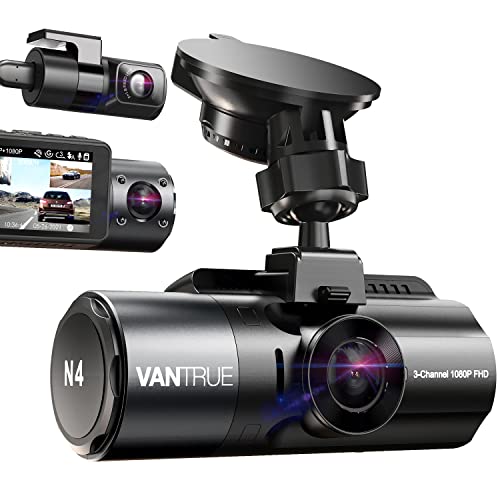
The Vantrue N4 is a three-channel camera with a 4K front camera, a 1440p cabin camera, and a 1080p rear camera, and its capacitor power is its key feature for battery health. A capacitor handles heat well and does not hold a charge that could drain the car battery. The listing describes a 24-hour parking mode, and the three channels cover the front, the cabin, and the rear at once. That coverage suits rideshare drivers, yet it uses more power than a single-channel camera, so a hardwire kit with a low-voltage cutoff is still the safe setup.
Nextbase 222
- Best for: Drivers who want simple, low-power parking protection with a single camera, with an intelligent parking mode that records only on motion or impact and a G-sensor that saves clips automatically, without a complex installation.
- Brand: Nextbase
- Model: 222
- Resolution: 1080p
- Parking mode: intelligent parking mode
Drivers who want simple, low-power parking protection with a single camera, with an intelligent parking mode that records only on motion or impact and a G-sensor that saves clips automatically, without a complex installation.
The single front camera does not cover the rear, so rear parking incidents will not be recorded, and drivers who need rear cover should choose a dual-channel camera instead for full parking protection.
The Nextbase 222 is a simple 1080p camera with an intelligent parking mode, and its simplicity is its main strength. The 1080p resolution uses less power than a 4K camera, which helps battery life, and the intelligent parking mode records when it detects motion or a bump rather than recording continuously. A G-sensor detects impacts and saves the clip automatically, so a parking incident is recorded even when the driver is away. The single-channel design keeps the power draw low and the setup simple, with no rear camera to wire.
Which One Fits Your Situation
Front and rear cover on a daily driver
For a daily driver that needs front and rear cover, the ROVE R2-4K DUAL is the right pick. Its 4K front camera records sharp detail, its rear camera covers the back, and its parking mode watches the car while parked. Pair it with a hardwire kit that includes a low-voltage cutoff, so parking mode runs safely.
Rideshare and complete cabin cover
Rideshare drivers should choose the Vantrue N4, since its three channels cover the front, the cabin, and the rear at once. The capacitor power handles heat well, and the 24-hour parking mode watches the car for a full day. Pair it with a hardwire kit with a low-voltage cutoff, since three channels use more power than one.
A simple camera for a car that sits for days
When a car sits parked for days at a time, the Nextbase 222 is the safest choice. Its 1080p resolution and single channel keep the power draw low, and its intelligent parking mode records only on motion or impact. Fit it with a hardwire kit that has a low-voltage cutoff, and set the cutoff conservatively.
Common Mistakes
- Running parking mode without a hardwire kit or a low-voltage cutoff, so the camera drains the battery overnight and the car will not start in the morning. A hardwire kit connects the camera to the fuse box, and the cutoff switches it off when the voltage drops, so fit both before leaving the camera to watch the car.
- Choosing a 4K three-channel camera for a car that sits for days, when a single 1080p camera would use far less power. Three channels and high resolution draw far more current, so match the camera to how the car is used and pick the simplest setup that still covers the driving being done and keeps the battery healthy.
- Leaving the camera on continuous recording in parking mode instead of motion or impact detection, which wastes power all night. A camera that records only when something happens can watch a parked car, while one that records continuously may flatten a battery overnight, so set the parking mode to wake on motion or impact and keep the battery healthy.
- Fitting a battery-powered camera in a hot car, where the battery degrades and can swell in summer heat. A capacitor handles heat well and does not hold a charge that could drain the car battery, so choose a capacitor model for a camera that stays in the car all year, especially in warm climates, and it lasts longer.
- Ignoring the memory card size, so the camera overwrites important parking footage before it is checked. A small card fills quickly when the camera records parking incidents, so fit a card large enough to hold several days of clips and check the footage regularly before the oldest clips are overwritten, so nothing important is lost.
Frequently Asked Questions
Will a dash cam drain my car battery?
A dash cam can drain a car battery if it runs in parking mode without protection. The safe setup is a hardwire kit with a low-voltage cutoff, which switches the camera off when the battery voltage drops to a set level. A camera with a motion or impact parking mode uses far less power.
What is a low-voltage cutoff on a dash cam?
A low-voltage cutoff is part of a hardwire kit that watches the battery voltage and switches the camera off when it drops to a set level. It protects the battery by stopping the camera before the battery is too flat. Check that the hardwire kit includes a cutoff and that the level can be adjusted.
Do I need a hardwire kit for parking mode?
Yes, parking mode needs a constant power source, and a hardwire kit connects the camera to the car’s fuse box so it can run with the engine off. A camera plugged into a cigarette lighter socket usually loses power when the engine is off. Always pair the kit with a low-voltage cutoff to protect the battery.
Is a capacitor dash cam better than a battery one?
A capacitor dash cam is better for hot climates and parking mode, since a capacitor handles heat well and does not hold a charge that drains the car battery. A battery-powered camera holds a small charge that saves the last clip when power is cut, yet batteries degrade in heat and can swell in summer.
FAQ
Will a dash cam drain my car battery?
What is a low-voltage cutoff on a dash cam?
Do I need a hardwire kit for parking mode?
Is a capacitor dash cam better than a battery one?
More from Amazon
Programs that pair well with the guide above. Offers and eligibility are set by Amazon and may change.
Free shipping on eligible items, Prime Video and more. Eligible new members can start with a free trial.
Start a Prime free trialA Prime membership for ages 18-24 with a trial period. Eligibility is set by Amazon.
See Prime for Young AdultsAudiobooks and podcasts to listen to on the go. Eligible new members can start with a free trial.
Try Audible freeAd-free music streaming. Eligible new subscribers can start with a free trial.
Try Music Unlimited freeAs an Amazon Associate we earn from qualifying purchases.