Key takeaways
- Find the best off road tires for suv adventures with our guide to all-terrain and mud-terrain tread, sidewall strength, sizing, load ratings and wet grip.
As an Amazon Associate we earn from qualifying purchases.
Choosing off-road tires for an SUV is a balance between trail grip and everyday road manners. A tire that claws through deep mud and grips slick rock can drone on the highway, wear fast, and use more fuel, while a quiet highway tire can leave a capable SUV spinning its wheels on the first muddy climb. The right choice depends on the worst ground you drive regularly, not the best-case trail you dream about, and on how much highway driving sits between you and the dirt.
This guide is written for weekend trail riders, overlanders heading far from pavement, daily drivers whose commute includes gravel and forest roads, and snow-belt SUV owners who need one set of tires to handle every season. It covers all-terrain and mud-terrain tread, sidewall strength, sizing and fitment, load ratings, road noise, wet and snow grip, and what to do about the spare, so you can pick a setup that suits your SUV and the ground you actually drive.
All-Terrain vs Mud-Terrain: The First Decision
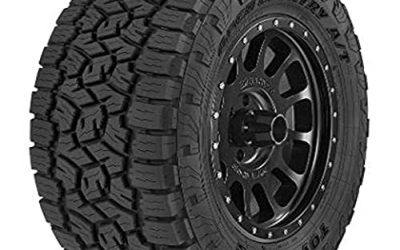
The first fork in the road is the tread family, and it shapes everything else about the tire. All-terrain tires sit in the middle: their tread blocks are large enough to bite into gravel, dirt, and light mud, yet tight enough to stay reasonably quiet and stable on pavement. For most SUV owners, this is the sweet spot, because the same vehicle that crawls a forest track on Saturday still has to commute, tow a small trailer, and handle a rainstorm on Monday. A good all-terrain tire also tends to last longer on the road than a mud-terrain, which matters when a set of four large tires is a serious purchase.
Mud-terrain tires go further in one direction. Their tread blocks are bigger, the gaps between them are wider, and the shoulders are more aggressive, so the tire can dig through deep mud, grip loose rock, and shed packed clay instead of turning into a slick. That ability comes with real trade-offs: more road noise, a firmer ride, faster wear on pavement, and weaker wet-road braking than a comparable all-terrain. Mud-terrain tires suit SUVs that spend a large share of their miles off pavement, or rigs built for rock crawling and deep mud, rather than a family SUV that visits a trail a few times a year.
Between the two sits the rugged-terrain or hybrid category, which borrows the open shoulders of a mud-terrain and the tighter centre tread of an all-terrain. These tires appeal to SUV drivers who want more bite than a standard all-terrain without accepting the full noise and wear penalty of a mud-terrain. They are a compromise in the honest sense: better than an all-terrain in loose ground, worse than a dedicated mud-terrain in the worst mud, and louder than an all-terrain on the highway. If your driving is genuinely split between rough tracks and long road miles, this middle ground deserves a close look.
Your SUV itself narrows the choice further. A body-on-frame SUV with a low-range transfer case and generous wheel wells can carry taller, heavier tires and make full use of them, while a unibody crossover with limited clearance and a car-based all-wheel-drive system gains more from a mild all-terrain in the stock size than from an aggressive mud-terrain that rubs, strains the driveline, and overwhelms the suspension. Match the tire to the vehicle you own and the ground you actually drive, and the rest of the decision gets much easier.
How to Choose
Match the Tread to Your Toughest Regular Terrain
Start with the ground that gives your current tires the most trouble, and buy for that ground rather than for the easiest trail on your list. Deep mud and soft clay call for wide voids between tread blocks, so the tire can clear itself with every rotation instead of packing solid and sliding. Rocky trails reward strong tread blocks and reinforced shoulders that resist chipping and cuts. Loose sand favours a wide footprint and a tread that floats rather than digs, which usually means airing down. Gravel and forest roads are the easiest case, and almost any all-terrain handles them well. Snow and ice are a separate question, but siping and a winter rating matter more there than block size.
Check Sidewall Strength and Load Rating
Sidewalls take the worst punishment off road, so their construction deserves as much attention as the tread. Rocks, stumps, and sharp ruts can slice a thin sidewall, and a tire that is tough across the tread but weak at the shoulder will let you down at the worst moment. Look for reinforced sidewalls, extra plies, and rim protectors. Light-truck tires, marked LT, carry stronger construction and higher load ratings than passenger tires marked P, which is why they are the usual pick for heavier SUVs, towing, and aired-down driving. Check the load index and load range against your SUV’s weight, including passengers, cargo, roof loads, and trailer tongue weight. Underrated tires flex, run hot, and wear early.
Get the Size and Fitment Right
Bigger looks capable, but fitment decides whether a tire works or causes trouble. Start with the size listed on your driver’s door placard, which is the size your SUV was engineered around. A taller tire raises ground clearance and improves approach over rocks and ruts, yet it can rub the fender, bumper, or suspension at full steering lock, throw off the speedometer, and dull acceleration. A wider tire spreads the load and grips loose surfaces, but it can also rub, hydroplane more easily in standing water, and follow ruts on the highway. Measure your clearance at full lock and full suspension travel before ordering, and check whether a small lift or trimmed liners are needed for the size you want.
Weigh Road Noise, Wet Grip and Snow Performance
Off-road ability means little if the tire makes driving miserable or unsafe in bad weather. Aggressive tread blocks generate a hum that grows with speed, and on a trip the difference between a quiet all-terrain and a loud mud-terrain can be the difference between arriving fresh and arriving exhausted. Test this against your tolerance and your passengers, because noise that seems fine on a weekend trip can wear thin on a daily commute. Wet grip matters as much: wide voids that clear mud also reduce the rubber in contact with wet pavement, so check how a tire behaves in rain when braking. For snow, look for the three-peak mountain snowflake symbol, which shows the tire passed a snow traction test.
Which One Fits Your Situation
Weekend Trail Rides in a Daily-Driven SUV
If your SUV commutes all week and hits forest roads and trails at the weekend, an all-terrain tire in the stock size or one size up is the natural fit. It keeps road noise near normal, preserves wet braking and handling, and gives you grip for gravel, dirt, ruts, and light mud. Keep the load rating matched to your vehicle, choose a tread with siping for rain, and spend the money you save on a compressor and a recovery board.
Overlanding and Multi-Day Remote Trips
Overlanders travel far from help, so durability and repairability matter more than grip. A strong all-terrain or rugged-terrain tire with reinforced sidewalls, a high load rating, and a tread that resists cuts and chunking is the right base, and it should be paired with a full-size spare, two spares on the longest routes. Carry a plug kit, a compressor, and a jack that works on uneven ground, and choose a tire size common enough to replace in a small town.
Snow, Rain and Year-Round Mixed Roads
SUV owners in wet or snowy regions need a tire that earns its keep in the worst weather, not just on the driest trail. An all-terrain tire with the three-peak mountain snowflake symbol, siping, and a compound that stays flexible in the cold is the best answer, because it handles snow and slush without giving up trail ability. Keep tread depth in view as the tire wears, since a worn all-terrain loses snow and wet grip before it looks bald.
Rock Crawling and Deep Mud Weekends
If your weekends mean rock gardens, deep ruts, and mud holes rather than gravel tracks, a mud-terrain or aggressive rugged-terrain tire earns its place. The open tread clears mud, the strong sidewalls resist rock cuts, and the tall blocks grip uneven stone. Accept the noise, the shorter road life, and the weaker wet braking as the cost of that ability, and check that your SUV has the clearance, gearing, and driveline strength to use the tire properly.
Common Mistakes
- Buying the tallest tire that fits the wheel well without checking for rubbing at full steering lock and full suspension compression, then discovering the problem on the first trail.
- Mixing tread types, sizes, or wear levels across the four corners, which confuses all-wheel-drive systems, unsettles handling, and wears the driveline unevenly.
- Ignoring the load rating and fitting a passenger-rated tire to a heavy SUV, then wondering why it flexes, runs hot, and wears out early under a full load.
- Fitting four new off-road tires and leaving a small, worn, or mismatched spare in place, which leaves you stranded or limited to a crawl when a trail puncture finally happens.
- Airing down for sand or rocks without a compressor, gauge, or plan to air back up, then driving home on soft tires that overheat, handle poorly, and risk coming off the rim.
Frequently Asked Questions
Can I put mud-terrain tires on a daily-driven SUV?
You can, but most daily drivers regret it. Mud-terrain tires are louder on the highway, wear faster on pavement, and brake less well in the wet than all-terrain tires, so the trade only pays off if a large share of your miles is off road. For a weekday commuter that trails at weekends, an all-terrain or rugged-terrain tire gives you most of the trail grip with better road manners.
Do I need a lift to fit bigger off-road tires?
Not always, but it depends on the size jump and your SUV. Many SUVs accept a tire one size larger than stock with no changes, while a taller or wider tire often needs a small lift, trimmed liners, or different wheel offset to clear the fenders and suspension. Check clearance at full steering lock and full compression before you buy. A lift changes handling, so fit it properly.
Should all five tires match, including the spare?
Yes, and this matters more on an SUV than on most vehicles. A matching full-size spare keeps your all-wheel-drive system happy, preserves ground clearance, and lets you drive out of a remote trail at normal speeds after a puncture. A smaller or different spare can strain the driveline and force a slow, careful exit, which is the last thing you need far from help.
Are all-terrain tires good enough for snow?
A good all-terrain tire with the three-peak mountain snowflake symbol handles snow and slush well for most drivers, and it is the best single-tire choice for an SUV that faces winter and trails alike. It is not equal to a dedicated winter tire in severe cold and ice, though, so drivers in the harshest climates should consider a separate winter set rather than asking one tire to do everything.
FAQ
Can I put mud-terrain tires on a daily-driven SUV?
Do I need a lift to fit bigger off-road tires?
Should all five tires match, including the spare?
Are all-terrain tires good enough for snow?
More from Amazon
Programs that pair well with the guide above. Offers and eligibility are set by Amazon and may change.
Free shipping on eligible items, Prime Video and more. Eligible new members can start with a free trial.
Start a Prime free trialA Prime membership for ages 18-24 with a trial period. Eligibility is set by Amazon.
See Prime for Young AdultsAudiobooks and podcasts to listen to on the go. Eligible new members can start with a free trial.
Try Audible freeAd-free music streaming. Eligible new subscribers can start with a free trial.
Try Music Unlimited freeAs an Amazon Associate we earn from qualifying purchases.