Key takeaways
- Five dual-battery fat tire e-bikes with hydraulic disc brakes for paved roads and gravel, compared on range, motor power, tires, and control.
Gravel changes a ride the moment pavement ends. Loose stone, washboard ruts, and wet corners ask more of tires and brakes than any city street, and a heavy e-bike with a full battery load needs stopping power that stays consistent when the surface does not. The five bikes in this guide pair dual-battery range with hydraulic disc brakes, so the same bike that cruises a paved bike path can slow with confidence on a gravel descent, and the range covers the distance between the two.


This guide is for riders who link paved roads with gravel lanes, farm tracks, and rail trails: commuters on mixed-surface routes, weekend explorers, and anyone whose favorite loop leaves the asphalt behind. Every model below was picked from its Amazon listing, with motor, battery, tire, and brake details drawn from the product page.
Quick Picks
As an Amazon Associate we earn from qualifying purchases.
| Product | Best for | Key spec from title |
|---|---|---|
| SMLRO F1 | Fast gravel descents and long mixed loops | Dual hydraulic disc brakes, 48V 44.8Ah dual battery |
| WakeWheel 1500W Cargo | Loaded gravel runs with gear or a passenger | Dual hydraulic disc brakes, 450 lb payload |
| WakeWheel 1000W Step Through | Easy mounting on mixed-surface commutes | Hydraulic disc brake, 48V 35Ah dual battery |
| ENGWE X26 | Folding storage with long mixed-surface range | Hydraulic disc brakes, 48V 29.2Ah dual battery |
| HappyRun G70 | Heavy cargo loops on pavement and dirt | Dual-piston hydraulic disc brakes, 48V 38Ah dual battery |
How to Choose
Hydraulic Brakes and Why They Matter on Gravel
Hydraulic disc brakes use fluid to move the pads, which gives a firmer lever, finer control, and the same stopping force in rain as in dry weather. On gravel that control matters, because a wheel that locks on loose stone slides instead of stopping, and a modulated squeeze keeps the tire rolling while speed bleeds off. Larger rotors shed heat on long descents, so look for 180mm rotors where the listing names them. Mechanical discs can work, but they ask for more hand effort and more frequent adjustment, and that gap grows on a heavy bike carrying a second battery.
Battery Range Across Two Surfaces
Gravel eats range. Soft stone and sand raise rolling resistance, so the same assist level that carries you 60 miles on pavement may only manage 40 on a gravel lane, and a headwind on an open stretch takes another cut. Dual batteries solve the planning problem rather than the physics: two packs give you the margin to ride out and back without hunting for a charger mid-route. Compare total amp-hours across both packs, then plan your route on the gravel number, not the pavement one, and keep a reserve for the ride home.
Tire Width, Tread, and Grip When the Surface Changes
Tire width decides how a bike behaves when the ground changes under it. A 4.0-inch tire spreads weight across loose gravel and sand, holding a line where a narrower tire wanders, while a 3.0-inch tire rolls quicker on pavement and still copes with hard-packed gravel. Tread depth matters too: widely spaced knobs bite into loose stone, and a tire that clears mud keeps its grip after a wet stretch. Drop the pressure a little for gravel days, since a softer tire conforms to the surface instead of skipping across it.
Suspension and Frame Control on Loose Ground
Suspension keeps the tire in contact with the ground, and contact is grip. A lockable front fork firms up for smooth pavement and opens for gravel, giving one bike two personalities, while a full suspension setup with a rear shock smooths washboard ruts that would otherwise shake the bike loose. Frame weight counts on mixed routes as well: a 90-plus lb dual-battery bike is steady on descents but harder to lift over a gate or into a vehicle. Check the payload figure too, since a loaded rack changes how the bike handles on loose corners.
The 5 Best Options
SMLRO F1
The SMLRO F1 leads this group on raw capability. Two 1000W motors deliver 2000W combined, and two removable 48V 22.4Ah packs add up to 48V 44.8Ah for a 70 to 120 mile pedal-assist range, so long loops that mix pavement with gravel stay inside one charge. Dual hydraulic disc brakes hold speed in check on loose descents, the lockable front fork firms up for paved stretches, and 26 by 4 inch tires keep grip where the surface turns to stone and sand. A 6061 aluminum frame and an IP65 water-resistant build round out a bike built for rough, wet routes.
Specs
- Dual 1000W motors, 2000W combined output
- Two removable 48V 22.4Ah batteries, 48V 44.8Ah total
- Up to 70–120 miles in pedal-assist mode
- 26 x 4.0 inch fat tires
- Dual hydraulic disc brakes
- Lockable front suspension fork, 80mm travel
- 6061 aluminum alloy frame
- Top speed up to 35 MPH
- 330 lb weight capacity
- IP65 water-resistant build
Best for: Fast, long mixed-surface loops with steep gravel descents.
Watch out for: At around 75 lbs, it is heavy to lift over gates or into a tall vehicle.
ASIN: B0DPFZT7KQ
WakeWheel 1500W Cargo
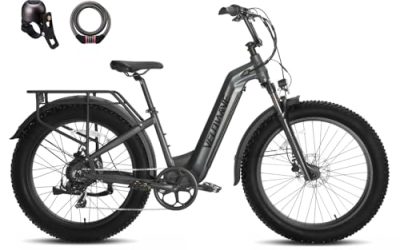
A loaded bike needs brakes that match its weight, and the WakeWheel cargo model pairs dual hydraulic disc brakes with a 450 lb payload. The 750W brushless motor peaks at 1500W with 80Nm of torque, the dual-battery option totals 48V 35Ah for up to 140 miles, and the rear rack, front basket, and carrier hoop move groceries, camping gear, or a passenger along the same route. The 20 by 3.0 inch fat tires roll well on pavement and hold their line on hard-packed gravel, while the lockable front fork and step-through frame suit riders from 4 feet 11 inches to 6 feet 5 inches.
Specs
- 750W brushless motor, 1500W peak, 80Nm torque
- Single 48V 17.5Ah or dual 48V 35Ah battery option
- Up to 70 miles with one pack, up to 140 miles with two
- 20 x 3.0 inch fat tires
- Dual hydraulic disc brakes
- Lockable aluminum hydraulic front suspension fork
- 450 lb payload capacity, rear rack holds up to 300 lbs
- 7-speed shifting gears
- Step-through frame, fits riders 4’11” to 6’5″
- Top speed up to 32 MPH
- Front basket, rear rack, and kid and cargo carrier hoop included
Best for: Loaded mixed-surface rides with gear or a passenger aboard.
Watch out for: The 3.0-inch tires wander more on deep, loose gravel than a full 4.0-inch tire.
ASIN: B0DDC2VD3F
WakeWheel 1000W Step Through
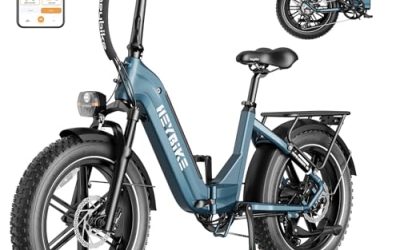
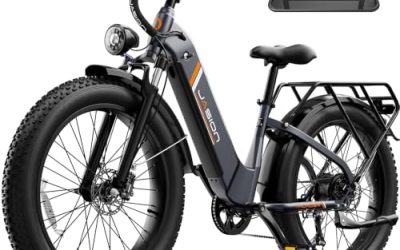
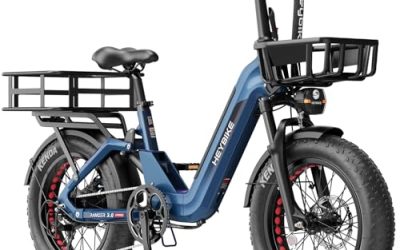
The step-through WakeWheel suits riders who mount and dismount often on mixed routes, from trailhead gates to farm stands. A 1000W motor drives 20 inch fat tires, and the dual-battery option totals 48V 35Ah for up to 140 miles, so a long loop of pavement and gravel fits inside one charge. Hydraulic disc brakes give steady stopping power when a gravel corner tightens without warning, the rear rack carries the day kit, and the low frame removes the high swing-over that makes frequent stops awkward on a tall bike.
Specs
- 1000W motor
- Single 48V 17.5Ah or dual 48V 35Ah battery option
- Up to 70 miles with one pack, up to 140 miles with two
- 20 inch fat tires
- Hydraulic disc brake
- Step-through frame
- Rear rack included
- IPX6 waterproof batteries
Best for: Mixed-surface commutes with frequent stops and easy mounting.
Watch out for: The second pack is a backup unit rather than a pack that runs at the same time, so plan swaps on long rides.
ASIN: B0DDKZC9ZZ
ENGWE X26
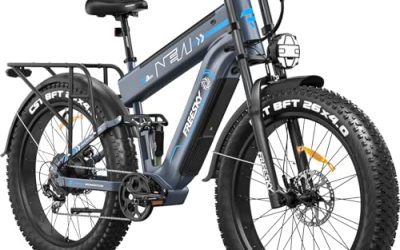
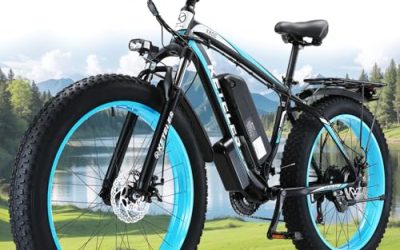
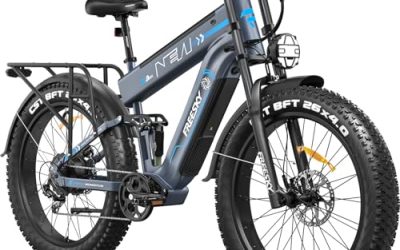
The ENGWE X26 is the folding option for riders who want dual-battery range without a permanent garage footprint. A 1200W peak motor with 70Nm of torque drives 26 by 4.0 inch tires, and the dual-battery setup pairs a 48V 19.2Ah pack with a 10Ah second pack for 29.2Ah total and up to 93 miles in ECO mode. Hydraulic disc brakes and a Shimano 8-speed drivetrain handle speed control on loose descents, while the triple suspension setup, with a front hydraulic fork, a central shock, and a rear air shock, smooths washboard gravel that would rattle a rigid frame.
Specs
- 1200W peak brushless rear hub motor, 70Nm torque
- 48V 19.2Ah single battery or 48V 29.2Ah dual battery
- Up to 93 miles in ECO mode with dual batteries
- 26 x 4.0 inch fat tires
- Hydraulic disc brakes
- Shimano 8-speed drivetrain
- Triple suspension: front hydraulic fork, central shock, and rear air shock
- Top speed up to 31 MPH
- 330 lb payload
- Folding 6061 aluminum alloy frame
- LCD display
Best for: Riders who fold the bike for transport and still want long mixed-surface range.
Watch out for: The dual-battery version weighs around 96 lbs, so a ramp helps with loading.
ASIN: B0DPQKGF2D
HappyRun G70
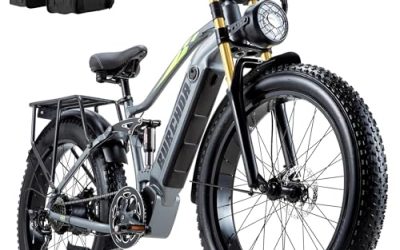
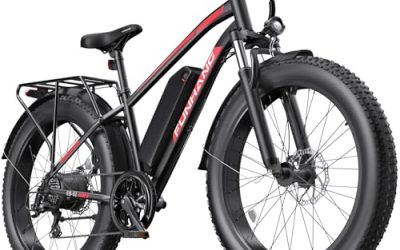
The HappyRun G70 is the cargo-flavored pick for mixed routes, pairing a 2000W peak motor with a 48V 38Ah detachable dual battery for more than 85 miles of range. Dual-piston hydraulic disc brakes give the stopping power a heavy, fast bike needs when gravel turns loose under the tires, and the full suspension setup keeps the 20 inch fat tires in contact with uneven ground. A 330 lb payload, NFC unlock, and GPS tracking round out a bike built for long, loaded loops that mix pavement with dirt.
Specs
- 2000W peak motor
- 48V 38Ah detachable dual battery (20Ah + 18Ah)
- 85+ mile range
- 20 inch fat tires
- Dual-piston hydraulic disc brakes
- Full suspension
- Top speed up to 36 MPH
- 110Nm torque
- 330 lb payload
- NFC unlock and GPS tracking
- 7-speed transmission
- 95 lbs
Best for: Long, loaded loops that switch between pavement and dirt.
Watch out for: At 95 lbs with a tall cargo frame, it is a handful to maneuver in tight storage.
ASIN: B0GQ34T5WM
Which One Fits Your Situation
You ride steep gravel descents
Pick the SMLRO F1. Dual hydraulic disc brakes give the modulation a loose descent demands, the 2000W dual-motor setup holds speed on the climb back out, and the 70 to 120 mile range covers a long loop. The lockable fork firms up for the paved ride home. The 26 by 4 inch tires hold grip where gravel turns to sand.
You carry a passenger or heavy cargo on gravel
Pick the WakeWheel 1500W Cargo or the HappyRun G70. The WakeWheel carries up to 450 lbs with a basket, rack, and carrier hoop, while the HappyRun pairs a 48V 38Ah dual battery with dual-piston hydraulic brakes and a 330 lb payload. Both keep a loaded bike steady when the surface turns loose.
You need to fold the bike for transport
Pick the ENGWE X26. It folds for a vehicle or a small garage, and the dual-battery setup still reaches up to 93 miles in ECO mode. Hydraulic disc brakes, a Shimano 8-speed drivetrain, and triple suspension keep it capable once the gravel begins. The 26 by 4.0 inch tires hold grip on loose stone and wet pavement alike.
You want a low frame for frequent stops on mixed routes
Pick the WakeWheel 1000W Step Through. The low frame makes mounting easy at gates, crossings, and trailheads, the hydraulic disc brake holds speed in check on wet gravel, and the dual-battery option stretches the range to 140 miles for long mixed-surface days. The rear rack carries lunch, layers, and tools for the whole loop.
Common Mistakes
- Braking hard with the front brake alone on loose gravel, which locks the wheel and slides the bike.
- Running pavement tire pressure on gravel, where a slightly softer tire grips far better.
- Ignoring brake pad wear after dusty gravel rides, which glaze pads and lengthen stopping distances.
- Choosing a bike on motor watts alone without checking whether the brakes are hydraulic.
- Planning a gravel route on pavement range figures, then running low far from home.
Frequently Asked Questions
Are hydraulic disc brakes worth it on gravel?
Yes, and the gap grows with bike weight. Hydraulic brakes give finer control at the lever, so you can slow without locking a wheel on loose stone, and they keep the same feel in rain and mud. Mechanical discs work, but they ask for more hand effort and more frequent adjustment on a heavy dual-battery bike.
How much range do you lose on gravel versus pavement?
Expect a noticeable cut, often a quarter to a third on soft or sandy gravel, since rolling resistance rises and the motor works harder. Dual batteries cover the gap by adding margin rather than efficiency, so plan the route on the gravel number and keep a reserve for the ride home.
What tire pressure works for mixed paved and gravel riding?
Run a middle setting rather than chasing either extreme. A slightly lower pressure than your pavement setup lets the tire conform to gravel and grip better, while enough pressure keeps the tire from squirming on asphalt. Check the sidewall range on the tire and adjust a few PSI at a time until the ride feels planted.
Can a folding fat tire e-bike handle gravel?
Yes, when the frame, fork, and tires suit the ground. The ENGWE X26 pairs a folding 6061 aluminum frame with 26 by 4.0 inch tires, triple suspension, and hydraulic disc brakes, which is a solid mixed-surface setup. Check the folding joints for tightness after rough rides, since gravel vibration loosens hardware faster than pavement does.
FAQ
Are hydraulic disc brakes worth it on gravel?
How much range do you lose on gravel versus pavement?
What tire pressure works for mixed paved and gravel riding?
Can a folding fat tire e-bike handle gravel?
More from Amazon
Programs that pair well with the guide above. Offers and eligibility are set by Amazon and may change.
Free shipping on eligible items, Prime Video and more. Eligible new members can start with a free trial.
Start a Prime free trialA Prime membership for ages 18-24 with a trial period. Eligibility is set by Amazon.
See Prime for Young AdultsAudiobooks and podcasts to listen to on the go. Eligible new members can start with a free trial.
Try Audible freeAd-free music streaming. Eligible new subscribers can start with a free trial.
Try Music Unlimited freeAs an Amazon Associate we earn from qualifying purchases.