Key takeaways
- Four flagship gaming mice compared on the specs their listings state: top optical sensors, 8K polling, optical switches and ultralight shells.
Flagship gaming mice are separated from the rest of the shelf by specification sheets, not by decoration. At this tier the listings state the newest optical sensors, polling rates up to 8,000 Hz, optical or inductive switch systems, shells under 65 grams and wireless batteries measured in days of play. The real decision is which of those headline technologies matches your grip and your games, because each flagship here spends its engineering effort in a different place.
This guide is for competitive players choosing between an ergonomic flagship and a symmetrical one, and for enthusiasts who want the most advanced click technology each brand currently lists. Every specification below comes from the product’s own Amazon listing title and details, including the stated weight, sensor name, polling figure and battery life, so the comparison rests on published numbers rather than reputation.
Quick Picks
As an Amazon Associate we earn from qualifying purchases
| Product | Best for | Key spec from title |
|---|---|---|
| Razer DeathAdder V4 Pro | Ergonomic flagship | Focus Pro 45K sensor Gen-2, 56 g |
| Razer Viper V4 Pro | Lightest symmetrical flagship | 49 g, Focus Pro 50K optical sensor |
| Logitech G Pro X2 Superstrike | Tunable click feel | Haptic Inductive Trigger System, 61 g |
| Logitech G Pro X Superlight 2 | Proven tournament shape | HERO 2 sensor, 44,000 DPI, 60 g |
How to Choose
Sensor Generation and Stated Ceiling
Each flagship line names its current top sensor, and the listings state the ceiling plainly: Focus Pro 45K and 50K optical sensors on the Razer side, HERO 2 on the Logitech side. Those maximum figures are far beyond the sensitivity most players actually set, so treat them as a marker of sensor generation rather than a number to use. A newer sensor generation also brings the tracking consistency and power management that support the long battery figures and high polling rates listed elsewhere in this guide, which is where the practical difference shows up.
Polling Rate and the Wireless Link
Standard gaming mice report position 1,000 times per second; the flagships here state up to 8,000 Hz. Reaching that figure needs the brand’s high-polling wireless mode or dongle, and it shortens battery life compared with the headline hours, which are measured at lower polling. Check what the listing includes in the box and what the stated battery life assumes. For most players the honest question is whether their game, monitor and play style can use the extra reports at all, because the sensor and shape will shape results long before polling does.
Switch Technology: Optical and Inductive
Mechanical microswitches are disappearing from this tier. Razer’s listings state optical switches, now at Gen-4 in the V4 Pro models, which actuate with light and remove the contact bounce that causes double clicks over time. Logitech splits its approach: the Superlight 2 lists LIGHTFORCE hybrid switches, while the Superstrike replaces the switch entirely with a Haptic Inductive Trigger System that lets you set actuation depth and rapid-trigger reset in software. If click feel is your priority, that adjustability is the defining feature to compare.
Weight, Shell and Battery Balance
The listings here state weights from 49 g to 61 g, and the lightest shells pair with symmetrical shapes aimed at claw and fingertip grips, while the ergonomic entry keeps a sculpted right-handed form at 56 g. Battery claims range from 95 to 180 hours, and the longest figures belong to the newest Razer models. Read the weight and battery lines together: a mouse that is both lighter and longer-running reflects the newest platform, while an older flagship may trade a few grams for a shape with a longer competitive track record.
The 4 Best Options
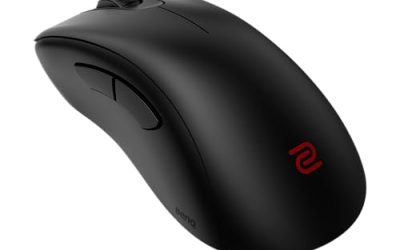
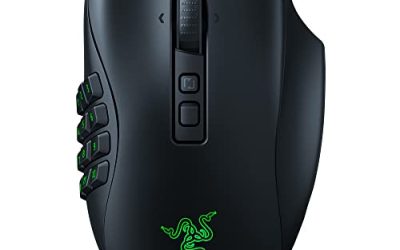
Razer DeathAdder V4 Pro

The DeathAdder V4 Pro is the ergonomic flagship in this group, keeping the line’s sculpted right-handed shape at a stated 56 g. Its listing names the Focus Pro 45K optical sensor Gen-2, HyperSpeed Wireless Gen-2 and true 8,000 Hz polling, plus an optical scroll wheel that matches the Optical Switches Gen-4 used for the main buttons. Battery life is stated at up to 150 hours, the strongest figure among the ergonomic flagships here. It suits palm and relaxed claw players who want the newest Razer platform without moving to a flat symmetrical shell.
Specs
- Weight: 56 g
- Sensor: Focus Pro 45K optical sensor Gen-2
- Polling: Up to 8,000 Hz
- Wireless: HyperSpeed Wireless Gen-2
- Scroll wheel: Optical scroll wheel
- Switches: Optical Switches Gen-4
- Battery: Up to 150 hours
Best for: Right-handed players who want the newest sensor and switches in an ergonomic shell
Watch out for: The white finish and the Niko Edition are separate listings with different ASINs, and running 8,000 Hz polling shortens battery life well below the stated maximum
ASIN: B0F3QCXL82
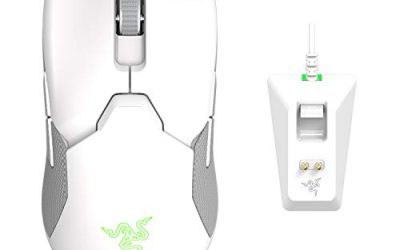
Razer Viper V4 Pro

The Viper V4 Pro is Razer’s current symmetrical flagship and the lightest mouse in this guide. The black listing states 49 g, a Focus Pro 50K optical sensor, 8K polling and Gen-4 optical switches, with battery life stated at up to 180 hours and USB-C charging. That combination of the lowest weight and the longest stated battery is what defines the newest Viper platform. The shape is a low, ambidextrous shell aimed at claw and fingertip grips, so it fits players who move the mouse with their fingers rather than resting a full palm on it.
Specs
- Weight: 49 g in black finish
- Sensor: Focus Pro 50K optical sensor
- Polling: 8K polling
- Switches: Optical Switches Gen-4
- Battery: Up to 180 hours
- Charging: USB-C
- Shape: Symmetrical
Best for: Claw and fingertip players who want the lightest current flagship shell
Watch out for: The white version is stated at 50 g and carries a different ASIN, so confirm the colour and weight line on the listing before ordering
ASIN: B0GMLBSSTD
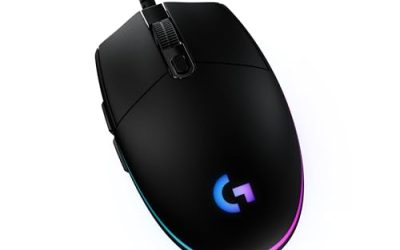
Logitech G Pro X2 Superstrike

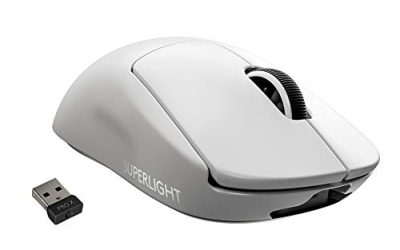
The Superstrike is the flagship built around the click itself. Instead of a conventional switch, its listing names a Haptic Inductive Trigger System, which Logitech describes as letting you adjust actuation, rapid-trigger reset and click haptics in software. The symmetrical shell is stated at 61 g with the HERO 2 sensor and LIGHTSPEED wireless, and it charges over USB-C. It is the most specialised mouse here: players who have a clear preference for how a click should feel and reset get a control no other listing in this guide states, while everyone else pays for adjustability they may never open.
Specs
- Weight: 61 g
- Sensor: HERO 2 sensor
- Switches: Haptic Inductive Trigger System with adjustable actuation and rapid trigger
- Buttons: 5
- Wireless: LIGHTSPEED wireless
- Charging: USB-C
- Finish: White with black buttons
Best for: Players who want to tune actuation depth and click feel in software
Watch out for: Battery figures differ between the Amazon specification table and Logitech’s headline figure, so check the battery line on the current listing before ordering
ASIN: B0G12HGHGM
Logitech G Pro X Superlight 2

The Superlight 2 remains Logitech’s proven symmetrical flagship, and its listing states the full headline set: 60 g weight, HERO 2 sensor up to 44,000 DPI, an 8 kHz report rate, LIGHTFORCE hybrid switches and USB-C charging, with battery life stated at up to 95 hours. Five programmable buttons keep the shell clean, which is the point of this design: it is the shape a generation of professional players standardised on, updated with the current sensor and polling. Choose it if you want the established Logitech platform rather than the newest experiment in the line.
Specs
- Weight: 60 g
- Sensor: HERO 2 sensor, up to 44,000 DPI
- Report rate: Up to 8 kHz
- Buttons: 5 programmable buttons
- Switches: LIGHTFORCE hybrid switches
- Charging: USB-C
- Battery: Up to 95 hours
Best for: Players who want the established symmetrical tournament shape with current internals
Watch out for: This ASIN is the black standard model 910-006628; the DEX and 2c variants and the white finish are different listings with different shapes or sizes
ASIN: B09NBWL8J5
Which One Fits Your Situation
Right-Handed Players Who Rest a Full Palm
Choose the DeathAdder V4 Pro. It is the only ergonomic flagship in this guide, and its listing pairs the sculpted shape with the Focus Pro 45K sensor Gen-2, Gen-4 optical switches and up to 150 hours of battery life. If your hand already knows the DeathAdder outline from earlier generations, this is the current top specification of that shape, with an optical scroll wheel completing the set.
Fingertip Players Chasing the Lowest Weight
Choose the Viper V4 Pro. At a stated 49 g in black it is the lightest flagship here, and it pairs that shell with the Focus Pro 50K sensor, 8K polling and the longest stated battery life in the guide at up to 180 hours. The flat symmetrical shape rewards fingertip and claw control, so it suits players who steer with small, quick movements rather than arm sweeps.
Players Who Want to Tune the Click Itself
Choose the Logitech G Pro X2 Superstrike. Its Haptic Inductive Trigger System is the one feature in this guide that changes how the primary buttons work, with adjustable actuation, rapid-trigger reset and click haptics set in software. If you have ever wished a click engaged sooner or reset faster, this is the flagship aimed at you; if not, the simpler switch systems in the other picks will serve you just as well.
Players Who Want the Established Tournament Standard
Choose the Superlight 2. Its shape is the symmetrical standard a generation of professional players settled on, and the current listing updates it with the HERO 2 sensor, an 8 kHz report rate, LIGHTFORCE hybrid switches and up to 95 hours of battery life in a 60 g shell. It is the complete flagship specification without a new platform’s learning curve, which makes it the lowest-risk pick in this guide for players who already know this outline suits their hand.
Common Mistakes
- Assuming the highest stated DPI figure is the one to play at, instead of setting sensitivity to your game and pad space
- Running 8,000 Hz polling full time without checking how far the stated battery life falls in that mode
- Buying a symmetrical flagship for a palm grip, when the ergonomic model in the same tier fits that hand position better
- Mixing up variant listings at checkout, since colours and special editions of these flagships carry separate ASINs and sometimes different stated weights
- Choosing the Superstrike for general play without intending to use its actuation adjustments, which are its defining feature
Frequently Asked Questions
What puts a gaming mouse in the flagship tier?
The listings in this guide share a pattern: the brand’s newest optical sensor, polling up to 8,000 Hz, optical or inductive switch systems, a stated weight under 65 g and wireless battery life of 95 hours or more. A mouse missing several of those stated features may still be excellent, but it is not the manufacturer’s current top specification, which is what this tier means.
Does 8K polling matter outside tournament play?
It depends on the rest of your setup. The flagship listings state up to 8,000 Hz, eight times the standard report rate, but the benefit shrinks on lower-refresh monitors and in slower-paced games, and battery life drops in high-polling modes. Treat it as headroom for fast-paced play on a high-refresh display, and use the standard mode for everyday sessions to keep the stated battery figures realistic.
Optical switches or an inductive trigger: what actually changes?
Optical switches, stated up to Gen-4 in the Razer flagships, fire the click with light, which removes the mechanical contact wear behind double-click faults. The Superstrike’s inductive system goes further by making actuation depth, reset point and click haptics adjustable in software. The first is about consistency over the mouse’s life; the second is about personal preference in how each click feels and behaves.
How long should a flagship wireless mouse run between charges?
The listings here state between 95 and 180 hours, with the newest Razer platform at the top of that range. Those figures are measured at standard polling, so expect less at 8,000 Hz. In practice, anything in this stated range means charging becomes an occasional overnight task rather than a weekly interruption, and USB-C charging on every model here keeps the cable the same as your other devices.
FAQ
What puts a gaming mouse in the flagship tier?
Does 8K polling matter outside tournament play?
Optical switches or an inductive trigger: what actually changes?
How long should a flagship wireless mouse run between charges?
More from Amazon
Programs that pair well with the guide above. Offers and eligibility are set by Amazon and may change.
Free shipping on eligible items, Prime Video and more. Eligible new members can start with a free trial.
Start a Prime free trialA Prime membership for ages 18-24 with a trial period. Eligibility is set by Amazon.
See Prime for Young AdultsAudiobooks and podcasts to listen to on the go. Eligible new members can start with a free trial.
Try Audible freeAd-free music streaming. Eligible new subscribers can start with a free trial.
Try Music Unlimited freeAs an Amazon Associate we earn from qualifying purchases.