Key takeaways
- Stabilize the fish first. Use a non-slip board and keep the work area clear. A moving fish makes precise cuts harder and raises the chance of slipping.
- Use the heel for robust cuts. The heel is the strongest part of the edge. Use controlled pressure for the head or smaller bones rather than swinging the knife like a cleaver.
- Follow the skeleton. For filleting, guide the blade along the backbone and ribs with deliberate cuts. Let the geometry do the work instead of twisting the edge sideways.
- Separate the fillet with a slicing action. A deba is thick and heavy compared with a dedicated fillet knife. For skinning or fine trimming, a thinner knife may offer better control.
- Stop if the blade binds. Pull back, reposition, and cut again. Twisting or levering against bone can chip the edge.
Best Deba Knives for Clean Fish Butchery
The best deba knife for most home cooks is a 165 mm, single-bevel knife in carbon steel or stainless steel: it is large enough to handle common whole fish, yet easier to control than a heavy 180–210 mm model. Choose a 150 mm knife for smaller fish and tighter spaces, or a 180 mm knife if you regularly break down large fish and are comfortable handling a heavier blade.
A deba is a thick-backed Japanese knife built for fish work: its weight helps cut through heads and smaller bones, while its bevel geometry supports controlled slicing along the backbone. It is not a cleaver, and using it to chop through large, hard bones can chip the edge. The right choice depends less on maximum blade length than on the fish you buy, your cutting surface, and whether you want to sharpen a traditional single bevel.
Our top picks
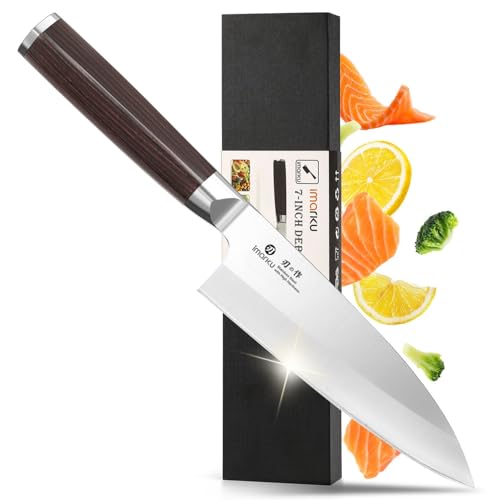


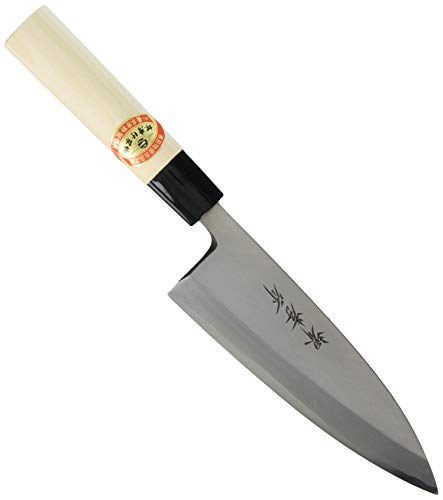
As an Amazon Associate we earn from qualifying purchases at no extra cost to you. Ratings are shown as listed on Amazon.
Compare the sizes before you buy
Blade length is measured from heel to tip. The weights below are practical approximate ranges, not guarantees: construction, steel, handle and blade height all affect the final weight. Check a specific maker’s dimensions when available.
| Blade length | Typical weight | Best suited to | Main trade-off |
|---|---|---|---|
| 135–150 mm | About 180–280 g | Small fish, compact kitchens, occasional use | Less reach and mass for larger heads and fish |
| 165 mm | About 250–350 g | Mixed home use; many small-to-medium whole fish | May feel short for large fish, heavy for delicate work |
| 180 mm | About 300–450 g | Frequent fish butchery and larger specimens | Needs more board space and controlled handling |
| 195–210 mm | About 400–600 g | Large fish and experienced users with room to work | Greater fatigue and less nimble control on small fish |
For a useful fit check, measure the fish you usually prepare from behind the gill plate to the tail base. A blade near that length gives good reach for tracing the backbone, but a deba does not need to span the whole fish in one stroke. If your typical fish is 300–400 mm long, a 165 mm knife is often a balanced starting point; choose 180 mm if the fish is deeper-bodied or you regularly work with larger specimens.
Choose by fish, skill and routine
| Your situation | Good starting choice | Why |
|---|---|---|
| First deba; occasional small fish | 150–165 mm, stainless, comfortable handle | Manageable length and less demanding upkeep |
| Regular home use; varied fish sizes | 165 mm, stainless or carbon steel | Versatile reach without the bulk of a long, heavy blade |
| Frequent large-fish breakdown | 180 mm, thick-backed construction | More reach and mass; requires space and practiced control |
| Small board or limited storage | 135–150 mm | Easier to maneuver and store, but less suitable for large fish |
| Experienced sharpener seeking a traditional edge | 165–180 mm, single-bevel carbon steel | Strong edge performance, with more maintenance and sharpening skill required |
Steel and bevel: the upkeep trade-off
Carbon steel
Carbon-steel debas are valued for how readily many of them take a sharp edge. They can also develop a patina as they react with food and moisture. That patina is normal; orange or powdery rust is not. Carbon steel needs prompt washing, thorough drying and occasional attention to rust spots. It suits cooks who sharpen regularly and do not mind cleaning the knife as they work.
Stainless steel
Stainless steel reduces the risk of rust during busy prep and is a practical choice for a first deba or frequent use. “Stainless” does not mean maintenance-free: fish residue and moisture can still stain or corrode a blade, especially around the edge or handle. Stainless options vary in sharpness retention and ease of sharpening, so consider the maker’s steel specification rather than assuming all stainless blades behave alike.
Single bevel or double bevel?
Traditional deba knives are usually ground primarily on one side, with a flatter back on the other. The geometry is designed for controlled fish butchery, but the knife can steer during a cut if used at the wrong angle. Sharpening also takes more care than maintaining a symmetrical edge. A double-bevel deba-style knife is often easier for cooks accustomed to Western knives and may suit either hand more readily, but it will not feel identical to a traditional single bevel. Check that the blade is made for your dominant hand: many single-bevel knives are right-handed, with left-handed versions less common and sometimes more expensive.
Handle, balance and build quality
Traditional wa handles are commonly made from wood, sometimes with a horn ferrule. They are light and can make a substantial blade feel nimble, but need to be kept dry and checked for looseness. A Western-style handle often feels more familiar and may have a more moisture-resistant construction, depending on the materials and fit. Neither shape is universally better: hold the knife if possible, and check that your fingers clear the board when gripping it.
Look for a secure handle-to-blade fit, a comfortable heel, and a weight that feels controlled rather than simply impressive. A thick spine is useful for the work a deba is designed for, but a knife’s mass is not permission to strike hard bones. For very large, dense bones, use an appropriate tool or ask a fishmonger to make the rough cuts.
Using a deba without damaging the edge
- Stabilize the fish first. Use a non-slip board and keep the work area clear. A moving fish makes precise cuts harder and raises the chance of slipping.
- Use the heel for robust cuts. The heel is the strongest part of the edge. Use controlled pressure for the head or smaller bones rather than swinging the knife like a cleaver.
- Follow the skeleton. For filleting, guide the blade along the backbone and ribs with deliberate cuts. Let the geometry do the work instead of twisting the edge sideways.
- Separate the fillet with a slicing action. A deba is thick and heavy compared with a dedicated fillet knife. For skinning or fine trimming, a thinner knife may offer better control.
- Stop if the blade binds. Pull back, reposition, and cut again. Twisting or levering against bone can chip the edge.
Ownership: sharpening, cleaning and wear
The edge is the first part likely to need attention, especially if it meets bone or a hard board. A whetstone is generally a better match for a quality deba than a pull-through sharpener, which can remove metal unevenly and is difficult to control on a single bevel. Use a stable stone and preserve the blade’s existing geometry; if you are new to single-bevel sharpening, learn on a less costly knife or use a reputable sharpener.
After each session, wash by hand, rinse away fish residue, and dry the blade and handle thoroughly before storing it. Do not leave it soaking in a sink or put it in a dishwasher. Store it so the edge cannot knock against other utensils. Carbon steel needs especially prompt drying, while any loose handle or visible rust deserves attention before the next use. With sensible cleaning and suitable cutting technique, a deba can last for years; repeated impacts, twisting cuts and careless sharpening shorten its useful life.
Bottom line
For most buyers, a 165 mm stainless or carbon-steel deba is the most adaptable starting point. Pick stainless if easy cleanup matters more than a traditional carbon-steel sharpening experience; choose carbon steel if you are prepared to dry it promptly and maintain the edge. Go shorter for small fish and compact workspaces, longer for frequent large-fish breakdown, and choose a single bevel only if its directional feel and sharpening needs suit your experience.