Key takeaways
- Regular diesel runs in a pickup: A baffled aluminum tank in the 50–100-gallon range, with a locking fill cap, compatible pump, hose and automatic nozzle. Confirm that the tank is designed for diesel and for the intended mounting location.
- Occasional equipment refueling: Consider a smaller transfer tank or a portable fuel container. A large tank can add substantial permanent weight even when empty and may be unnecessary if refueling trips are infrequent.
- Trailer or service-body installation: Choose a tank whose footprint, fill access and mounting points suit that specific platform. A tank that fits a pickup bed may block trailer access or interfere with body compartments.
- High-use, demanding work: Prioritize heavy-duty construction, accessible pump service, replaceable filters and a secure mounting system over maximum capacity. Steel may suit some work environments, but its extra weight and susceptibility to corrosion need consideration.
Best Fuel Transfer Tanks for Secure On-the-Go Fuel Storage
The best fuel transfer tank is a baffled, securely mounted tank sized to your actual trip needs, built from a material suitable for the fuel, and paired with a compatible pump and legally compliant setup. For most pickup owners hauling diesel to equipment, an aluminum auxiliary tank with a 12-volt pump is a practical balance of weight and corrosion resistance; frequent commercial use or exposure to rough conditions may justify a heavier steel tank.
Best choices by situation
- Regular diesel runs in a pickup: A baffled aluminum tank in the 50–100-gallon range, with a locking fill cap, compatible pump, hose and automatic nozzle. Confirm that the tank is designed for diesel and for the intended mounting location.
- Occasional equipment refueling: Consider a smaller transfer tank or a portable fuel container. A large tank can add substantial permanent weight even when empty and may be unnecessary if refueling trips are infrequent.
- Trailer or service-body installation: Choose a tank whose footprint, fill access and mounting points suit that specific platform. A tank that fits a pickup bed may block trailer access or interfere with body compartments.
- High-use, demanding work: Prioritize heavy-duty construction, accessible pump service, replaceable filters and a secure mounting system over maximum capacity. Steel may suit some work environments, but its extra weight and susceptibility to corrosion need consideration.
These are selection profiles, not endorsements of a particular model. Product availability and specifications vary, so verify the maker’s current documentation before buying.
Our top picks


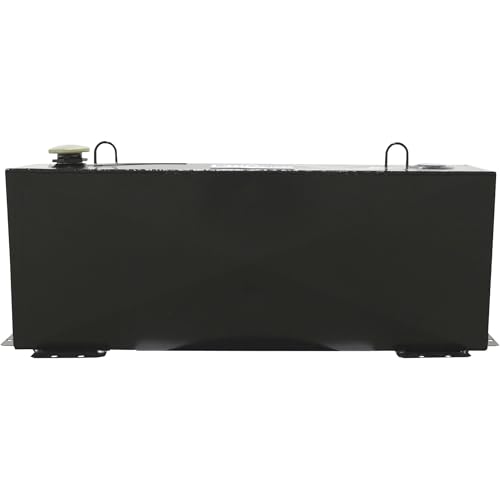
As an Amazon Associate we earn from qualifying purchases at no extra cost to you. Ratings are shown as listed on Amazon.
Capacity, weight and fit: the numbers that change the decision
Fuel weighs roughly 7 pounds per gallon for gasoline and 7.1–7.2 pounds per gallon for diesel; the exact value varies with temperature and blend. That means a 100-gallon diesel load adds about 710–720 pounds before counting the tank, pump, hose and fittings. Check the truck’s payload rating and axle limits, not just its advertised towing capacity. Passengers, tools, hitch load and other cargo also consume payload.
The table below uses rounded planning estimates. Empty tank weights are illustrative ranges, not specifications for any particular product; actual weights depend on dimensions, material thickness and included hardware.
| Nominal capacity | Fuel weight when full (diesel) | Illustrative empty tank weight | Approximate full tank-plus-fuel weight | Typical fit consideration |
|---|---|---|---|---|
| Fuel container: 5 gal | 36 lb | About 5–10 lb | About 41–46 lb | Portable, but needs secure transport and separate storage |
| Transfer tank: 50 gal | 360 lb | About 50–90 lb | About 410–450 lb | May suit some short-bed or service-body layouts; measure first |
| Transfer tank: 75 gal | 540 lb | About 65–110 lb | About 605–650 lb | Check wheel-well clearance, bed length and remaining payload |
| Transfer tank: 100 gal | 720 lb | About 80–140 lb | About 800–860 lb | Requires careful payload, axle and mounting review |
For example, if a truck has 1,500 pounds of available payload after accounting for occupants and existing cargo, a 100-gallon diesel tank weighing about 800–860 pounds leaves roughly 640–700 pounds for everything else. That estimate is only a screening calculation: use the vehicle’s door-jamb payload label, axle ratings and actual tank weight to make the final call.
Before ordering, measure the usable bed or trailer area, including wheel wells, tie-downs, tonneau rails, cab clearance and access to the fill cap. Also check where the tank’s outlet and pump would sit. A nominal capacity does not tell you the tank’s footprint or whether it will obstruct cargo.
Aluminum or steel?
| Consideration | Aluminum | Steel |
|---|---|---|
| Weight | Usually lighter for a comparable design, helping preserve payload | Usually heavier; include that difference in payload calculations |
| Corrosion | Does not rust like ordinary carbon steel, but can still corrode or suffer galvanic corrosion at dissimilar-metal contact points | Coating damage, trapped moisture and neglected upkeep can lead to rust |
| Worksite trade-off | Useful when reducing carried weight matters | May suit buyers prioritizing a rugged, repairable construction, subject to the maker’s fuel and use specifications |
| What to inspect | Welds, mounting flanges and contact points against other metals | Coating condition, seams, underside and areas where water or debris collect |
Material alone does not establish safety or durability. Check that the tank is explicitly intended for the fuel type and application, and follow its installation and inspection instructions. Do not assume a utility or “transfer” tank is approved for storing gasoline or for use as a vehicle’s permanent fuel tank.
Baffles, mounting and pump compatibility
Why baffling matters
Baffles reduce the distance fuel can surge inside a tank during braking, cornering and acceleration. They cannot eliminate liquid movement, and an unbaffled tank can make a heavy load feel unsettled. For a vehicle-mounted tank, look for documented internal baffling and a design intended for mobile use. Keep the load secured and drive with extra following distance; a baffle does not make an overloaded vehicle safe.
Mounting is part of the tank choice
Use the manufacturer’s specified mounting points and hardware, and attach the tank to a structure capable of carrying its full load. Do not rely on thin bed sheet metal, friction or improvised straps alone. Installation must account for vehicle-frame movement, tank expansion, vibration, exhaust heat and clearance from sharp edges. If the instructions do not clearly explain the approved mounting method, ask the manufacturer or a qualified installer before purchase.
Match the pump to the fuel and electrical system
Confirm that the pump, seals, hose, filter and nozzle are compatible with the intended fuel. A 12-volt pump is common for pickup-mounted transfer tanks, but check its voltage, current draw, flow rate and connection requirements against the vehicle’s electrical system. A higher flow rate is not automatically better: the nozzle, hose and receiving equipment must be able to handle it safely. Verify whether the pump includes a filter, automatic shutoff nozzle and a way to prevent unauthorized use; these may be separate purchases.
Legal and safety checks before you buy
- Use the right tank for the fuel: Verify the product’s labeling and documentation. Gasoline and diesel have different handling and equipment requirements.
- Check transport rules: Requirements can vary by jurisdiction, fuel type, quantity, vehicle and whether the use is personal or commercial. Confirm applicable local, state or provincial rules and transport regulations before carrying a filled tank.
- Look for appropriate safety features: A lockable cap helps deter tampering; a properly designed vent, secure filler and compatible shutoff nozzle help manage normal operation. No single feature makes an unsuitable tank compliant.
- Prevent spills and ignition risks: Refuel outdoors in a suitable area, keep fuel away from flames and hot surfaces, and follow the pump and tank instructions. Never leave fuel transfer unattended.
- Check the vehicle’s limits: Stay within payload and axle ratings, secure the tank against movement, and avoid blocking lights, visibility, doors or required access points.
For commercial hauling or larger quantities, consult the relevant transport and fire-safety authorities. A seller’s “DOT compliant” or similar marketing claim is not a substitute for confirming that the complete installation and intended use meet the rules that apply to you.
Ownership details that are easy to overlook
Before buying, ask whether filters, seals, hoses and nozzles are standard replaceable parts and whether the pump can be serviced without removing the tank. These are common wear items. Inspect fittings and hose condition regularly, keep the tank exterior and mounting points clear of accumulated dirt, and address leaks, damaged wiring, loose fasteners or corrosion promptly. Follow the manufacturer’s schedule and cleaning instructions; do not put water or an unapproved cleaner into a fuel tank.
Common mistakes include choosing capacity before checking payload, assuming every bed-mounted tank fits under a cover, using a pump or seal not rated for the fuel, and treating a baffle as a substitute for secure mounting. The best choice is the smallest properly rated tank that covers your real refueling needs, fits without obstructing the vehicle, and can be installed and maintained according to its documentation.