Key takeaways
- The Short Answer For most drivers, an OBD2 scanner needs very little storage memory: 8 GB to 16 GB is enough for code reading, live data, basic resets, and periodic software updates. A Bluetooth code reader may have almost no…
What's inside
The Short Answer
For most drivers, an OBD2 scanner needs very little storage memory: 8 GB to 16 GB is enough for code reading, live data, basic resets, and periodic software updates. A Bluetooth code reader may have almost no onboard storage because your phone provides the screen, processing power, and saved reports. A handheld scanner with a built-in display usually works well with 16 GB to 32 GB.
Choose 32 GB to 64 GB if you want a professional-style scanner with bidirectional controls, multiple vehicle-system coverage, large diagnostic-code libraries, repair information, screenshots, data recording, or frequent updates. Memory capacity is not a physical-size measurement, but it can affect the scanner’s price, update capacity, and how long it remains convenient to use.
As an Amazon Associate we earn from qualifying purchases at no extra cost to you. Product prices and availability are accurate as of the date shown and are subject to change.


For physical storage, plan for a scanner body roughly the size of a TV remote, small tablet, or compact handheld game device. Most basic wired readers fit in a 7 × 4 × 2 inch drawer area, while tablet-style diagnostic tools may need a 13 × 10 × 4 inch case or shelf space.
Standard Sizes
| Scanner type | Typical physical dimensions | Typical weight | Recommended onboard memory | Best for |
|---|---|---|---|---|
| Bluetooth plug-in adapter | 1.8–2.3 in. long × 1.5–1.9 in. wide × 0.8–1.2 in. deep 4.6–5.8 × 3.8–4.8 × 2.0–3.0 cm |
1–3 oz. 28–85 g |
Minimal onboard memory; phone storage handles reports | Occasional check-engine-light diagnosis and app-based monitoring |
| Basic wired handheld reader | 4.5–6.5 in. long × 2.5–3.5 in. wide × 0.8–1.3 in. deep 11.4–16.5 × 6.4–8.9 × 2.0–3.3 cm |
5–10 oz. 140–285 g |
8–16 GB | Code reading, code clearing, readiness checks, and voltage displays |
| Four-system handheld scanner | 6.0–8.5 in. long × 3.5–5.0 in. wide × 1.0–1.6 in. deep 15.2–21.6 × 8.9–12.7 × 2.5–4.1 cm |
10–22 oz. 285–625 g |
16–32 GB | Engine, transmission, ABS, and SRS diagnosis |
| Tablet-style bidirectional scanner | 8.0–10.5 in. long × 5.0–7.5 in. wide × 0.4–1.1 in. deep 20.3–26.7 × 12.7–19.1 × 1.0–2.8 cm |
1.0–2.5 lb. 0.45–1.13 kg |
32–64 GB | Active tests, service functions, vehicle profiles, and saved diagnostic sessions |
| Shop-level tablet scanner with protective case | 12–16 in. long × 9–12 in. wide × 3–5 in. deep 30.5–40.6 × 22.9–30.5 × 7.6–12.7 cm |
3–7 lb. 1.4–3.2 kg |
64 GB or more | Frequent professional use and multi-vehicle recordkeeping |
A low-cost reader such as a basic V520-style tool, often priced around $30 to $40, generally does not need large memory. It is designed for engine codes, I/M readiness, voltage checks, and erasing codes. A four-system Bluetooth scanner in the $50 to $70 range can rely heavily on a companion app, so phone storage matters more than scanner storage.
Higher-function units, including bidirectional scanners with active tests and 15 or more reset services, often cost roughly $180 to $250. These benefit from 32 GB or more because software packages, brand coverage, saved reports, and update files take up more room. In 2026, buyers should focus less on the largest advertised storage number and more on whether the scanner has enough free space after updates are installed.
How to Measure Your Space
- Decide where the scanner will live. Measure the inside of your glove box, center-console bin, garage drawer, tool chest, or carrying case. Measure length, width, and depth—not just the opening.
- Add room for the cable. Wired OBD2 scanners commonly include a cable about 3 to 6 feet long. Allow at least 2 extra inches around the scanner body if the cable stays attached during storage.
- Measure the narrowest access point. A scanner may fit inside a console compartment but not pass through its lid opening. Measure the opening width and height before choosing a larger handheld unit.
- Allow space for a protective case. A padded case usually adds 1 to 2 inches to the tool’s length and width and 1 to 3 inches to its depth. This matters most for tablet-style scanners.
- Check your device storage before buying Bluetooth. If the scanner uses an app, leave at least 2 GB to 5 GB free on your phone for the app, vehicle reports, update downloads, and recorded live-data files.
- Plan for charging clearance. A rechargeable tablet scanner needs room for its charging cable. Reserve about 6 inches of clear space near a USB or wall outlet so the cable is not sharply bent.
By Room or Use Case
Glove Box or Center Console
A Bluetooth adapter or compact wired reader is the right size for in-car storage. Look for a body no larger than 6.5 inches long, 3.5 inches wide, and 1.3 inches thick. A basic reader with 8 GB to 16 GB of memory is sufficient because it will primarily read and clear engine codes. Avoid leaving a large tablet scanner in a vehicle year-round; heat, cold, and theft risk are practical concerns.
Apartment, Closet, or Small Garage Drawer
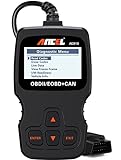
For a compact home tool setup, reserve a drawer footprint of at least 12 × 8 × 4 inches. This holds a handheld scanner, cable, manual, and small pouch. Choose 16 GB to 32 GB if you own more than one vehicle or want to save reports over time. A code reader with a large built-in DTC library can be useful here, since it lets you look up many fault-code definitions without reaching for a separate device.
Home Workshop Bench
A home mechanic performing brake work, battery registration, oil resets, or ABS/SRS diagnostics should consider a four-system handheld scanner or compact tablet. Allocate a shelf or drawer area of 14 × 10 × 5 inches, including case space. Memory in the 32 GB range is a practical target for storing several vehicle profiles, software updates, screenshots, and diagnostic logs.
Driveway Repairs and Mobile Use
For driveway troubleshooting, size and grip matter as much as memory. A scanner between 6 and 9 inches long is easy to hold while standing beside a vehicle. A tethered cable reduces the chance of dropping the scanner, while a rubberized case adds bulk but improves durability. Select 16 GB to 32 GB unless you routinely record long live-data sessions. For basic fault finding, more memory will not make the scanner diagnose faster.
Multi-Car Household or Side-Hustle Repairs
If you regularly work on several makes and models, choose a scanner with 32 GB to 64 GB and a case footprint around 13 × 10 × 4 inches. This category is appropriate for bidirectional tools that can run active tests, operate certain components for diagnosis, and access multiple service functions. Keep saved reports organized by vehicle identification number, date, and mileage so storage does not fill with duplicates.
Common Sizing Mistakes
Confusing memory with screen size. A 7-inch diagnostic tablet may have only 16 GB of storage, while a tiny Bluetooth adapter may use your phone’s 128 GB or 256 GB capacity. These are separate specifications.
Buying excess storage for a basic task. If you only want to check a check-engine light before a smog inspection, 8 GB to 16 GB is typically enough. Spending more for 64 GB will not add ABS, SRS, or bidirectional functions unless the scanner’s software supports them.
Ignoring update-file space. A scanner can technically have 16 GB of memory but feel cramped after downloading coverage updates. Check whether storage can be expanded with a microSD card, and keep at least 20% of internal storage free when possible.
Measuring only the scanner body. The cable connector, protective boot, charging brick, and case all need storage space. Add at least 2 inches of depth for a coiled cable and adapter bundle.
Assuming all OBD2 ports have the same clearance. The diagnostic port is standardized, but its location varies. A plug-in Bluetooth adapter can protrude below the dashboard, where it may interfere with a driver’s knee or a panel cover. Measure available clearance before leaving an adapter connected.
FAQ
How much memory does a basic OBD2 scanner need?
For reading and clearing engine codes, viewing live data, and checking I/M readiness, 8 GB to 16 GB is usually enough. Many simple code readers need even less because their functions and code libraries are limited.
Is 32 GB enough for a bidirectional OBD2 scanner?
Yes, 32 GB is a strong minimum for most home-use bidirectional scanners. It provides room for vehicle coverage updates, saved reports, screenshots, service functions, and diagnostic data. Choose 64 GB if you work on many vehicles or expect to keep extensive records directly on the tool.
Do Bluetooth OBD2 scanners need onboard memory?
Usually not much. Bluetooth scanners commonly send information to an iPhone, Android phone, or tablet, where the app stores reports and logs. Check your mobile device’s free space instead; 2 GB to 5 GB free is a sensible starting point for occasional use.
What physical size OBD2 scanner fits in a glove box?
Most glove boxes can accommodate a compact handheld reader up to about 6.5 × 3.5 × 1.3 inches, but vehicle storage compartments vary. A small Bluetooth adapter is the easiest option, typically measuring under 2.5 inches long. Measure your glove box opening and interior depth before purchasing a larger wired scanner.