Key takeaways
- “All systems” without a coverage list: Require specific information for your vehicle’s ABS, SRS, transmission, and body modules.
- Unclear update terms: A low purchase price can become expensive if essential updates require a yearly fee.
- No clear return policy or warranty: Diagnostic hardware is difficult to evaluate until it is connected to a vehicle.
- Only generic code descriptions: A code reader should not imply that a code identifies one guaranteed failed part.
- Unsupported claims about repairs: A scanner can guide testing, but it does not replace a wiring diagram, multimeter, pressure gauge, or mechanical inspection.
- Very short cables and fragile strain relief: These are inconvenient and vulnerable during frequent use.
What's inside
Buying an OBD2 scanner is easy; buying one that matches your car, repair habits, and budget is harder. Many DIY mechanics make the same mistakes: they choose the cheapest code reader without checking vehicle compatibility, assume every scanner can reset an ABS warning, or pay for advanced features they will never use. Others focus on a large color screen while overlooking update costs, data coverage, cable length, and whether the tool can access systems beyond the engine computer.
This OBD2 scanner buying guide for DIY mechanics in 2026 focuses on the features that affect real garage work. A basic reader may be perfect for checking a check-engine light, while a more capable diagnostic tool can display live sensor data, test batteries, and work with ABS, airbag, transmission, or body-control modules. The right choice depends less on the longest feature list than on what you intend to diagnose.
As an Amazon Associate we earn from qualifying purchases at no extra cost to you. Product prices and availability are accurate as of the date shown and are subject to change.



Decide These 3 Things First
- What systems do you need to scan? If you only want to read and clear engine fault codes, a basic OBD2 reader is enough. If you need ABS, SRS, transmission, battery registration, electronic parking brake, or diesel-related service functions, look for an enhanced scanner with explicit coverage for those systems.
- Do you want diagnosis or code lookup? A code reader tells you the stored fault code. A diagnostic scanner adds live data, freeze-frame information, graphing, battery tests, and sometimes active tests. Code lookup is useful; diagnosis requires context.
- How often will you use it? Occasional users can stay near $20 to $80. Owners of several vehicles, serious DIY mechanics, and people who perform their own brake or battery work may benefit from a $150 to $300 tool with broader coverage and service resets.
Size and Portability
Scanner size matters when the diagnostic port is tucked beneath a dashboard or when you keep the tool in a glove box. Compact readers are often about 4 to 6 inches long and 2 to 3 inches wide, making them easy to store and use one-handed. Larger tablet-style units can measure roughly 8 to 12 inches diagonally and may be more comfortable for viewing graphs, but they need more storage space.
Also check cable length. A cable of about 3 to 6 feet lets you position the scanner on the center console or passenger seat while watching live data during a road test. A short 2-foot cable may work for stationary code checks but can be awkward when monitoring data in motion. Wireless adapters reduce cable clutter, although they depend on a phone or tablet and a compatible app.
Weight is rarely a major concern. Most handheld code readers weigh under 1 pound; advanced touchscreen scanners may weigh 1.5 to 3 pounds. A lighter unit is easier to hold under the dash, while a heavier tablet may feel more substantial but is less convenient for quick checks.
Materials and Construction
Look for a scanner with a hard plastic housing, molded strain relief where the cable enters the case, and buttons that do not feel loose or gritty. A rubberized outer edge can help protect the tool from a short drop and keep it from sliding off a fender. Avoid treating any consumer scanner as waterproof unless the manufacturer specifically rates it for water or dust resistance.
The connector deserves special attention. A full-size OBD2 plug should fit firmly without excessive side-to-side movement. A cable that feels thin or sharply kinked near the plug is more likely to become a failure point after repeated use. If the scanner will live in a busy garage, choose a model with a replaceable or visibly reinforced cable when available.
Screen construction affects longevity, too. A 2.5- to 4-inch color display is common on handheld units. Touchscreen models are easier to navigate but can be harder to use with greasy gloves. Physical buttons are slower for scrolling but dependable in cold weather and dirty working conditions.
Comfort and Diagnostic Performance
A good scanner should make information easy to understand. For basic work, prioritize clear code descriptions, freeze-frame data, and a simple menu. For deeper diagnosis, look for live data with at least numeric readings and, preferably, graphing. Graphs help reveal intermittent sensor behavior that a single displayed value can hide.
Useful live-data items include engine speed, coolant temperature, throttle position, fuel trims, oxygen-sensor readings, vehicle speed, and battery voltage. More data is not automatically better: a long list of unsupported or confusing parameters can slow down troubleshooting. Confirm that the scanner supports the specific data streams your vehicle provides.
Consider response time and navigation. A tool that takes 30 to 60 seconds to connect each time may become frustrating during repeated tests. Automatic VIN identification can save typing, but it is not essential. Service functions such as oil-life reset, battery reset, electronic parking-brake service, steering-angle calibration, throttle relearn, and ABS bleeding should be listed individually. “Full system” language is not a guarantee that every function works on every vehicle.
Do not judge performance by wattage. OBD2 scanners draw low-voltage power from the vehicle’s diagnostic port, and wattage is generally not a meaningful buying specification. More important electrical details are supported vehicle voltage, low-battery behavior, and whether the tool warns you before a voltage drop interrupts a scan.
Price Tiers That Make Sense
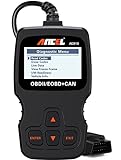
Budget: $15 to $40. These scanners are best for reading and clearing generic engine codes, checking readiness monitors, and confirming whether a repair stopped a recurring warning. The MOTOPOWER MP69033 is an example of the basic code-reader category. Expect fewer live-data options, limited system access, and little or no capability for ABS or airbag diagnosis.
Midrange: $50 to $120. This tier typically adds a better display, live data, freeze-frame information, graphing, battery checks, or selected reset functions. The FOXWELL NT301 and Innova 5210 represent the kind of handheld tools shoppers often compare here. Before buying, verify whether a feature is included in the purchase price or requires an app, subscription, or separate update plan.
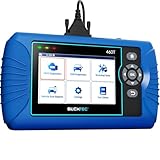
Advanced: $150 to $300 and up. These tools may scan multiple control modules and include a collection of service resets. The BLCKTEC 460T illustrates this category, with advertised access to functions such as ABS, SRS, transmission, oil, TPMS, electronic parking brake, battery, steering-angle, diesel particulate filter, and throttle systems. Coverage varies by vehicle, so treat the list as a starting point, not a universal promise.
Warranty, Updates, and Ownership Cost
A warranty of at least 12 months is a sensible baseline. Some manufacturers offer longer coverage, but read the exclusions: damaged cables, cracked screens, water exposure, and unauthorized repairs may not be covered. Keep the receipt and record the serial number before putting the scanner into regular use.
Software updates can be free, limited-time, or subscription-based. A basic code reader may need few updates, while an advanced scanner depends heavily on current vehicle databases. Ask three questions before purchase: How long are updates free? What does renewal cost? Can the scanner still perform its original functions if you stop updating?
Compatibility support is another ownership benefit. A manufacturer that provides vehicle-specific coverage information and responsive technical support can be more valuable than a slightly larger screen. If you work on multiple makes, check coverage by year, engine, and system rather than relying on a general “all vehicles” claim.
Delivery, Storage, and Setup
There is usually no assembly beyond plugging in a cable, but setup still affects convenience. A handheld scanner should boot and reach the vehicle menu in a few minutes. Wireless models may require an app download, Bluetooth pairing, account creation, and phone permissions. Confirm that the app supports your phone’s operating system before ordering.
Plan a storage location that protects the screen and connector. A soft case or padded drawer is useful, especially for a tool weighing less than 3 pounds. Do not leave a scanner connected indefinitely unless the manufacturer says it is designed for that use; some vehicles keep the diagnostic port powered after the ignition is off.
Spec Checklist
| Spec | Budget | Mid | Premium |
|---|---|---|---|
| Typical price | $15–$40 | $50–$120 | $150–$300+ |
| Best use | Engine codes and readiness checks | DIY diagnosis and live data | Multi-system diagnosis and service work |
| Screen | About 2–3 inches, basic color or monochrome | About 2.5–4 inches, color preferred | About 5–12 inches, often touchscreen |
| Cable or connection | Usually 2–4 feet, wired | About 3–6 feet or Bluetooth option | Wired or wireless, vehicle-dependent |
| Live data | Limited or numeric only | Numeric data and some graphing | Broader data, graphing, and possible active tests |
| Module access | Usually engine only | Engine plus selected systems | Engine, ABS, SRS, transmission, and other systems when supported |
| Service functions | Usually none or oil reset | One or several resets | Multiple resets and calibrations |
| Updates | Minimal need | Check free-update period | Confirm subscription and renewal pricing |
Red Flags
- “All systems” without a coverage list: Require specific information for your vehicle’s ABS, SRS, transmission, and body modules.
- Unclear update terms: A low purchase price can become expensive if essential updates require a yearly fee.
- No clear return policy or warranty: Diagnostic hardware is difficult to evaluate until it is connected to a vehicle.
- Only generic code descriptions: A code reader should not imply that a code identifies one guaranteed failed part.
- Unsupported claims about repairs: A scanner can guide testing, but it does not replace a wiring diagram, multimeter, pressure gauge, or mechanical inspection.
- Very short cables and fragile strain relief: These are inconvenient and vulnerable during frequent use.
FAQ
Can an inexpensive OBD2 scanner diagnose every check-engine problem?
No. A basic scanner can retrieve diagnostic trouble codes from the engine computer and may show limited data, but it cannot prove which component failed. Use the code as a starting point, then verify the cause with visual inspection, service information, and appropriate tests.
Do I need ABS and airbag scanning?
Choose it if you plan to work on brake, restraint, or transmission warnings. A standard engine-only reader generally cannot access those modules. Confirm compatibility for your exact vehicle because coverage can differ between models, engines, and trim levels.
Is live data worth paying more for?
Yes, if you troubleshoot sensor, fuel, temperature, or drivability problems. Live data can show trends and help compare related readings. If you only clear an occasional code or check readiness monitors before an inspection, a budget reader may be sufficient.
Should I buy a wired or wireless scanner?
Wired scanners are simple, self-contained, and usually ready as soon as they are plugged in. Wireless scanners are convenient for phone-based graphing and road tests but depend on app quality, Bluetooth pairing, and phone compatibility. For a first tool, choose the format you will actually use consistently.