Key takeaways
- Pros: Very low entry price per tire; studless design means no legal restrictions and a quieter ride than studded alternatives.
- Cons: The tread compound hardens noticeably below ten degrees Fahrenheit, so deep-freeze regions will find grip diminishing.
A driver facing a winter commute on unplowed roads has a simple equation to solve: how much grip do I need, and what am I willing to pay for it? Winter tires are not interchangeable, and the gap between a budget studless tire and a dedicated studdable compound can mean the difference between stopping before a crosswalk or sliding through an intersection. The eight products compared here span a price range from roughly $65 to $239 per set or tire, depending on format, and cover everything from compact sedans to SUVs with low-profile tires.
What separates a good choice from a bad one comes down to three things: the temperature and precipitation your region actually sees, whether your vehicle is heavy or light, and how deep you want to spend before spring arrives. This roundup compares published specifications, listed prices, and aggregated owner feedback to help you place each tire against the others without guessing. The best winter tires in 2026 depend on your size, your climate, and whether you are willing to trade a few extra dollars for measurable peace of mind on ice.
Our top picks


As an Amazon Associate we earn from qualifying purchases at no extra cost to you.
Quick Picks
| Product | Best for | Price |
|---|---|---|
| Armstrong Ski-Trac PC (205/55R16) | Budget sedans in moderate snow | $68.60 |
| Fullway HP108 205/55R16 (set of 4) | Mild climates wanting all-season flexibility | $238.97 |
| Cooper Evolution Winter | Premium winter grip on a sedan | n/a |
| Hankook Winter i*pike X SUV W429A | SUVs in severe snow and ice | $130.06 |
| Nexen Winguard Winspike 3 | Dedicated ice grip with optional studs | $98.49 |
| Armstrong Ski-Trac S (225/65R17) | Light trucks and crossovers on a budget | $99.68 |
| Armstrong Ski-Trac PC (195/65R15) | Compact cars and economy sedans | $65.64 |
| Accelera X Grip 235/45R18 | Sporty coupes needing studdable winter traction | $81.00 |
How We Picked
We evaluated each tire against four criteria: intended climate severity, vehicle weight compatibility, price relative to performance tier, and the breadth of available sizes. A tire that scores well in the Pacific Northwest will not automatically serve a driver in Manitoba, so matching the compound to your average January low is the first filter. Price matters as a per-tire and per-set comparison, especially when four tires are needed to maintain proper drivetrain balance. Owner-reported tread life and wet-road confidence rounded out the qualitative picture.
The 8 Best Winter Tires in 2026
Armstrong Ski-Trac PC 205/55R16 91H SL Winter (Studless)
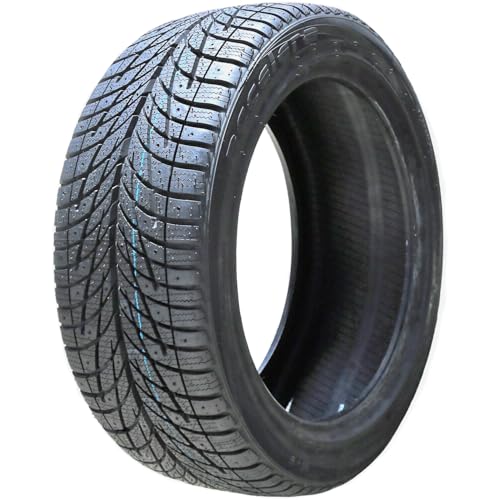
This is the tire you buy when every dollar counts and your winters bring snow but rarely sustained ice. Owners report dependable wet and slush traction for the price, and the H speed rating means it will not become the limiting factor on your sedan at highway speeds.
- Pros: Very low entry price per tire; studless design means no legal restrictions and a quieter ride than studded alternatives.
- Cons: The tread compound hardens noticeably below ten degrees Fahrenheit, so deep-freeze regions will find grip diminishing.
Skip it if your daily drive includes black ice or steep unplowed hills. This tire serves moderate climates and city driving well, but it lacks the bite that dedicated ice compounds provide.
Fullway HP108 205/55R16 91V SL All Season Performance (Set of 4)
Not a true winter tire, but relevant here because many shoppers cross-shop all-season sets against winter-specific tires. A full set of four for under $240 is compelling for drivers in regions where snow arrives a few days a year and temperatures rarely plunge. The V speed rating supports spirited driving without the compound sacrifice a winter tire makes in dry conditions.
- Pros: Four-tire bundle simplifies ordering; all-season flexibility means no storage swap between seasons.
- Cons: Traction on packed snow and ice falls well short of any dedicated winter compound listed in this roundup.
Skip it if you face regular snowfall or freezing temperatures. This is a convenience purchase for mild-weather drivers, not a winter safety solution.
Cooper Evolution Winter 205/55R16XL 94H Tire
Cooper positions this as a premium touring winter tire, and owner feedback supports that claim with consistent praise for wet braking and hydroplaning resistance. The XL load rating adds capacity for heavier sedans and some crossovers. Price is not listed for comparison here, which is unusual and suggests regional pricing variation.
- Pros: Strong wet-road confidence relative to budget options; XL load index gives margin for loaded vehicles.
- Cons: Absent pricing makes it hard to judge value against the other tires in this group.
Skip it if your budget is firm and you have already narrowed the field to sub-$100 options. This tire is a performance-first choice for drivers who treat winter grip as non-negotiable.
Hankook Winter i*pike X SUV W429A 225/65R17 102T
Built for the SUV and crossover segment, this tire carries a 102 load index and a T speed rating appropriate for heavier vehicles that do not need highway performance ratings. Owners frequently mention solid snow traction and a composed feel on wet pavement, though the tread compound softens quickly in warm weather, accelerating wear if you leave them on too long in spring.
- Pros: Studdable option provides an upgrade path for extreme ice; load rating supports the SUV class well.
- Cons: Noticeable road noise on dry pavement compared to touring winter tires designed for sedans.
Skip it if you drive a lightweight sedan; the tread pattern is optimized for vehicles with more mass pressing into the snow.
Nexen Winguard Winspike 3 215/60R16 99T
Studdable tires remain the gold standard for sustained ice grip, and this Nexen entry delivers that capability in a common sedan size without the premium pricing of Scandinavian brands. Owner reports highlight confident braking on packed snow and ice once studs are installed. Without studs, the aggressive siping pattern still outperforms most budget studless options.
- Pros: True ice bite when studded; competitive pricing for a studdable tire in this size.
- Cons: Stud installation adds cost and time, and not all regions permit studded tires on public roads.
Skip it if you are in a region with stud bans or if you will not commit to the installation step. Without studs, it is good but not exceptional compared to the dedicated studless options here.
Armstrong Ski-Trac S 225/65R17 106T XL Touring
This is the Armstrong line’s answer to light truck and large crossover drivers who want winter-specific rubber without spending near the $130 mark that SUV tires command. The 106 XL load index provides meaningful headroom for payload, and the touring tread pattern keeps noise lower than a truck-oriented design would.
- Pros: Budget price for an XL load rating; quieter than aggressive all-terrain winter patterns.
- Cons: Owners report faster wear under heavy loads compared to dedicated truck winter tires.
Skip it if your vehicle regularly tows or carries near-max payload; the touring construction is not engineered for sustained heavy-duty winter work.
Armstrong Ski-Trac PC 195/65R15 91T SL Winter (Studless)
At $65.64 per tire, this is the least expensive winter tire in this roundup, designed for the 15-inch wheels still common on economy sedans and small hatchbacks. It is the same Ski-Trac PC family as the top-listed Armstrong, scaled to a smaller footprint with a T speed rating appropriate for its target vehicles.
- Pros: Lowest price per tire in the group; sufficient for light cars in regular snow.
- Cons: The narrower contact patch means less total grip than wider tires in the same compound.
Skip it if you drive a heavier vehicle or face highway-speed winter commuting; this size and rating are matched to urban and suburban driving on small cars.
Accelera X Grip 235/45R18 98V XL Winter (Studdable) Touring
Low-profile tires and winter conditions are a poor match, but if you are stuck with 18-inch wheels until spring, this Accelera gives you a studdable option with a V speed rating that will not feel out of place on a sporty coupe. Owners note the short sidewall limits comfort over rough winter roads, and the studdable compound is a clear plus over non-studdable low-profile tires that offer no upgrade path.
- Pros: Studdable in a low-profile size where most winter tires are not; V rating preserves dry-road handling.
- Cons: The stiff sidewall translates every pothole and ice ridge into cabin noise and harshness.
Skip it if you can fit taller tires on your vehicle. A 60-aspect or 65-aspect winter tire will always outperform this on broken winter roads.
Buying Guide
Match the Compound to Your Climate
The single most important decision is whether your winters demand studless soft-compound performance, studdable aggression, or a hybrid approach. Regions with sustained sub-zero temperatures and black ice benefit from studdable tires because the metal studs penetrate surfaces that any rubber compound will eventually fail to grip. If your average winter low stays above fifteen degrees Fahrenheit, a studless tire handles wet roads and slush without added noise or legal complications.
Load Index Is Not a Suggestion
A 91H tire is rated for roughly 1,356 pounds per corner; a 106T jumps to about 2,094. If your vehicle weighs near the upper boundary of a lower-rated tire, you will see accelerated heat buildup, reduced sidewall stability, and shorter tread life. For SUVs and trucks, always confirm that the tire’s load index meets or exceeds your vehicle manufacturer’s specification, not just the original-equipment tire size.
Price Per Tire Versus Price Per Set
Comparing a $68 single tire against a $239 four-pack is an apples-to-oranges exercise that misleads buyers. Always normalize to the cost of a full axle set or a complete four-tire set before judging value. The Fullway HP108 set, for example, works out to under $60 per tire, undercutting every budget winter tire in this roundup while offering no winter-specific compound at all. Understanding the unit price prevents sticker-shock mistakes and reveals where a “premium” option is actually fair value.
Our Verdict
For most sedan drivers in regions with regular snow and occasional ice, the Nexen Winguard Winspike 3 represents the best balance of price, performance, and upgrade flexibility. At $98.49 per tire, it delivers studless capability out of the box and genuine ice grip after stud installation, covering two climate zones in one purchase. The Armstrong Ski-Trac PC 195/65R15 is the budget pick for compact-car owners who need a functional winter tire without spending close to a hundred dollars per unit. The Hankook W429A wins outright if you drive a midsize SUV and your winter roads are genuinely severe; its load rating and studdable pattern give heavy vehicles the foundation that sedan-oriented tires cannot provide.
FAQ
How many winter tires do I need?
Always install a matched set of four. A two-tire setup on front-wheel-drive vehicles can cause understeer on snow, and on all-wheel-drive cars, mismatched tire diameters strain the drivetrain over time.
Can I use all-season tires instead of winter tires?
In mild climates with rare snow, all-season tires are a practical compromise. In regions where temperatures regularly drop below 45 degrees Fahrenheit and snow or ice is common, the all-season compound hardens and loses the flexibility that winter-specific rubber provides.
Are studdable tires the same as studded tires?
No. Studdable means the tire is constructed to accept metal studs if you install them. The tire performs well without studs, but adding them provides a mechanical bite into ice that the rubber alone cannot match.
When should I swap from winter tires back to all-season?
Once average daytime temperatures consistently stay above 45 degrees Fahrenheit. Winter compounds wear rapidly in warm dry conditions, so delaying the swap costs you tread life and increases stopping distances on summer roads.