Key takeaways
- Code depth: Basic readers pull generic engine codes only, while mid-tier units add ABS, SRS airbag, and transmission systems.
- Live data: Look for real-time sensor streaming if you want to diagnose intermittent faults rather than stored codes alone.
- Wired vs Bluetooth: Plug-in units are foolproof and need no phone, while Bluetooth dongles use an app for a larger screen and graphing.
- Definition library: A scanner that displays the plain-English meaning saves you constant Googling of P-codes.
- Update path: Choose a tool with free lifetime software updates so it stays current with newer model years.
What's inside
When your check engine light flicks on, that little amber glow can mean anything from a loose gas cap to a failing catalytic converter. An OBD2 scanner is the tool that translates the mystery into a specific trouble code, letting you decide whether to keep driving, book a shop visit, or fix it yourself. Every car sold in the United States since 1996 has a standardized OBD2 port, so one scanner works across virtually your entire fleet of vehicles.
For beginners, the challenge is not using a scanner but choosing one, since prices range from under $25 to well over $200. This guide breaks down what the numbers mean and reviews five scanners that cover the sweet spot between affordability and genuine diagnostic power in 2026.
As an Amazon Associate we earn from qualifying purchases.




⚡ Save on Your Next PC — Amazon Prime
Prime members get fast free shipping on the systems above, plus early access to Prime Day & Black Friday PC deals. New members get a 30-day free trial.
Watch: Car Diagnostic Tools: OBD2 Scanners Explained for Beginners — Video Review
How to Choose an OBD2 Scanner
- Code depth: Basic readers pull generic engine codes only, while mid-tier units add ABS, SRS airbag, and transmission systems.
- Live data: Look for real-time sensor streaming if you want to diagnose intermittent faults rather than stored codes alone.
- Wired vs Bluetooth: Plug-in units are foolproof and need no phone, while Bluetooth dongles use an app for a larger screen and graphing.
- Definition library: A scanner that displays the plain-English meaning saves you constant Googling of P-codes.
- Update path: Choose a tool with free lifetime software updates so it stays current with newer model years.
The Best Picks Reviewed
ANCEL AD310 Classic Enhanced Universal OBD II Scanner
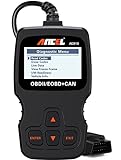
The AD310 is the default recommendation for first-time users and for good reason. It plugs in, reads and clears engine codes, shows freeze-frame data, and checks I/M readiness for emissions testing, all for around $22. There is no app, no pairing, and no subscription, making it the most reliable “just works” option on this list.
FOXWELL NT301 OBD2 Scanner with Live Data
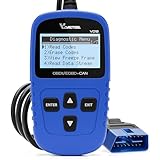
Stepping up to roughly $60, the NT301 adds a color screen, live data graphing, and a much faster read speed. For DIYers who want to watch coolant temperature or oxygen sensor voltage in real time while chasing a rough idle, this is the standout value pick.
Innova 5210 OBD2 Scanner and Engine Code Reader
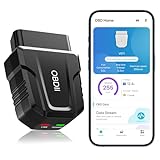
The Innova 5210 blends a code reader with a built-in battery and charging-system tester, plus oil-reset functionality. Its Bluetooth link to a repair app gives you probable-fix suggestions ranked by how often they solve a given code, which is genuinely helpful for beginners.
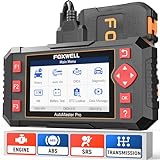
FOXWELL NT604 Elite OBD2 Scanner
If you want to see beyond the engine, the NT604 Elite reads ABS, SRS airbag, and transmission codes in addition to standard OBD2. That four-system coverage catches problems a basic reader would miss entirely, which matters on older, higher-mileage cars.
MOTOPOWER MP69033 Car OBD2 Scanner Code Reader
At the budget end, the MP69033 is a dependable pocket-sized reader for under $25. It reads and clears codes, retrieves vehicle information, and runs emissions readiness checks. It lacks live data, but for the driver who just wants to know why the light is on, it delivers.
Frequently Asked Questions
Will an OBD2 scanner tell me exactly what is wrong?
It gives you a trouble code that points to a system or component, not always the precise broken part. A P0301 tells you cylinder one is misfiring, but you still diagnose whether it is a coil, plug, or injector.
Is it safe to clear codes myself?
Yes, though clearing a code only turns off the light temporarily. If the underlying fault remains, the code and light will return, so use clearing to confirm whether a repair actually worked.
Do I need Bluetooth or is a wired scanner enough?
A wired scanner like the ANCEL AD310 is more than enough for most people and never has pairing issues. Choose Bluetooth only if you specifically want app-based graphing on a larger phone screen.
Will one scanner work on all my cars?
Any vehicle built for the US market from 1996 onward uses the same OBD2 standard, so a single scanner covers your whole household. Enhanced manufacturer-specific functions can vary by brand.
Final Thoughts
An OBD2 scanner pays for itself the first time it stops you from paying a shop just to read a code. Beginners on a tight budget should start with the ANCEL AD310, while anyone who wants live data and multi-system coverage will be happier with the FOXWELL NT301 or NT604 Elite. Any of these five turns a scary dashboard light into actionable information.