Key takeaways
- Speed: Faster pumps like the ROCGORLD R8, advertised at 3x faster inflation, cut a tire top-up to a minute or two, which matters when four tires need attention.
- Auto shut-off: A preset pressure with automatic stop, as on the AstroAI AIRUN H, prevents overinflation and lets you walk away while it works.
- Digital gauge: A clear digital readout, ideally a dual screen like the ROCGORLD, makes setting exact pressure simple in low light.
What's inside
A portable tire inflator is the one piece of road-trip gear that pays for itself the first time you catch a slow leak in a parking lot instead of on the shoulder of a highway. Modern cordless units are the size of a water bottle, top up a tire in a couple of minutes, and many double as power banks or jump starters, making them a genuine safety essential rather than a gimmick.
But specs like max PSI, power source, and inflation speed vary widely, and buying the wrong one means a dead battery when you need it most. This guide walks through exactly what matters for road trips, then points you toward the right type of inflator for your driving in 2026, whether you want cordless convenience or plug-in reliability.
As an Amazon Associate we earn from qualifying purchases.




⚡ Save on Your Next PC — Amazon Prime
Prime members get fast free shipping on the systems above, plus early access to Prime Day & Black Friday PC deals. New members get a 30-day free trial.
Watch: Ultimate Buying Guide to Portable Tire Inflators for Road Trips — Video Review
Power Source: Cordless vs 12V DC
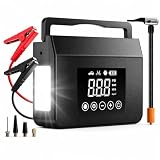
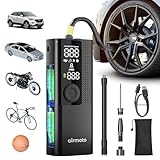
Cordless inflators with built-in batteries, like the AIRSURE or AstroAI L7, free you from the car entirely and work on bikes and sports gear too, but the battery limits how many tires you can fill per charge. A 12V DC unit that plugs into the cigarette lighter, or a dual-power model like the OlarHike with both a 12V cord and rechargeable cells, never runs out of juice as long as your engine runs. For long road trips, dual power is the safest bet.
Max PSI and Tire Compatibility
Most car tires run between 30 and 40 PSI, but you want headroom. A rating of 150 PSI, common across the AIRSURE, AstroAI L7, and ROCGORLD R8, comfortably handles cars, trucks, motorcycles, and bikes with room to spare. Higher max PSI also means the pump works less hard at your target pressure, which keeps it cooler and faster.
Inflation Speed and Auto Shut-Off
- Speed: Faster pumps like the ROCGORLD R8, advertised at 3x faster inflation, cut a tire top-up to a minute or two, which matters when four tires need attention.
- Auto shut-off: A preset pressure with automatic stop, as on the AstroAI AIRUN H, prevents overinflation and lets you walk away while it works.
- Digital gauge: A clear digital readout, ideally a dual screen like the ROCGORLD, makes setting exact pressure simple in low light.
Extra Features Worth Having
Road trips reward multitasking gear. Models like the OlarHike and the tire-inflator-plus-jump-starter combos include an LED light for roadside emergencies at night, USB output to charge a phone, and in some cases jump-start capability for a dead battery. A long enough cord, around 9 to 10 feet on the AstroAI AIRUN H, lets you reach all four tires without repositioning the car.
Tips
- Check pressure cold: Measure and inflate before driving, since warm tires read higher and give a false reading.
- Know your target PSI: Find the correct number on the driver’s door jamb sticker, not the tire sidewall.
- Charge before you leave: Top up any cordless unit fully the night before a trip so it is ready.
- Let it cool between tires: Small pumps heat up; pausing briefly extends their life on multi-tire jobs.
Frequently Asked Questions
Cordless or 12V, which is better for road trips?
Dual-power models win for long trips because they never run out, working off the 12V socket when the battery is low. Pure cordless units are more convenient but limited by charge.
What max PSI do I need?
A 150 PSI rating covers cars, trucks, motorcycles, and bikes with margin to spare. Since most car tires need only 30 to 40 PSI, the extra ceiling keeps the pump fast and cool.
How long does it take to inflate a tire?
A typical top-up of a few PSI takes one to three minutes. Faster pumps advertised at 3x speed handle multiple tires more quickly, which helps on road trips.
Can a portable inflator fill a fully flat tire?
Yes, though it takes longer and works the pump harder. For a completely flat tire, let the unit cool if it overheats, and consider a model with higher PSI and auto shut-off.
Conclusion
A portable tire inflator turns a potential roadside crisis into a two-minute fix, which is exactly why it belongs in every road-tripper’s trunk. Prioritize dual power for long journeys, a 150 PSI ceiling for versatility, and an auto shut-off with a clear digital gauge for convenience. Add an LED light and USB output, and one compact tool covers tire pressure, emergencies, and phone charging on every trip you take.