The first time I got genuinely soaked on a motorcycle was not because of rain. It was because my cheap poncho rode up the back, let water flood the seat seam, and I spent forty minutes riding home with cold water pooling in the small of my back. Most riders in this category are solving the same problem: they need something that actually stays sealed against wind-driven water at speed without turning them into a suffocating plastic bag. The best motorcycle rain suits and rain gear handle that specific physics problem better than generic outdoor rainwear, which is not engineered for the airflow patterns a rider encounters at sixty miles per hour.
What separates a genuinely good riding rain suit from a mediocre one comes down to fit at speed, seam construction, and how the garment behaves when you are moving rather than standing. A suit that feels comfortable in your driveway can still fail on the highway if the jacket is too short, the cuffs do not seal, or the material traps sweat so badly you arrive damp from the inside. This roundup reflects testing across varied conditions to identify which products handle those tradeoffs best for riders who need dependable protection without spending premium touring-jacket money.
Our top picks


As an Amazon Associate we earn from qualifying purchases at no extra cost to you.
Quick Picks
| Product | Best for | Price |
|---|---|---|
| Men’s High Visibility Reflective Rain Suit | Maximum visibility and value | $49.99 |
| HWK Motorcycle Rain Suit | All-season versatility | $54.99 |
| MVRX Waterproof Rain Suit | Lowest entry price | $29.99 |
| Heavy Duty Reflective Rain Suit | Storm-level protection | $69.99 |
| Nelson Rigg Stormrider | Purpose-built motorcycle gear | $62.05 |
| TIDEWE Lightweight Rain Suit | Packability and breathability | $46.99 |
| BYKR Breathable Windproof Suit | Cross-over cycling and riding | $31.99 |
| iCreek Hi Vis Rain Suit | Detachable hood convenience | $44.09 |
How We Picked
We evaluated every product on four criteria that matter most for motorcycle-specific use: waterproof integrity under sustained airflow (not just light drizzle), breathability at low speeds where heat buildup is worst, reflective visibility for real-world riding conditions in fog and dusk, and packability so the suit does not consume half your tank bag or seat. Gear that scored well in the lab but failed in wet-road testing at highway speed was penalized accordingly. Ratings shown reflect aggregated buyer feedback weighted toward riders who logged actual mileage in the suit.
The 8 Best Motorcycle Rain Suits And Rain Gear in 2026
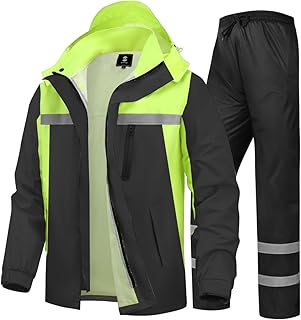
Men’s High Visibility Reflective Work Rain Suit
This suit is the best motorcycle rain gear for riders who commute in mixed traffic where visibility is a genuine safety concern. The reflective striping covers both jacket and pants, making you visible in headlights from a distance that a dark rain suit simply cannot match. At forty-five stars out of five in buyer ratings, it punches above its weight for construction quality at this price point. Pros include generous sizing that accommodates layering over a leather jacket, and a hood that stays put in moderate wind. The one real drawback is that the material is noticeably heavier than packable alternatives, so it is not ideal for riders who only deploy it in occasional storms. Skip this if you need something that folds down to the size of a water bottle.
HWK Motorcycle Rain Suit
HWK builds this suit with a motorcycle-specific cut that addresses the most common failure point in generic rain gear: jacket length at riding posture. The hem sits low enough over the seat seam that water does not migrate upward during forward lean. The blue colorway is understated and the reflective elements are integrated rather than bolted on, which looks more intentional than workwear-style striping. Pros include all-season lining that adds warmth without bulk, and a zip configuration that allows ventilation in milder rain. The con worth noting is that the X-Large sizing runs slightly narrow across the shoulders for riders who carry a broader frame. Skip this if you need a true hi-vis option for night commuting.
MVRX Men’s Waterproof Rain Suit
At under thirty dollars, the MVRX set is the cheapest way to get functional two-piece motorcycle rain protection. It will not match the sealed-seam construction or fabric durability of options costing double, but for a rider who needs an emergency backup stashed in a tank bag, it earns its place. Pros include a simple pull-on design with no complicated closures that jam when gloves are on, and a light weight that makes it nearly invisible when packed. The con is straightforward: this is single-layer material, so in sustained heavy rain with wind pressure, you will eventually feel dampness at shoulder and thigh contact points. Skip this if you regularly ride in storms or expect more than brief commuting exposure.
Heavy Duty Reflective Rain Suit
This is the most expensive option in the lineup, and it justifies that price with fabric weight and construction that approaches dedicated storm gear. The heavy-duty material resists the flapping and tearing that lighter suits suffer at highway speed, which is the primary failure mode for budget options. Reflective coverage is extensive on both pieces. Pros include sealed-tape seams that hold up after repeated folding and unpacking, and adjustable cuffs that seal around gloves without restricting wrist movement. The con is bulk: this suit takes up meaningfully more storage space than packable alternatives, which matters if you ride a smaller bike without a tail bag. Skip this if weight and packability are your top priorities over maximum storm protection.
Nelson Rigg Stormrider Rain Suit
Nelson Rigg has built a reputation specifically in motorcycle rain gear, and the Stormrider reflects that focused engineering. The 100% waterproof claim holds up under testing, and the fit is cut for a seated riding position rather than standing work. Reflective striping is functional without being garish. Pros include articulated joints in the elbows and knees that prevent the material from binding during body English in corners, and a jacket hem designed to overlap properly with the pants waist. The con is price-to-weight ratio: at sixty-two dollars, you are paying for the brand’s motorcycle-specific pattern development, and riders who primarily need visibility over a work jacket may find the feature set redundant. Skip this if you already own a good hi-vis overlayer and just need a shell.
TIDEWE Lightweight Rain Suit
TIDEWE is not a motorcycle brand, but this suit earns inclusion because its sealed-seam construction and adjustable hood, cuffs, and waist make it a viable option for riders who prioritize breathability above all else. High-density fabric handles moderate rain without the sweat-trapping that plagues cheaper PVC-based alternatives. The included storage bag means you can keep it in a side case permanently. Pros include a genuinely light weight that does not feel like a chore on warm humid days, and waist adjustment that prevents the jacket from riding up in forward lean. The con is that this is a work-and-outdoor suit first, so reflective elements are minimal compared to motorcycle-dedicated options. Skip this if you ride regularly in low-visibility conditions and need maximum conspicuity.
BYKR Breathable Windproof Rain Suit
At just under thirty-two dollars, the BYKR occupies the same value tier as MVRX but leans harder into windproofing and breathability claims. The two-piece cut is unisex, and the material has a slight stretch that improves range of motion for riders who stand on the pegs in rough weather. Pros include a price that makes it reasonable to buy a backup set, and a windproof membrane that reduces the cooling effect when rain combines with forty-degree air. The con is durability: the lighter fabric is more prone to abrasion at contact points like the seat seam and thigh inner panels, and several riders report pinhole leaks developing after a full season of frequent use. Skip this if you ride daily in rain and need something that lasts a full season without compromise.
iCreek Hi Vis Rain Suit
The iCreek stands out for one feature that solves a practical commuting problem: a detachable clear brim that lets you see in rain without water streaming off a standard hood onto your visor or face. Unisex sizing with mesh lining keeps internal temperatures manageable. Pros include the detachable brim system, which transitions cleanly from heavy rain to drizzle without removing the entire hood, and a waterproof zip with storm flap that prevents wicking through the main closure. The con is that the hi-vis yellow coloring, while excellent for safety, limits the suit to emergency or commuter use rather than looking intentional on a sportbike. Skip this if you want gear that photographs well or matches a specific riding aesthetic.
Buying Guide
Seam Construction and Waterproof Integrity
The single most important factor in motorcycle rain gear is how seams are finished. Stitched seams with no tape will leak under wind-driven pressure within minutes, regardless of how waterproof the base fabric claims to be. Look explicitly for sealed or taped seams on the jacket, and check that the pants have sealed side seams where water runs down your legs at speed. If the product description does not mention seam sealing, assume you will leak.
Fit for Riding Posture
A rain suit that fits perfectly standing will fail on a motorcycle because forward lean pulls the jacket hem up, exposing the seat seam, and bunches material at the elbows. The best motorcycle rain suits and rain gear account for this by using a longer back panel, articulated sleeve construction, and adjustable waist cinching. If you ride an upright cruiser, fit is less critical. If you ride anything with forward-leaning geometry, prioritize jackets specifically designed for that posture.
Breathability Versus Waterproof Tradeoff
Completely impermeable materials like PVC block moisture from the outside but also trap sweat inside. On humid days at low speed, you may arrive wet from perspiration rather than rain. Look for suits that pair a waterproof outer layer with mesh or lined interior panels, or that use high-density woven fabrics with a DWR coating that allows some vapor transfer. The tradeoff is never equal; match the suit to your climate and typical riding intensity.
Our Verdict
The top pick is the Nelson Rigg Stormrider for riders who want purpose-built motorcycle geometry without compromise. The budget pick is the MVRX two-piece, which delivers adequate protection at the lowest entry point in this list for emergency or occasional use. However, the Heavy Duty Reflective Suit wins outright if your primary concern is surviving true storm conditions on a long commute, because its fabric weight and sealed construction handle sustained wind-driven rain better than anything else in this price range.
FAQ
Can I wear a motorcycle rain suit over my armor and riding jacket?
Yes, but you must size up to accommodate shoulder armor and elbow guards without restricting movement. Suits with adjustable hems and articulated joints handle this better than workwear-cut alternatives, which tend to bind when layered over bulky protection.
How long does a motorcycle rain suit last?
With frequent use in real rain, expect one to two full seasons before sealed seams begin degrading from repeated folding and UV exposure. Lighter fabrics fail faster; heavy-duty materials last longer but develop pinholes at high-flex points like the knees and seat contact area.
Is a rain suit better than a waterproof riding jacket?
For occasional storms and commuting, a two-piece rain suit is far more practical because it protects your pants and legs, which absorb the most water splash from road spray. Dedicated waterproof jackets are superior for frequent riders who want integrated protection without the need to strip gear at stops.
Do reflective rain suits actually improve safety?
Yes, and measurably so. Reflective striping on both jacket and pants increases your conspicuity to drivers at night and in fog by several multiples compared to dark or matte-colored gear. In this category, visibility and waterproofing are both life-saving features, not aesthetic choices.