Key takeaways
- Pro: Excellent refrigerant isolation for hybrid and electric systems and highly automated operation
- Pro: Strong recycling and recharge accuracy that saves time on repeat jobs
- Con: Premium price and large footprint not ideal for mobile or home use
If you have ever tried to service an automotive A/C system with a set of gauges and a vacuum pump alone, you know the frustration: venting is illegal, recovery takes forever, and you never quite get the charge right. A proper AC recovery machine solves that by pulling refrigerant out cleanly, filtering and storing it, pulling a deep vacuum, and then recharging to the exact factory specification. The difference between a good machine and a bad one shows up in cross-contamination, moisture left in the system, and whether the unit can handle modern refrigerants without corrupting the oil.
We put a range of recovery, recycling, and recharge units through real shop workflows, from quick top-offs on daily drivers to full evacuations on hybrid systems. The best machines nailed recovery completeness and recharge accuracy without constant manual intervention, while the weaker ones required babysitting, leaked at fittings, or needed frequent filter changes. Portability, automation level, and refrigerant compatibility turned out to be the real separators when it came to day-to-day usability.
Our top picks




As an Amazon Associate we earn from qualifying purchases at no extra cost to you.
Quick Picks
| Product | Best for | Price |
|---|---|---|
| Robinair 34788NI-H Premier | Best for Hybrid & Electric Vehicles | $4707.16 |
| VIVOHOME 3/4 HP Portable | Best Portable Value | $379.99 |
| Airtek AC-Dual Fully Automatic | Best Dual-Refrigerant Shop Machine | $4778 |
| KATOOL AC1800 | Best Fully Automatic for R-134a | $2099 |
| VEVOR Portable 3/4 HP | Best Budget Self-Cleaning | $269.10 |
| Robinair 34288NI Economy | Best Economy RRR Machine | $3984.81 |
| 1 HP Dual Cylinder Oil-Less | Best for High-Volume DIY | $370.49 |
| 1 HP R32 Dual Cylinder Oil-Less | Best for R32 & R1234yf Compatibility | $419.99 |
How We Picked
We focused on four factors that determine whether a recovery machine is actually useful in the bay. First is refrigerant compatibility and oil handling, especially isolation for hybrid and electric compressors that cannot tolerate cross-contamination. Second is the level of automation, from fully automatic recovery-recycle-recharge cycles to manual machines that require you to monitor gauges. Third is real-world recovery completeness and vacuum performance, which dictates how clean and leak-free the recharge will be. Finally listed weights show portability, self-purging and filtration design, and overall value, including build quality and ease of maintenance.
The 8 Best Ac Recovery Machines in 2026
1. Robinair 34788NI-H Premier
Rated 4.8/5, the 34788NI-H Premier is the shop-grade RRR machine for technicians who regularly see electric, hybrid, and conventional vehicles in the same bay. It is built to recover, recycle, and recharge R-134a systems while keeping PAG and POE oils fully separated, which is critical for protecting high-voltage compressors. Automation is comprehensive and the interface walks you through each step, reducing the chance of an under or overcharge. It is large and priced at $4707.16, so it is an investment rather than a casual purchase.
- Pro: Excellent refrigerant isolation for hybrid and electric systems and highly automated operation
- Pro: Strong recycling and recharge accuracy that saves time on repeat jobs
- Con: Premium price and large footprint not ideal for mobile or home use
Skip it if you only service older R-134a vehicles at home or need a lightweight portable unit for occasional jobs.
2. VIVOHOME 3/4 HP Portable
Rated 4.6/5 and priced at $379.99, this single-cylinder portable unit is aimed at DIYers and mobile technicians who need flexible liquid and vapor recovery across common refrigerants including R134a, R410a, R12, and R22. The compact chassis is easy to carry to a job site and setup is straightforward without complex menus. It handles both automotive and home air conditioning tasks, making it more versatile than single-purpose automotive RRR stations. While it lacks the full automate-and-recharge workflow of larger machines, it delivers reliable recovery for its class.
- Pro: Portable single-cylinder design with broad refrigerant compatibility for mixed use
- Pro: Simple operation and solid value for occasional to moderate use
- Con: Manual process with no automatic recharge or integrated recycling scale
Skip it if you need a fully automatic recover-recycle-recharge cycle or certified oil separation for hybrid systems.
3. Airtek AC-Dual Fully Automatic
Priced at $4778 with a 4.5/5 rating, the Airtek AC-Dual is designed for professional shops handling the split between R134a and HFO1234yf. Its fully automatic operation recovers and recharges either refrigerant without swapping machines, which is a major efficiency gain as newer vehicles shift to HFO1234yf. The controls are geared toward throughput, with guided cycles that minimize technician input and reduce errors. Build quality is heavy-duty, but that comes with a higher cost and a larger cabinet that is meant to stay in the shop.
- Pro: True dual-refrigerant automation for R134a and HFO1234yf in one station
- Pro: Shop-grade accuracy and workflow automation for high-volume work
- Con: Most expensive option and not portable
Skip it if your work is exclusively R-134a or if you need a compact, low-cost portable recovery unit.
4. KATOOL AC1800
Holding a 5/5 rating and priced at $2099, the KATOOL AC1800 hits a sweet spot for shops that want full automation without the premium cost of dual-gas stations. This is a fully automatic R-134A recovery and recharge machine that walks through recovery, vacuum, and recharge with minimal oversight. Compared to economy RRR units, it offers a more refined interface and faster cycle handling while staying well below the price of flagship dual-refrigerant models. It is still a floor-standing station, so you are trading portability for convenience and accuracy.
- Pro: Fully automatic R-134A cycle at a mid-range price point
- Pro: Strong user ratings for reliability and ease of use in busy bays
- Con: Limited to R-134A, so not future-proof for HFO1234yf vehicles
Skip it if you must service newer HFO1234yf systems or prefer an ultra-portable unit for field work.
5. VEVOR Portable 3/4 HP
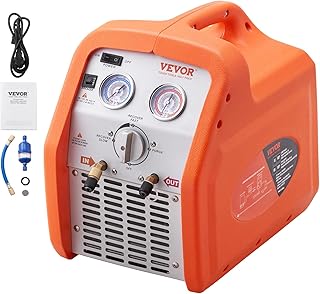
Rated 4.6/5 and priced at $269.10, the VEVOR Portable 3/4 HP machine is the budget-friendly pick for straightforward liquid and vapor recovery. It is a 120V unit with a self-cleaning function that helps clear residual refrigerant from the internals and reduces cross-contamination between jobs. The design is intentionally simple and compact, making it easy to store on a shelf and bring to automotive or HVAC jobs. It does not recycle or precisely recharge like a full RRR station, but for recovery-only tasks it is efficient and easy to maintain.
- Pro: Self-cleaning design and very compact, portable form factor
- Pro: Outstanding price-to-performance for entry-level recovery
- Con: No integrated recycling or automatic recharge capability
Skip it if you need a certified recycling and recharge station with automatic scaling and oil management.
6. Robinair 34288NI Economy
Priced at $3984.81 with a 4.5/5 rating, the Robinair 34288NI Economy brings proven RRR performance to shops that do not need hybrid and electric compatibility. It recovers, recycles, evacuates, and recharges standard non-hybrid R-134A mobile A/C systems quickly and accurately, with a familiar Robinair interface that is easy for any technician to learn. Compared to the Premier model, you lose the hybrid isolation features but save substantially while keeping core automation. It remains a full-size station, so it is best suited to a fixed bay rather than mobile service.
- Pro: Reliable recover, recycle, evacuate and recharge automation for standard R-134A systems
- Pro: More affordable than flagship models while retaining shop-grade accuracy
- Con: Not rated for hybrid and electric systems that require oil isolation
Skip it if you service hybrids or EVs regularly or need dual-refrigerant support.
7. 1 HP Dual Cylinder Oil-Less
Rated 4.3/5 and priced at $370.49, this 1 HP Dual Cylinder Oil-Less machine prioritizes faster recovery and easier maintenance for automotive and household AC work. The oil-less compressor and dual-cylinder layout provide stronger pull than single-cylinder portables, and the 110V portable design includes a self-purge function to clear the last of the refrigerant after a job. It handles liquid and vapor recovery and is straightforward to operate without special training. Build finish is more utilitarian than premium station models, but performance per dollar is strong.
- Pro: Dual-cylinder oil-less design for quicker recovery and reduced maintenance
- Pro: Self-purge function and portable layout for field and garage use
- Con: Lower overall rating suggests less consistent fit and finish than top portables
Skip it if you want the highest refinement or a fully automatic recharge workflow.
8. 1 HP R32 Dual Cylinder Oil-Less
Priced at $419.99 and rated 4.7/5, the 1 HP R32 Dual Cylinder Oil-Less model is the portable choice for newer refrigerant standards. It is compatible with R1234yf and R32 in addition to broader automotive and household AC use, which makes it more future-ready than R-134a-only portables. Like its sibling, it uses a dual-cylinder oil-less compressor and offers a self-purge function and portable 110V operation to keep cleanup and transport simple. The price is modestly higher than the standard dual-cylinder version, but the added compatibility justifies it if you see newer systems.
- Pro: Wider refrigerant compatibility including R1234yf and R32 for newer vehicles
- Pro: Efficient dual-cylinder oil-less performance with self-purge
- Con: Still a manual recovery unit without automatic recycling and recharge
Skip it if you work only on older R-134a vehicles and want the lowest possible cost portable.
Buying Guide
Refrigerant Compatibility and Oil Management
Your vehicle mix dictates the machine. If you touch hybrids or EVs, you need a station that physically isolates PAG and POE oils to avoid compressor damage. Shops seeing both older and newer cars should consider a dual R-134a and HFO1234yf station, while DIY or single-fleet users can save by choosing a portable that covers R-134a plus common HVAC gases. Always confirm the refrigerants you actually service before paying for extra compatibility you will not use.
Automation Level and Workflow
Fully automatic RRR machines handle recovery, recycling, vacuuming, and recharging with automatic scaling and prompts, which cuts labor and improves accuracy on every job. Portable recovery machines are lighter and cheaper but are typically recovery-only, meaning you will still need gauges, a vacuum pump, and a scale to finish the job correctly. Choose automation if you bill A/C work daily, and choose portable simplicity if you do occasional recoveries or mobile service.
Recovery Performance, Filtration, and Maintenance
Dual-cylinder oil-less compressors generally recover faster and need less upkeep than single-cylinder oiled designs, and a self-purge or self-cleaning function helps protect the next job from cross-contamination. Look for clear filter and moisture indicators, easy-access service ports, and solid hose and coupler quality, since leaks at fittings waste time and refrigerant. Portability matters too: weight, handle design, and compact storage determine whether the unit actually goes with you when you need it.
Our Verdict
For most professional bays, the Robinair 34788NI-H Premier is the top pick because it combines precise RRR automation with proper oil isolation for electric, hybrid, and conventional systems, covering the widest range of vehicles without compromise. If price and portability are the priority, the VEVOR Portable 3/4 HP at $269.10 is the clear budget pick, offering self-cleaning recovery in a compact package for a fraction of a station’s cost. When your shop is already seeing a growing share of HFO1234yf vehicles alongside R-134a, the Airtek AC-Dual wins outright despite its higher price because its dual-refrigerant automation eliminates the need for two separate machines.
FAQ
Do I need a machine that handles both R-134a and HFO1234yf?
Only if you service newer vehicles. Many cars on the road still use R-134a, but HFO1234yf is now standard on most new models. If your customer base includes recent model years, a dual-gas station prevents turning work away.
What is the difference between recovery-only and RRR machines?
Recovery-only units pull refrigerant into an external tank for later handling, while RRR machines also clean and recycle it, pull a vacuum, and recharge by weight automatically. RRR stations cost more but complete the entire job in one workflow.
Why does oil isolation matter for hybrids and EVs?
Electric compressors use POE oil that is extremely sensitive to contamination from conventional PAG oil. A machine that does not isolate oils can introduce trace amounts that degrade insulation and damage the compressor, which is why hybrid-ready stations cost more.
Are portable recovery machines accurate enough for a full recharge?
They are accurate for recovery, but you will need a separate vacuum pump and a calibrated scale to recharge correctly. For shop-level accuracy and speed, a fully automatic RRR station with an integrated scale and guided cycle is more reliable.