Key takeaways
- Find the best tablets for ebooks with sharp screens, long battery life, and room for a large library. Compare 4 reader-friendly tablets for 2026.
A good tablet can turn a spare half hour into a finished chapter. Unlike a phone, it gives text room to breathe, and unlike a laptop, it disappears into a bag until reading time. The best tablets for ebooks balance screen clarity, weight, battery life, and access to the reading apps that hold a personal library, and they need to be comfortable to hold one-handed on a train, in bed, or in a waiting room.


This guide focuses on tablets that work well as ebook readers first and general-purpose devices second. Every pick below runs a major ebook app, offers enough storage for a large library, and lasts long enough for a full day of reading without hunting for a charger. Screen size matters too: an 8-inch tablet feels closest to a paperback, while a 10- or 11-inch screen suits illustrated books, comics, magazines, and PDFs with small print. The four tablets here cover both sizes.
As an Amazon Associate, we earn from qualifying purchases.
Quick Picks
Our Short List of 3
- Display: 8-inch HD touchscreen, 1280 x 800 resolution, 189 ppi, IPS technology
- Processor and memory: Hexa-core 2.0 GHz, up to 4 GB RAM
- Storage: 64 GB internal, microSD slot for up to 1 TB additional storage
- Battery life: Up to 13 hours of reading, browsing, watching videos, and listening to music
- Display: 10.1-inch Full HD display, 1920 x 1200 resolution, 224 ppi, strengthened aluminosilicate glass
- Processor and memory: Octa-core processor up to 2.05 GHz, 3 GB RAM
- Storage: 64 GB internal, microSD slot for up to 1 TB additional storage
- Battery life: Up to 13 hours of reading, browsing the web, watching videos, and listening to music
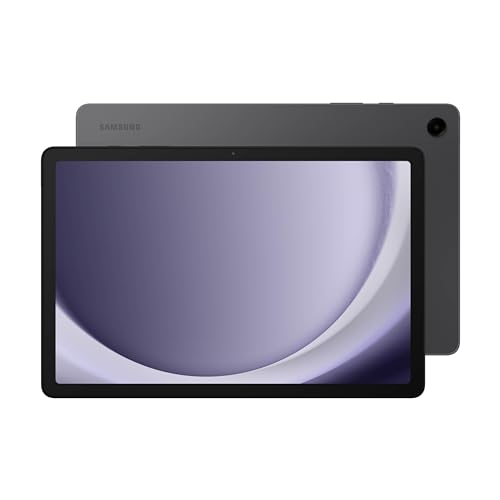
- Display: 11-inch TFT LCD, 1920 x 1200 resolution, 90 Hz refresh rate, 480 nits
- Processor and memory: Qualcomm Snapdragon 695, 4 GB RAM
- Storage: 64 GB internal, expandable up to 1 TB with microSD
- Audio: Quad speakers with Dolby Atmos
All 3 Picks at a Glance
| Product | Specs | Action |
|---|---|---|
| 1. Amazon Fire HD 8 Tablet (2024 Release) — Best Compact Tablet for Ebooks |
| Check price on Amazon |
| 2. Amazon Fire HD 10 Tablet (2023 Release) — Best Full HD Tablet for Ebooks |
| Check price on Amazon |
| 3. Samsung Galaxy Tab A9+ — Best Big-Screen Android Tablet for Ebooks |
| Check price on Amazon |
1. Amazon Fire HD 8 Tablet (2024 Release) — Best Compact Tablet for Ebooks
- Display: 8-inch HD touchscreen, 1280 x 800 resolution, 189 ppi, IPS technology
- Processor and memory: Hexa-core 2.0 GHz, up to 4 GB RAM
- Storage: 64 GB internal, microSD slot for up to 1 TB additional storage
- Battery life: Up to 13 hours of reading, browsing, watching videos, and listening to music
The Fire HD 8 is the closest thing in this guide to a paperback. At 8 inches and 11.88 ounces, it is light enough to hold in one hand for a long chapter, and it slips into a small bag without adding noticeable bulk. For readers who carry a tablet everywhere and read in short sessions — on a commute, in a queue, or during a lunch break — that portability is the main reason to choose it.
The 8-inch HD display uses 1280 x 800 resolution at 189 pixels per inch, with IPS technology and strengthened aluminosilicate glass. Text stays legible at comfortable font sizes, and the screen is bright enough for indoor reading and shaded outdoor spots. The tablet runs the Kindle app natively, so a Kindle library, highlights, notes, and Whispersync progress carry over without any setup work. Audible is built in as well, which makes it easy to switch from reading to listening on the same device.
Under the hood, a hexa-core 2.0 GHz processor pairs with up to 4 GB of RAM in the 64 GB configuration, enough for smooth page turns and quick library searches. Storage reaches 64 GB in the version linked here, with a microSD slot that accepts cards up to 1 TB, so a library of thousands of ebooks fits with room to spare. Battery life is rated at up to 13 hours of reading, browsing, watching videos, and listening to music, and the tablet charges over USB-C.
Key specs
Pros
Cons
2. Amazon Fire HD 10 Tablet (2023 Release) — Best Full HD Tablet for Ebooks
- Display: 10.1-inch Full HD display, 1920 x 1200 resolution, 224 ppi, strengthened aluminosilicate glass
- Processor and memory: Octa-core processor up to 2.05 GHz, 3 GB RAM
- Storage: 64 GB internal, microSD slot for up to 1 TB additional storage
- Battery life: Up to 13 hours of reading, browsing the web, watching videos, and listening to music
The Fire HD 10 takes the same Kindle-first idea as the Fire HD 8 and puts it on a larger, sharper page. Its 10.1-inch Full HD display shows 1920 x 1200 resolution at 224 pixels per inch, which makes a visible difference for illustrated books, comics, cookbooks, and magazines, where images and fine text share the page, and for PDFs and textbooks, where a bigger page means less zooming and scrolling.
An octa-core processor running up to 2.05 GHz with 3 GB of RAM keeps page turns and library browsing smooth, and the jump from the previous generation is noticeable when moving between apps. The version linked here has 64 GB of internal storage, with 32 GB also available, and a microSD slot that supports cards up to 1 TB. That combination suits readers who keep a large downloaded library on the device rather than relying on cloud access.
Battery life is rated at up to 13 hours of reading, web browsing, watching videos, and listening to music, and the tablet fully charges in under 4 hours with the included 9W adapter and USB-C cable. At 15.29 ounces, it suits two-handed reading, a lap, or a stand more than extended one-handed holds. The screen is strengthened with aluminosilicate glass, and the tablet includes an ambient light sensor, dual speakers, a 3.5 mm headphone jack, and Bluetooth 5.3 for wireless headphones.
The Kindle app is the natural home for this tablet, and Alexa can read Kindle books aloud through the Kindle Read Aloud feature, which is handy for hands-free stretches. Accessibility settings include VoiceView screen reader, screen magnification, adjustable font and display size, and high-contrast text, all useful for readers who need larger or clearer type.
Key specs
Pros
Cons
3. Samsung Galaxy Tab A9+ — Best Big-Screen Android Tablet for Ebooks
- Display: 11-inch TFT LCD, 1920 x 1200 resolution, 90 Hz refresh rate, 480 nits
- Processor and memory: Qualcomm Snapdragon 695, 4 GB RAM
- Storage: 64 GB internal, expandable up to 1 TB with microSD
- Audio: Quad speakers with Dolby Atmos
The Galaxy Tab A9+ is the pick for readers who want a large, smooth screen and the full range of Android reading apps. Its 11-inch display runs at 1920 x 1200 resolution with a 90 Hz refresh rate and 480 nits of brightness, so scrolling through a library and turning pages feels fluid, and text stays readable in brighter rooms. The screen is a TFT LCD panel, and the tablet measures 10.12 x 6.64 x 0.27 inches, keeping a slim profile despite the larger display.
Because it runs Android with Google Play, the Tab A9+ opens the widest reading shelf in this guide. Kindle, Google Play Books, Kobo, Libby, and other reading apps all install directly, so readers are not tied to a single store. That matters for anyone whose library is split across services, or who borrows ebooks from a public library. Multi-window support also helps: a reader can keep a book open beside notes, a dictionary, or a browser tab without closing the book.
The larger screen is the main trade-off. An 11-inch tablet suits a table, a stand, or a lap better than one hand held aloft for an hour, while readers who mix novels with magazines, comics, and PDFs will get more from the extra screen space.
Key specs
Pros
Cons
4. Apple iPad (10th Generation) — Best Premium Tablet for Ebooks
The 10th-generation iPad is the premium pick for readers who want the sharpest screen and the broadest reading app library in one device. Its 10.9-inch Liquid Retina display uses True Tone, which adjusts the white balance to match ambient light, so pages look natural under warm indoor lighting and in daylight. Text is crisp, colors in illustrated books and comics are accurate, and the all-screen design keeps bezels slim without making the tablet hard to hold.
The A14 Bionic chip powers the iPad, and it handles large ebook libraries, illustrated PDFs, and comics without stuttering. The version linked here has 64 GB of storage and Wi-Fi 6, with Touch ID built into the top button for quick, secure unlocking. Battery life is described as all-day, and the tablet charges over USB-C.
What sets the iPad apart for ebook readers is the app ecosystem. Apple Books, Kindle, Kobo, Libby, Google Play Books, and specialist PDF and comic readers all run on iPadOS. The iPad also works with Apple Pencil (1st generation, with a USB-C to Apple Pencil Adapter) for annotating PDFs and marking up books, and with the Magic Keyboard Folio for readers who also type notes. At 1.05 pounds and 0.28 inches thick, it is portable for its screen size, though still a two-handed device for long sessions.
Key specs
- Display: 10.9-inch Liquid Retina display with True Tone
- Chip: A14 Bionic chip
- Storage: 64 GB
- Connectivity: Wi-Fi 6, USB-C connector, Touch ID
- Cameras: 12 MP Ultra Wide front camera, 12 MP Wide back camera with Smart HDR 3
- Apple Pencil: Works with Apple Pencil (1st generation) using USB-C to Apple Pencil Adapter
- Size and weight: 9.79 x 7.07 x 0.28 inches, 1.05 pounds
- Model number: MPQ33LL/A, first available October 18, 2022
Pros
- Excellent Liquid Retina display with True Tone for comfortable, natural-looking pages
- Widest choice of reading apps, including Apple Books, Kindle, Kobo, and Libby
- Fast A14 Bionic chip handles large libraries and illustrated books smoothly
- Apple Pencil support for annotating PDFs and marking up books
Cons
- Higher cost than the Fire and Samsung picks in this guide
- 64 GB of storage in the base model fills up faster with large comic and PDF libraries
- Apple Pencil (1st generation) needs a separate USB-C adapter
How to Choose a Tablet for Ebooks
Screen size and weight
Screen size is the first decision, and it depends on what is being read. An 8-inch tablet mirrors a paperback: light, easy to hold in one hand, and simple to carry. A 10- or 11-inch tablet shows more words per page and handles illustrated books, comics, and PDFs better, but it weighs more and suits a stand or a lap. Readers who finish mostly novels will usually be happier with the smaller size.
Display quality
Resolution decides how crisp text looks. A Full HD display at 1920 x 1200, as on the Fire HD 10 and Galaxy Tab A9+, renders small fonts cleanly. Brightness matters too, especially for reading near a window or outdoors in shade; a brighter panel, such as the 480-nit screen on the Tab A9+, stays legible where a dimmer screen washes out. Features such as True Tone on the iPad adjust color temperature to the room, which can reduce the harsh feeling of a bright white page at night.
Reading apps and comfort
A tablet is only as good as the library it can open. Kindle-first readers are well served by Fire tablets, while readers whose books live across Kindle, Kobo, and a library app such as Libby need Google Play or the App Store, which points toward the Galaxy Tab A9+ or the iPad. For comfort, look for a night mode, adjustable font size, an ambient light sensor, and Bluetooth or headphone support for audiobooks.
Battery life and storage
Ebook reading is light work for a tablet, so most of these devices last many hours on a charge. A rating of up to 13 hours, as on both Fire tablets, typically covers several days of ordinary reading. Storage is the quieter constraint: novels are small, but comics, illustrated books, and PDFs add up quickly. A 64 GB tablet with microSD expansion, as on the Fire tablets and the Tab A9+, removes that worry, while a fixed 64 GB iPad needs a little more library management.
Frequently Asked Questions
Is a tablet or a dedicated e-reader better for ebooks?
It depends on how reading fits into the day. A dedicated e-reader usually has an e-ink screen that is gentler in bright sunlight and a battery that lasts weeks, but it runs a limited set of apps. A tablet has a color screen, runs every major reading app, and also handles video, browsing, and email. Readers who want one device for books, comics, magazines, and everything else should choose a tablet.
What screen size is best for reading ebooks?
For novels, 8 inches is the sweet spot: close to a paperback, light in one hand, and easy to carry. For comics, magazines, illustrated books, and PDFs, 10 to 11 inches works better because images and small print stay legible without constant zooming.
How much storage do I need for ebooks?
Novels are small, often only a few megabytes each, so 32 GB holds thousands of them. Storage becomes important with comics, illustrated books, and PDFs, which can each run to hundreds of megabytes. A 64 GB tablet is a comfortable baseline, and microSD expansion up to 1 TB on the Fire tablets and the Galaxy Tab A9+ makes storage a non-issue for even the largest libraries.
Can I read Kindle books on a Samsung or Apple tablet?
Yes. The Kindle app is available on Android tablets through Google Play and on iPad through the App Store, so a Kindle library, highlights, and reading progress sync across devices. Fire tablets run the Kindle app natively. Samsung and Apple tablets also carry Kobo, Libby, and other reading apps.
Do tablets work well for reading at night?
Yes, with the right settings. Lower the brightness, turn on a night mode or warm display setting, and increase the font size so the eyes do not strain. A tablet screen still emits light, unlike an e-ink display, so readers who are sensitive to light at night may prefer a warm color temperature and a dark reading theme in their ebook app.
Conclusion
The best tablet for ebooks is the one that matches how and what its owner reads. The Fire HD 8 is the best compact choice: light, easy to hold, and built around the Kindle library, with up to 13 hours of battery life. The Fire HD 10 adds a sharper Full HD page for illustrated books and PDFs. The Galaxy Tab A9+ brings a large, smooth 90 Hz screen and the full range of Android reading apps, including library borrowing through Libby. The 10th-generation iPad offers the finest display and the broadest app library in this guide, with Apple Pencil support for readers who annotate.
Readers who mainly finish novels on the move should start with the Fire HD 8. Readers who mix novels with comics, magazines, and PDFs should look at the Fire HD 10 or the Galaxy Tab A9+. Readers who want the best screen and the widest app choice should choose the iPad. Any of the four will hold a large library, last through long reading sessions, and make the next chapter easy to reach.
FAQ
Is a tablet or a dedicated e-reader better for ebooks?
What screen size is best for reading ebooks?
How much storage do I need for ebooks?
Can I read Kindle books on a Samsung or Apple tablet?
Do tablets work well for reading at night?
More from Amazon
Programs that pair well with the guide above. Offers and eligibility are set by Amazon and may change.
Free shipping on eligible items, Prime Video and more. Eligible new members can start with a free trial.
Start a Prime free trialA Prime membership for ages 18-24 with a trial period. Eligibility is set by Amazon.
See Prime for Young AdultsAudiobooks and podcasts to listen to on the go. Eligible new members can start with a free trial.
Try Audible freeAd-free music streaming. Eligible new subscribers can start with a free trial.
Try Music Unlimited freeAs an Amazon Associate we earn from qualifying purchases.