Key takeaways
- Best Overall for Cost and Convenience: Brita Everyday Elite 10-Cup, because its Elite filter is rated for roughly six months or 120 gallons and is certified to reduce lead.
- Best for High-TDS Tap Water: ZeroWater 10-Cup Pitcher, because its five-stage filter and included TDS meter let you see dissolved solids drop.
- Best Budget: Brita Small 6-Cup, a compact pitcher with the lowest upfront cost in this comparison.
- Best Value Upgrade: Brita Large 10 Cup, the familiar standard-filter pitcher that fits most fridge doors.
- Best for Families: ZeroWater 22-Cup Dispenser, for households that drink a lot and want a spigot.
- Best Big Dispenser with Longer Filters: Brita XL 27 Cup with an Elite filter, for offices and big families.
- Best Mid-Size ZeroWater: ZeroWater 12-Cup Pitcher, an in-between size for couples.
If you are standing in front of two pitchers and wondering about zero water vs brita, the short answer is this: choose the ZeroWater 10-Cup Pitcher if your tap water has a lot of dissolved solids or you want a built-in TDS meter to show what the filter does, and choose the Brita Everyday Elite 10-Cup if you want the lowest long-term running cost with a filter that is certified to reduce lead for about six months. The Brita Large 10 Cup with a standard filter is the budget option for people who only want milder chlorine taste and smell. This guide compares real, currently sold models from both brands, so whether you searched “brita or zero water” or simply want a better glass of water, you can see which pitcher fits your kitchen, your tap and your budget.
A note on how we wrote this: this guide is research-based. We did not personally use these products. We compared manufacturer specification pages, the listing details of each pitcher and independent comparisons from water-quality publications, and we say “not listed” whenever a detail could not be confirmed. Nothing here is a health claim; if you have a specific concern such as lead in an older home, check your local water-quality report and the certification data sheet of the filter you plan to buy.
Our top picks


As an Amazon Associate we earn from qualifying purchases at no extra cost to you.
Top Picks at a Glance
- Best Overall for Cost and Convenience: Brita Everyday Elite 10-Cup, because its Elite filter is rated for roughly six months or 120 gallons and is certified to reduce lead.
- Best for High-TDS Tap Water: ZeroWater 10-Cup Pitcher, because its five-stage filter and included TDS meter let you see dissolved solids drop.
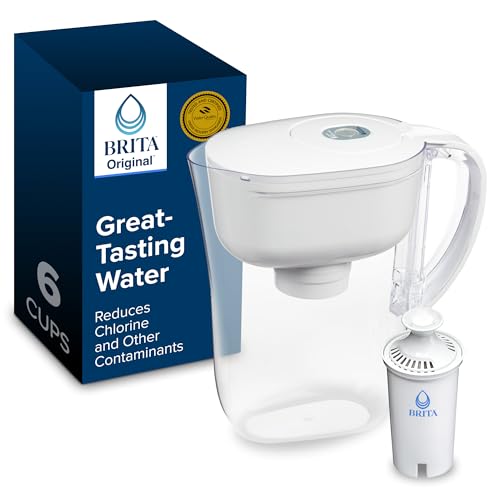
- Best Budget: Brita Small 6-Cup, a compact pitcher with the lowest upfront cost in this comparison.
- Best Value Upgrade: Brita Large 10 Cup, the familiar standard-filter pitcher that fits most fridge doors.
- Best for Families: ZeroWater 22-Cup Dispenser, for households that drink a lot and want a spigot.
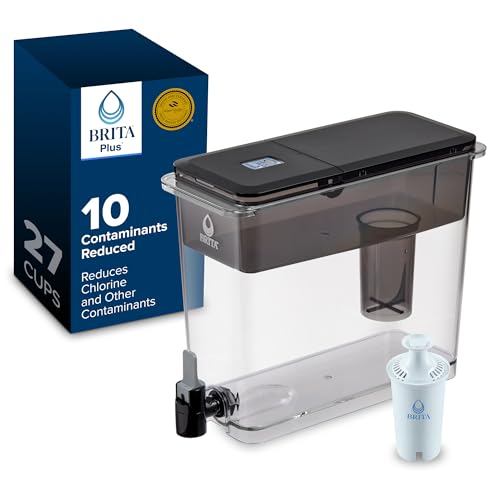
- Best Big Dispenser with Longer Filters: Brita XL 27 Cup with an Elite filter, for offices and big families.
- Best Mid-Size ZeroWater: ZeroWater 12-Cup Pitcher, an in-between size for couples.
Quick Comparison Table
| Product | Best for | Key specs | Watch for | Price tier |
|---|---|---|---|---|
| ZeroWater 10-Cup Pitcher | High-TDS tap water, taste purists | 5-stage filter, TDS meter included, IAPMO-certified for lead and PFOA/PFOS per the listing | Filters can wear out quickly in hard-water areas | Mid-range |
| ZeroWater 12-Cup Pitcher | Couples and small families | 12-cup capacity, same 5-stage filter, TDS meter included | Bigger pitcher, same filter replacement cost | Mid-range |
| ZeroWater 22-Cup Dispenser | Heavy daily drinkers | 22-cup tank with spigot, 5-stage filter | Needs fridge or counter space | Mid-range |
| Brita Everyday Elite 10-Cup | Lowest yearly filter cost | Elite filter, up to 120 gallons or about 6 months, reduces 99% of lead per the listing | Does not strip dissolved solids the way ion exchange does | Mid-range |
| Brita Large 10 Cup | Basic chlorine taste and odor reduction | Standard filter, about 40 gallons or 2 months | Standard filter is not the lead filter | Budget |
| Brita Small 6-Cup | Singles and small fridges | 6-cup capacity, standard filter | Frequent refills | Budget |
| Brita XL 27 Cup with Elite Filter | Offices and large households | 27-cup dispenser, Elite filter | Large footprint | Mid-range |
1. ZeroWater 10-Cup Pitcher: Best for High-TDS Tap Water
- Five-stage filtration with an ion-exchange stage, according to the manufacturer
- Includes a handheld TDS meter so you can read dissolved solids before and after filtering
- Listing describes IAPMO certification for lead, chromium, mercury and PFOA/PFOS
- 10-cup capacity with a pour spout and push-button lid
- Filter life depends on your tap water; hard water shortens it
Best for: people who dislike the flat “filtered” taste of a basic carbon pitcher, anyone curious about their water, and homes where tap water tastes mineral-heavy. Skip if: your local water is very hard and you do not want to replace filters often.
The reason this pitcher built a following is the meter. Most filters ask you to trust a calendar sticker. The ZeroWater ships with a TDS reader, so you can dip it into tap water, dip it into the filtered pour and see a number change. The manufacturer describes the filter as removing nearly all dissolved solids, and the practical result is water with a very clean, neutral taste. The important phrase is “dissolved solids”: TDS is a general measure of minerals and salts, not a safety score, so a reading of zero does not by itself tell you the water is safe or that every contaminant is gone. It does tell you when the filter is exhausted, which is how ZeroWater suggests deciding when to swap it.
That same ion-exchange design is also the trade-off. The more dissolved solids in your tap water, the faster the filter reaches the end of its life. Independent comparisons report a certified rating of about 15 gallons for the 10-cup pitcher, with real-life use somewhere between two and eight weeks depending on the water, and the manufacturer itself advertises higher figures for low-TDS areas. In plain terms, someone with soft water may be pleased with the cost, while someone in a hard-water region could find the filter ends up costing several times what a Brita Elite does per year.
The flow rate is slower than a basic pitcher, so plan on filling it before you need it rather than refilling mid-recipe. The lid and reservoir are straightforward to clean, and the TDS meter uses a small battery you will eventually replace.
Pros: included TDS meter; very neutral taste; certification for lead and PFOA/PFOS stated in the listing; widely available filters. Cons: filter life varies and can be short in hard-water areas; slower filtering; ongoing filter cost can be higher than Brita.
2. Brita Everyday Elite 10-Cup: Best Overall for Cost and Convenience
- Elite filter rated for up to 120 gallons or roughly six months, per the manufacturer
- Listing says it reduces 99% of lead, along with other contaminants such as microplastics
- 10-cup capacity in a standard Brita pitcher body
- Fits in most refrigerator doors
- NSF/ANSI certification referenced in the listing
Best for: households that want a set-and-forget pitcher, older homes where lead is a concern worth checking, and anyone who wants to replace a filter only twice a year. Skip if: you want to see a TDS number or want water stripped of minerals.
Brita’s Elite filter is the answer to the usual complaint about the standard Brita: that it only improves taste. According to the manufacturer, the Elite filter lasts three times as long as the standard one and is certified to reduce lead, along with a longer list of contaminants. If lead is on your mind, remember that no pitcher is a substitute for knowing your own water. Check your utility’s annual report, and if you live in a home with older plumbing, consider asking the utility or a certified laboratory about your tap. For many people, the Elite is the cheapest way to get a certified pitcher without frequent changes.
In daily use, this is the pitcher most people will find easiest to live with. It fills at a comfortable speed, some versions have a reminder indicator, and the water tastes like good tap water without chlorine. It does not claim to remove nearly all dissolved solids, so if your tap tastes mineral-heavy because of hardness, you will notice less change than with ion exchange.
Pros: long filter life; lead reduction certification; lowest yearly filter cost of the group; fits fridge doors. Cons: does not remove dissolved minerals; PFAS performance is not clearly listed, so check Brita’s data sheet; plastic body.
3. Brita Large 10 Cup: Best Value Upgrade from Tap
- 10-cup pitcher with a standard filter
- Standard filter life about 40 gallons or two months, per independent reviews
- Reduces chlorine taste and odor, plus copper, mercury and cadmium per the listing
- Same body fits the Elite filter, so you can upgrade later
Best for: renters, students and anyone who simply wants tap water that tastes less like a pool. Skip if: lead reduction is the reason you are shopping.
This is the pitcher most people picture when they hear the brand name. The standard filter is built around activated carbon and handles chlorine taste and smell, which is the most common reason people want a pitcher at all. A key point many buyers miss is that the standard filter and the Elite filter are different products with different certifications, even though they fit the same pitcher. If you buy this body, you can later drop in an Elite filter without replacing the pitcher.
The cost over a year is dominated by how often you change the filter. At roughly every two months, that means about six filters a year, which adds up compared with two Elite filters. So the real saving comes from the cheaper pitcher, not necessarily the cheaper year.
Pros: familiar, widely stocked; easy upgrade path; simple to clean. Cons: shorter filter life; not the lead filter; no meter or indicator on basic versions.
4. ZeroWater 22-Cup Dispenser: Best for Families
- 22-cup reservoir with a push-button spigot
- Same five-stage filter approach as the pitchers
- Listing describes IAPMO certification for lead, chromium, mercury and PFOA/PFOS
- Includes the TDS meter
Best for: homes with several people drinking filtered water daily. Skip if: your fridge shelf is tight or you have very hard water.
A larger tank changes the economics. Because the dispenser stores more water, you refill it less often, and the filter is processing more gallons per day, which in a high-TDS area means swapping filters even more frequently. The upside is convenience: you can put the dispenser on the counter and fill glasses or bottles without opening the fridge. As with the pitcher, the meter is the best way to decide when the filter is spent.
Pros: big capacity; spigot is easy for kids and bottles; meter included. Cons: large footprint; filter cost adds up with heavy use; slower filling.
5. Brita XL 27 Cup with Elite Filter: Best Big Dispenser with Longer Filters
- 27-cup dispenser with spigot
- Elite filter included, listed as reducing 99% of lead
- Designed for countertop or fridge shelf use
- Same Elite filter life of up to six months or 120 gallons
Best for: offices, large families and meal-prep kitchens. Skip if: you only drink a couple of glasses a day, because a big tank of water sitting for days is less appealing.
Pairing the biggest Brita body with the Elite filter is the closest thing to a low-maintenance system in this lineup. High-volume use will hit the 120-gallon rating sooner than six months, so count gallons rather than months if you use it heavily. At roughly 27 cups per fill, you will go through a lot of gallons in a busy household.
Pros: large capacity with the longer-life filter; spigot; fewer refills. Cons: bulky; no TDS information; higher upfront cost than small pitchers.
6. ZeroWater 12-Cup Pitcher: Best Mid-Size ZeroWater
- 12-cup capacity
- Same five-stage filter and TDS meter as the 10-cup
- Listing mentions IAPMO certification for lead, chromium, mercury and PFOA/PFOS
Best for: couples who want one extra glass per fill compared with the 10-cup. Skip if: a fridge door shelf is the only place it will fit.
This is the same filtering technology in a slightly larger body. If you already like the idea of the ZeroWater approach, the extra two cups reduce refilling slightly. Its biggest benefit is not filter life, which is the same, but convenience.
Pros: slightly larger; same meter and filter; easy to find. Cons: same filter-life issues in hard water; bigger footprint than the 10-cup.
7. Brita Small 6-Cup: Best Budget
- 6-cup capacity
- Standard filter, reduces chlorine, copper, mercury and cadmium per the listing
- Compact for small fridges and dorm rooms
Best for: one-person households, dorms, and a shelf-sized fridge. Skip if: you refill constantly.
It does the same job as the Large 10 Cup in a smaller body. The value here is purely upfront cost and size. You will refill it more, and the standard filter still needs changing around every two months.
Pros: low cost; compact; same filters as larger Brita pitchers. Cons: small capacity; standard-filter limitations.
Also Consider
- ZeroWater 7-Cup Pitcher: the smallest ZeroWater for single drinkers who still want the meter and five-stage filter.
- Culligan ZeroWater 10-Cup Pitcher: the newer branded version whose listing states it is certified to remove total PFAS, lead, mercury and fluoride; read the certification details before relying on that claim.
- Brita Large 10-Cup Elite Water Filter Pitcher: another Elite configuration if the Everyday Elite is not in stock.
- Brita Elite Replacement Water Filter 2 Pack: the refill to keep on hand if you already own a Brita pitcher and want to upgrade from the standard filter.
How We Chose
We built this comparison from manufacturer specification pages, listing details for each pitcher and independent water-filter comparisons by publications that review filters. We did not personally use these products, and we do not report measurements of our own. Each pitcher is a real model that you can find by name. Where a source gave a different number (for example, the actual lifespan of a ZeroWater filter versus the advertised figure), we used the range and explained why it varies. Price information is expressed as tier words only, because retail prices shift week to week.
We prioritized five factors: what the filter is certified for, how long the filter lasts under realistic conditions, the pitcher capacity, ease of use, and the cost of ownership over a year. We deliberately treated “removes more” as less important than “removes what matters to you”, because the right choice depends on what is in your own tap water.
Buying Guide
Start with your own water report
Every US utility publishes an annual consumer confidence report, and it lists levels of regulated contaminants. Read it before you buy. If the report mentions elevated lead from service lines, look for a filter whose data sheet states lead reduction under NSF/ANSI 53. If your concern is taste, chlorine and hardness matter more. If you have a private well, a pitcher is not a substitute for lab results; ask a certified laboratory what to look for.
Understand what TDS tells you
Total dissolved solids is the sum of minerals, salts and other dissolved material. A tap reading below roughly 150 ppm usually means a ZeroWater filter lasts longer; above roughly 250 ppm, many users report filters ending in a few weeks. A meter is a useful gauge for filter life and taste, but it is not a safety check and does not identify lead or bacteria. Calcium and magnesium raise TDS and are not considered harmful; some people simply prefer the taste of low-TDS water.
Compare certification, not marketing words
Look for named standards: NSF/ANSI 42 covers aesthetic effects like chlorine taste and odor, 53 covers health-related contaminants such as lead, and 401 covers emerging contaminants. ZeroWater lists IAPMO certification, which is a legitimate certifying body, for lead, chromium, mercury and PFOA/PFOS. Brita Elite lists NSF/ANSI certification for lead. If PFAS is your concern, read each data sheet rather than relying on a bullet in a listing, because the specific compounds covered differ.
Calculate yearly filter cost
The pitcher is a one-time purchase, the filters are not. A Brita Elite lasts roughly six months, so you buy about two a year. A standard Brita lasts about two months, so about six a year. A ZeroWater filter lasts anywhere from about two to eight weeks depending on your water, which could mean six to twenty-five filters a year. Do the maths with your own TDS reading before you commit to the system with the pricier running cost.
Match capacity to habits
For one or two people, a 6- to 10-cup pitcher fits a fridge door. For three or more, a 22- to 27-cup dispenser reduces refills. Remember that filtered water has no chlorine to protect it, so keep the pitcher cool and use it within a few days. Clean the reservoir every couple of weeks with mild soap and rinse well, and replace filters on schedule, not when they seem slow.
Common Mistakes to Avoid
- Assuming any pitcher filter removes lead; only models certified for it can say so.
- Buying the cheapest pitcher but ignoring the filter cost.
- Skipping the soak and rinse a new filter needs according to the instructions, which can cause carbon fines or air locks.
- Leaving filtered water out for days.
- Using a non-genuine filter and expecting the original certification to apply.
Frequently Asked Questions
Is ZeroWater better than Brita?
It depends on what you value. ZeroWater removes more dissolved solids and includes a TDS meter, while Brita Elite lasts much longer per filter and costs less to run. Choose ZeroWater for taste and transparency, Brita for convenience and lower yearly cost.
Which is cheaper to run, Brita or ZeroWater?
Brita is usually cheaper. The Elite filter lasts about six months or 120 gallons, while ZeroWater filters often last weeks in moderate to hard water. Independent estimates put ZeroWater at several times the yearly filter cost of a Brita Elite.
Does the Brita Elite filter work for lead?
Yes, Brita states the Elite filter is certified to reduce 99% of lead under the conditions defined by the standard. Check the data sheet for the exact contaminants, and consider a water report for your home.
Does ZeroWater remove PFAS?
The listing states certification for PFOA and PFOS, and the Culligan-branded version states certification for total PFAS. Those claims are specific to the certified compounds, so read the data sheet to see what is covered.
Why does my ZeroWater filter need changing so fast?
High dissolved solids exhaust the ion-exchange resin faster. Check the tap reading with the meter. If it is high, expect shorter filter life, or consider a different filter type.
Can I use a Brita Elite filter in any Brita pitcher?
According to the manufacturer, the Elite filter fits all Brita pitchers and dispensers except the Stream models. Always match the filter to your pitcher before buying.
How often should I clean my filter pitcher?
Wash the reservoir and lid with mild soap every one to two weeks, rinse well and let them air dry. Replace the filter on its schedule.
Daily Life with Each System
Picture a typical week. With a Brita Elite you fill the pitcher once or twice a day, ignore it, and swap the filter around the half-year mark; the only decision is whether the reminder light or your calendar tells you when. With a ZeroWater you also fill it once or twice a day, but the filter has a visible finish line because the meter tells you when the output creeps up, so you check it every week or two. Some people enjoy that feedback; others find it one more chore. Think honestly about which person you are before buying, because a filter that is never changed does nothing useful no matter how good its certification looks.
Taste is the other difference you will notice immediately. Brita water tastes like tap water with the chlorine edge removed, so it still carries the local mineral character. ZeroWater output tastes flatter and cleaner, which some people love for coffee and tea and others find slightly empty. If you brew coffee at home, remember that very low-mineral water can change extraction, so a small experiment with your own beans is worthwhile.
Which One Should You Buy?
If your tap water is moderately hard or you want the lowest running cost and a filter that is certified for lead, buy the Brita Everyday Elite 10-Cup. If you want the cleanest-tasting water and like measuring it, and your tap TDS is low to moderate, buy the ZeroWater 10-Cup Pitcher. If you only want to cut chlorine taste on a budget, the Brita Large 10 Cup or Small 6-Cup does the job and can be upgraded with an Elite filter later. For heavy daily use, choose the ZeroWater 22-Cup Dispenser if your TDS is low, or the Brita XL 27 Cup with an Elite filter if it is not.
Sources
- Brita product and replacement-filter pages (brita.com)
- ZeroWater and Culligan ZeroWater product pages
- Culligan’s ZeroWater versus Brita comparison page
- Bob Vila’s Brita water filter review
- Independent comparison pages from drinkingwaterfilter.com and tapwaterdata.com
Last updated: October 2026