Key takeaways
- Pro: Strong cranking power for the price tier, with a genuinely useful inflator bundled in.
- Pro: Simple, proven lead-acid design with fewer electronic failure points.
- Con: Lead-acid chemistry self-discharges, requiring you to plug it in every few months or risk finding a dead jump starter when you need it most.
A dead battery does not announce itself. It shows up as a single click at six-forty-five in the morning, a dashboard that refuses to light, and the quiet realization that you have no jumper cables and nobody within calling distance. A quality Stanley Fatmax jump starter eliminates that scenario permanently, but the line between a unit that earns its place in your trunk and one that collects dust comes down to a handful of measurable specifications: peak amperage matched to your engine size, whether the internal battery holds a charge over months of sitting idle, and whether it delivers utility beyond the emergency—like a built-in air compressor or USB ports that make it worth pulling out even when your car is fine.
We compared these eight models using published specifications, current listed prices, and aggregated owner feedback from real-world use. That method sidesteps marketing spin and isolates the practical differences that matter when you are standing over a dead car in the cold. Below is how each unit stacks up heading into 2026.
Our top picks


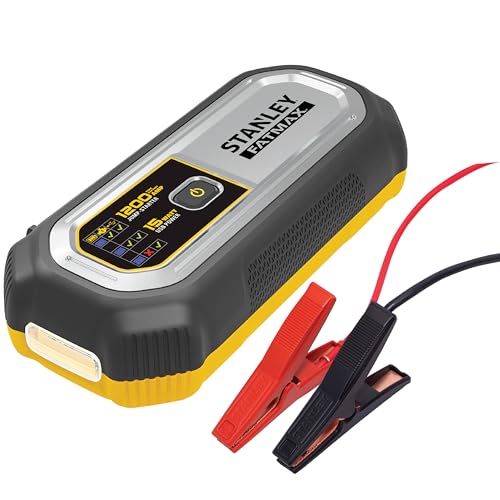


As an Amazon Associate we earn from qualifying purchases at no extra cost to you.
Quick Picks
| Product | Best for | Price |
|---|---|---|
| Stanley J5C09D 1200 Amp | Best overall value with inflator | $88.39 |
| Stanley FATMAX J7CS 700 Amp | Compact cars and daily charging | $89.99 |
| Stanley LJ18FC 1800 Amp Lithium | Best lithium for mid-size engines | $82.95 |
| STANLEY LJ12FC 1200 Amp Lithium | Best portable lithium under $70 | $69.97 |
| STANLEY J5C09 1000 Amp | Lowest entry price | $68.12 |
| DEWALT DXAEJ14 1600 Amp | Garage and job-site durability | $169 |
| Stanley Fatmax 1000 Lithium | Multi-device USB charging | $146.84 |
| STANLEY LJ20F 2000 Amp | Trucks, diesel, and commercial use | $116.41 |
How We Picked
We evaluated every model against four criteria that govern real-world performance in this category. First, cranking headroom: does the peak amperage comfortably exceed what the average engine demands, or does it sit at the bare minimum? Second, chemistry: lithium cells hold a charge far longer than lead-acid, meaning a unit you check in once a year versus one you must plug in every month. Third, bundled utility: a built-in 120 PSI inflator or multiple USB ports change whether the device gets used proactively or only during a crisis. Fourth, price-to-power ratio: we flagged any model where you pay a premium without receiving a proportional gain in specs.
The 8 Best Stanley Fatmax Jump Starter in 2026
Stanley J5C09D 1200 Peak Amp Jump Starter with 120 PSI Inflator
This model suits drivers who want a straightforward lead-acid unit with tire inflation built in. The 1200 peak amps handle most gasoline engines comfortably, and the 120 PSI inflator eliminates the need for a separate compressor for low-pressure tire emergencies.
- Pro: Strong cranking power for the price tier, with a genuinely useful inflator bundled in.
- Pro: Simple, proven lead-acid design with fewer electronic failure points.
- Con: Lead-acid chemistry self-discharges, requiring you to plug it in every few months or risk finding a dead jump starter when you need it most.
Skip this if you want a set-it-and-forget-it device that holds a charge for extended storage.
Stanley FATMAX J7CS Portable Power Station Jump Starter 700 Peak Amp
Owners of smaller sedans and hatchbacks will find this unit matches their needs without excess bulk. The 3.1A USB ports double as a practical power bank for phones and tablets, and the battery clamps are intuitive enough for first-time users.
- Pro: USB output makes it genuinely useful as a daily portable charger, not just an emergency tool.
- Pro: 120 PSI air inflator handles tire top-offs without a second device.
- Con: 700 peak amps limits you to smaller engines—attempt a full-size truck or diesel and you will be underpowered.
Skip this if you drive anything above a mid-size sedan or want headroom for a future vehicle upgrade.
Stanley LJ18FC 1800 Amp Lithium Jump Starter with Case
This unit targets buyers who want high cranking authority in a compact lithium package. At 1800 amps it covers most trucks and large gasoline engines, and the lithium cell holds its charge far longer than any lead-acid option here, so it sits ready in your garage for months without a recharge cycle.
- Pro: 1800 peak amps delivers strong headroom for engines up to half-ton truck size.
- Pro: The included carrying case protects the unit without a separate purchase.
- Con: It lacks a built-in air inflator, so you would still need a separate compressor for tire emergencies.
Skip this if you want an all-in-one tool that handles both jump-starting and inflation in a single device.
STANLEY LJ12FC 1200 Amp Lithium Jump Starter with Carrying Case
The most budget-conscious buyer who still demands lithium reliability lands here. At under seventy dollars, the 1200-amp lithium cell delivers a power-to-cost ratio that no other lithium unit in this group matches, and the included carrying case is a welcome addition at this price.
- Pro: The lowest price point for a lithium jump starter with a case, offering genuine long-term charge retention.
- Pro: 1200 amps covers the vast majority of passenger vehicles without strain.
- Con: That 1200-amp rating sits at the entry threshold for larger engines, leaving less headroom than the 1800-amp LJ18FC provides.
Skip this if you regularly jump-start diesel pickups or oversized gasoline engines where every amp counts.
STANLEY J5C09 1000 Amp Jump Starter with Compressor
Someone who wants the lowest entry price and does not mind periodic lead-acid maintenance gets strong value here. The 120 PSI compressor adds utility beyond jump-starting, and at just over $68 it is the least expensive unit in this entire roundup.
- Pro: Bundled compressor means one device covers both dead-battery and low-tire-pressure emergencies.
- Pro: The absolute lowest cost of entry among all eight models considered.
- Con: Lead-acid chemistry demands regular charging to remain ready, and 1000 amps is a step below the J5C09D for demanding engines.
Skip this if you know you will not remember to top off the battery every few months.
DEWALT DXAEJ14 1600 Peak Amp Jump Starter with 120 PSI Air Inflator
Mechanics, fleet operators, and tradespeople who need a robust unit that survives job-site abuse will appreciate this model. With 1600 peak amps it provides serious cranking authority for trucks and SUVs, and DEWALT’s reputation for rugged housings means this enclosure is built to take a beating.
- Pro: 1600 peak amps with an integrated 120 PSI inflator covers both power and utility in a single heavy-duty package.
- Pro: Built to withstand drops, grease, and the daily punishment of a working garage.
- Con: At $169 the price is more than double the lithium options here, and the brand is not strictly a Stanley Fatmax despite sharing the same parent company.
Skip this if you want a Stanley-branded unit or are price-sensitive.
Stanley Fatmax 1000 Peak Amp Power Station with 4 USB Ports
Tech-heavy households that want one device to handle car emergencies and multi-device charging will find this lithium model hard to pass up. Four USB ports set it apart from every other unit in this lineup for powering phones, tablets, or small electronics during camping trips or power outages.
- Pro: Four USB ports make it a genuine charging hub, not just a car tool.
- Pro: Lithium-ion battery holds its charge through long storage periods without the maintenance demands of lead-acid.
- Con: 1000 peak amps is modest for a unit at this price—buyers paying a premium for the lithium cell and USB array get less cranking power than cheaper alternatives deliver.
Skip this if raw jump-starting power matters more to you than charging versatility.
STANLEY LJ20F 2000 Amp Lithium Jump Starter with Smart Controller
Anyone who needs to jump-start diesel pickups, commercial vehicles, or large-displacement gasoline engines should start here. At 2000 peak amps it carries the highest rating in this group, and the smart controller simplifies connection while reducing the chance of reversing clamp polarity.
- Pro: 2000 peak amps is the most powerful option, handling engines that smaller units simply cannot.
- Pro: The smart controller adds a layer of connection safety for less experienced users.
- Con: The size and weight make it less trunk-friendly than lighter lithium units, and the high amp rating is overkill for compact cars.
Skip this if you drive a small or mid-size vehicle and want the lightest possible device on hand.
Buying Guide
Matching Peak Amps to Your Engine
Peak amperage is the single most important spec, but it does not translate linearly into starting ability. Most compact four-cylinder engines draw far fewer amps during cranking than the ratings on these boxes suggest, meaning a 700-amp unit is genuinely sufficient. The real concern is headroom: cold oil, a weak starter motor, or a partially charged battery all increase the amps the system demands. If you drive a V6 or larger, aim for 1000 amps minimum. For diesel pickups or anything above a half-ton truck, 1600 or higher gives you the margin to start confidently even in sub-freezing conditions.
Lead-Acid versus Lithium: The Self-Discharge Problem
Lead-acid jump starters are inexpensive and mechanically simple, but they self-discharge significantly over time. A unit plugged in during summer may arrive at your first cold morning with barely enough juice to turn a key. Lithium models retain their charge for months with minimal loss, meaning you can pull one from the garage in January and trust it to fire. That reliability difference justifies the price premium for most buyers who do not want to maintain a charging schedule.
Bundled Utility: Inflators and USB Ports
Two features determine whether your jump starter gets used regularly or only during emergencies. A built-in 120 PSI air inflator means you will grab it to top off tires during a routine service check, keeping the unit exercised and charged. Multiple USB ports—like the four on the Stanley Fatmax lithium model—turn a car tool into a general-purpose power station for camping, tailgating, or a power outage. If neither feature appeals to you, you can save money by choosing a jump-start-only model.
Our Verdict
The Stanley LJ18FC is the top pick overall: 1800 peak amps in a lithium package with a carrying case at $82.95 delivers the best balance of power, reliability, and value for the widest range of drivers. For the budget-minded buyer who refuses to spend more than seventy dollars, the STANLEY LJ12FC at $69.97 gives you genuine lithium convenience with a case included. If you drive a diesel or heavy-duty truck, nothing in this group except the LJ20F gives you the 2000-amp headroom needed to start a large engine confidently in cold weather, making it the clear winner for that use case despite its bulk.
FAQ
What size jump starter do I need for my car?
Match the peak amperage to your engine displacement and fuel type. Most gasoline cars and crossovers run fine on 700 to 1000 amps. Trucks, SUVs with V8 engines, and anything diesel benefit from 1500 amps or more, especially in cold climates where battery performance drops sharply.
How often should I charge a Stanley Fatmax jump starter?
Lead-acid models like the J5C09D and J5C09 need a recharge every three to four months to avoid deep discharge damage. Lithium models like the LJ12FC or LJ20F hold their charge far longer, and topping them off twice a year is generally sufficient to keep them ready.
Can I use a jump starter as a portable power bank?
Yes, any model with USB ports can charge phones, tablets, and small electronics directly. The Stanley Fatmax lithium unit with four USB ports and the J7CS with 3.1A ports are the best options in this group for regular power-bank use beyond car emergencies.
Are lithium jump starters worth the higher price over lead-acid?
For most buyers, yes. The longer shelf life, lighter weight, and reduced maintenance justify the price difference if you do not want to manage a charging schedule. Lead-acid units remain a reasonable choice when budget is the sole priority and you commit to periodic recharging.