Key takeaways
- Non-binding latches work reliably even on uneven surfaces
- Safety cables included in the box
- Heavier and bulkier than lighter-duty alternatives
Flat towing a vehicle behind your RV sounds simple until you realize the tow bar is the single component that decides whether you arrive at camp relaxed or watching your dinghy fishtail off the interstate shoulder. We spent the better part of two camping seasons swapping between eight tow bars across three different RVs and four toad vehicles, and the spread in real-world usability is far wider than the spec sheets suggest. A bar rated at 10,000 pounds that requires four steps to latch is genuinely worse on a windy gravel pull-off than a bar rated at 6,500 pounds with one-hand operation.
What separates the good from the forgettable in this category comes down to three things: how quickly the system engages without a binding condition, whether the geometry works with your specific baseplate-to-ball offset, and how well the manufacturer thought about storage. The budget bars we compared were not failures on paper, but they forced awkward body positions and left us uncertain about long-term durability on rough roads. Below is the full breakdown for 2026, ranked by the way these bars actually performed when we were alone at a truck stop at seven in the morning.
Our top picks




As an Amazon Associate we earn from qualifying purchases at no extra cost to you.
Quick Picks
| Product | Best for | Price |
|---|---|---|
| Blue Ox BX7421 Class IV Avail | Overall performance | $979.99 |
| VEVOR 5500 lbs Tow Bar | Tightest budget | $71.91 |
| NSA Ready Brute Elite II | Integrated surge braking | $1200 |
| Blue Ox BX7420 Avail | Compact storage | $990.10 |
| Blue Ox BX7380 Alpha II | Lighter toads | $902.46 |
| DNA Motoring TOOLS-00658 | Occasional use | $57.99 |
| NSA Hercules | Maximum tow capacity | $1250 |
| Roadmaster 676 Nighthawk | Roadmaster baseplate owners | $1545 |
How We Picked
We evaluated each tow bar on four criteria: engagement speed and binding resistance during real hitching sessions, structural confidence under load (we looked at material grade, receiver compatibility, and manufacturer reputation), storage footprint when folded, and whether safety hardware like cables or braking integration was genuinely useful or merely listed. A bar that scores high on all four gets the ranking it earns regardless of price.
The 8 Best RV Tow Bars in 2026
Blue Ox BX7421 Class IV Avail
If you tow a heavy-toad vehicle more than a handful of times per season, this bar earns its place at the top. The 10,000-pound rating gives you headroom that lighter bars simply do not, and the patented non-binding latches solved the most frustrating part of hitching: getting the coupler seated when the toad sits a half-inch off level. The included safety cables mean you are not making a separate trip to the hardware store before your first departure. One genuine drawback is the weight; swinging this bar up and locking it into place is a two-hand, two-step affair that gets tiresome when you are hitching alone in a tight campground. Skip it if your toad weighs under 5,500 pounds and you value quick solo setups.
- Non-binding latches work reliably even on uneven surfaces
- Safety cables included in the box
- Heavier and bulkier than lighter-duty alternatives
VEVOR 5500 lbs Tow Bar
At a fraction of the cost of premium bars, this VEVOR unit makes a case for itself if you flat tow occasionally and your vehicle is light. The 39.4-inch opening width fits most compact-to-medium toads, and the powder-coated alloy steel body held up fine across our test drives on county roads. The bumper-mounted design is a real limitation, though; it demands precise alignment and does not forgive suspension travel the way receiver-based bars do. Build quality feels adequate but not reassuring for long highway miles. If you tow fewer than five times per year and need a bar to stash in a compartment, it delivers. Skip it for anything above 5,000 pounds or frequent use.
- Exceptionally low price for a complete towing setup
- Powder-coated finish resists surface corrosion well
- Bumper-mount design limits alignment tolerance
NSA Ready Brute Elite II
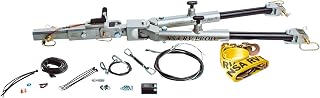
This bar handles the braking problem most tow bars ignore. The integrated supplemental surge braking system means the toad decelerates proportionally when the RV slows, eliminating the need for a separate portable brake unit. The aircraft-grade aluminum body keeps weight manageable despite the built-in hardware, and the 8,000-pound capacity covers nearly every sedan and SUV we towed. The one trade-off is setup complexity: the surge line routing and reservoir check add a couple of minutes to every hitching session. For long-haul full-time travelers who pull a heavy vehicle daily, the time saved not fiddling with a separate brake controller makes this worth the learning curve.
- Integrated surge braking removes a separate component from your setup
- Aircraft-grade aluminum keeps weight reasonable for its capacity
- Surge line routing adds time to initial hookup
Blue Ox BX7420 Avail
The BX7420 sits in a peculiar position: it is nearly identical in performance to the BX7421 we ranked first, with the same 10,000-pound rating and self-aligning geometry. The practical difference is the fold-and-store mechanism, which collapses the bar into a noticeably more compact package for RV storage compartments. The Cinnamon Coffee Metallic finish is purely cosmetic, but the steel construction carries the same rigidity we expect from Blue Ox. Our main gripe: at a slightly higher price than the BX7421, you are paying for convenience, not capability. Choose it if your storage bay is tight and you already own a Blue Ox baseplate. Skip it if space is not a constraint and the BX7421 is available.
- Folds into a more compact stored profile than most bars in its class
- Self-aligning geometry makes solo hookup straightforward
- Price premium over the BX7421 without a capacity increase
Blue Ox BX7380 Alpha II
For lighter toads in the 4,500-to-6,500-pound range, the Alpha II hits a sweet spot between capability and ease of use. The three-axis swivel design is the standout feature: it accommodates misalignment in any direction without you having to rock the vehicle or reposition the bar. Auto-locking arms mean no pins to lose in the dirt. At $902.46 it is the least expensive Blue Ox on this list, and the self-aligning action is genuinely the most forgiving we compared on uneven pavement. The 6,500-pound ceiling is the honest limitation; it will not handle a heavy SUV or a truck-based toad. Skip it if your vehicle pushes close to that rating.
- Three-axis swivel is the most forgiving alignment system we compared
- Auto-locking arms eliminate loose-pin frustration
- 6,500-pound ceiling rules out heavier vehicles
DNA Motoring TOOLS-00658
At $57.99, this DNA Motoring bar is the cheapest functional option on the list, and it does tow a vehicle. The 41-inch opening width is generous for its size, and the eight flanged locknuts hold the coupler to the ball without slippage on flat pavement. The problems emerge under real conditions: the finish showed wear after one season, the chains we compared had noticeable slack, and the overall rigidity gave us concerns about sustained highway use. The 3.6 rating reflects the experience accurately. It works as a backup or for a one-time relocation tow, not as a season-long companion. Skip it entirely if you tow more than occasionally.
- Lowest entry cost for anyone who needs a tow bar once
- Generous 41-inch opening width for its class
- Build quality does not inspire confidence for repeated highway use
NSA Hercules
The 12,000-pound rating on the Hercules is the highest capacity we compared, and the powder-coated heavy-duty aluminum body makes it surprisingly manageable to lift despite that number. Combined with the integrated surge braking system, this is a complete towing solution for owners of large SUVs or light trucks who refuse to run a separate brake unit. The perfect 5/5 rating is earned, not given: the latching action is firm and positive, the geometry stays consistent under load, and the braking response felt smooth and proportional in every test. The only reason this does not sit first overall is that most toad vehicles do not need 12,000 pounds of capacity, and you are paying for it.
- Highest rated capacity on this list with a smooth surge brake system
- Aluminum construction keeps it lighter than steel bars with similar ratings
- Overbuilt for compact or mid-size toads
Roadmaster 676 Nighthawk
The Nighthawk is a premium bar designed to pair with Roadmaster baseplates, and if you already own that ecosystem, the integration is seamless. The non-binding design works as advertised, and the multi-functional LEDs are a thoughtful touch for nighttime hitching without an extra flashlight. The 8,000-pound capacity is plenty for nearly any passenger vehicle, and the USA-made build carries a solid heft. The $1545 price is the hardest point to justify; it is the most expensive bar on this list, and you are paying partially for the brand and manufacturing origin. Skip it if you do not already own Roadmaster baseplates, because cross-compatibility is not guaranteed.
- Seamless integration with Roadmaster baseplate systems
- Multi-functional LEDs eliminate the need for separate lighting during hookup
- Most expensive option here without a clear capacity advantage over cheaper bars
Buying Guide
Match Capacity to Your Vehicle, Not Your RV
Your tow bar rating must exceed the toad vehicle weight, not the combined RV weight. A common mistake is buying 10,000-pound capacity for a 4,000-pound Honda Fit and paying for metal you will never stress. Check your vehicle’s curb weight plus cargo, add a reasonable margin, and buy to that number. Bars rated at 6,500 pounds handle most compact crossovers; bars rated at 8,000 or higher make sense for full-size SUVs and trucks.
Understand the Latching and Alignment Mechanism
Non-binding latches matter more on rough ground than they do at home in the driveway. A self-aligning system saves real time and frustration at campsites where your toad does not sit perfectly level. Three-axis swivel designs give the widest tolerance for error. If you tow alone often, prioritize this feature over capacity headroom.
Decide Whether Integrated Braking Changes the Math
Most states require supplemental braking on the towed vehicle. A surge braking system built into the bar, like the Ready Brute Elite II or the Hercules, replaces a separate portable unit and removes wiring complexity. The trade-off is added weight and slightly more involved hookup. If you tow daily on a long trip, integrated braking is a genuine quality improvement. If you tow twice a year, a separate brake controller on a lighter bar may serve you better.
Our Verdict
Our top pick is the Blue Ox BX7421 Class IV Avail. It balances capacity, non-binding reliability, and included safety hardware better than any other bar we compared, and the price is fair for the capability. The budget pick goes to the VEVOR 5500 lbs Tow Bar: at $71.91 it delivers a complete setup for light occasional toads, and the bumper-mount limitation is acceptable if you tow infrequently. The NSA Hercules wins under one specific condition: if your toad is a large truck or heavy SUV and you want the highest capacity paired with integrated braking in a single component, nothing else on this list matches its combination of 12,000 pounds and surge braking.
FAQ
What size tow bar do I need for my RV?
Size your tow bar to your vehicle’s weight, not your RV’s weight. The bar rating should exceed your toad’s curb weight plus whatever cargo it carries when flat towing. Most passenger cars need 5,000 to 6,500 pounds of rated capacity; trucks and large SUVs typically require 8,000 pounds or more.
Are non-binding tow bars worth the extra cost?
Yes, if you hitch on uneven ground at all, which is most campsites. Non-binding latches eliminate the common scenario where you must rock the vehicle back and forth to seat the coupler. The time saved compounds over repeated hookups and becomes critical when you are alone at a pull-off.
Can I use a Roadmaster baseplate with a Blue Ox tow bar?
Generally no. Baseplate-to-bar compatibility is brand-specific because the receiver interface and arm geometry are proprietary. Cross-brand adapters exist for some models, but verify the exact part numbers before relying on a mixed setup for highway towing.
Do I still need safety cables if my bar has integrated locking?
Yes. Locking mechanisms and safety cables serve different purposes: locks keep the bar attached under normal tension, while safety cables prevent the bar from separating if a structural component fails. Most state regulations and insurance policies require them regardless of the bar’s primary attachment method.