Key takeaways
- Flexible to moderately firm: best for beginners, casual classes, and riders who walk frequently. The Shimano IC2 and TIEM Slipstream fall into this practical category.
- Moderately stiff: a useful middle ground for regular classes and higher resistance. The Shimano IC5 is a sensible example.
- Firm road-shoe platform: best for riders who prioritize power transfer or also ride outdoors. The Torch 1.0 Road and Giro Cadet are better suited to this role.
Best Indoor Cycling Shoes for Comfort and Power
The best indoor cycling shoes for most riders are the TIEM Slipstream for walkable comfort, the Shimano IC5 for a breathable SPD setup, and the Specialized Torch 1.0 Road for riders who want a stiffer, more efficient three-bolt platform.
Your decision comes down to three questions: which cleat your bike accepts, how much sole stiffness you need, and whether the shoe must be comfortable when walking between the changing room and bike. A very stiff road shoe can transfer force well but feel excessive on a short class; a flexible commuter-style shoe may be pleasant off the bike but less stable during high-cadence efforts.
Our top picks

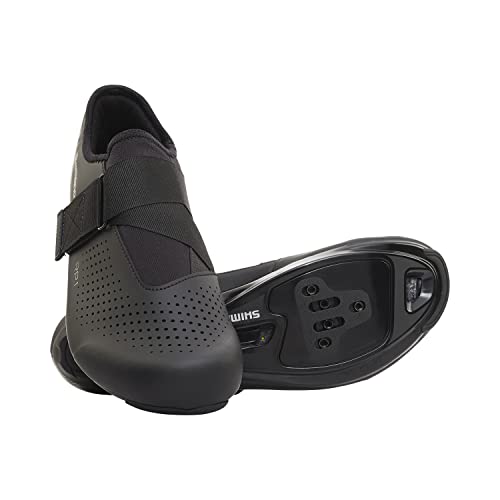
As an Amazon Associate we earn from qualifying purchases at no extra cost to you. Ratings are shown as listed on Amazon.
Quick comparison
| Shoe | Cleat compatibility | Closure | Ventilation and walkability | Typical 2026 price | Best for |
|---|---|---|---|---|---|
| TIEM Slipstream | 2-bolt SPD; cleat recessed | Single strap with breathable mesh upper | Very good ventilation; easiest to walk in | $135–$150 | Frequent studio classes and comfort |
| Shimano IC5 | 2-bolt SPD | BOA dial and hook-and-loop strap | Good ventilation; moderately walkable | $120–$150 | SPD bikes and secure mid-foot fit |
| Shimano IC2 | 2-bolt SPD | Hook-and-loop strap | Good ventilation; flexible walking sole | $90–$110 | Budget-conscious beginners |
| Specialized Torch 1.0 Road | 3-bolt Look-style road cleat | Three hook-and-loop straps | Good upper ventilation; awkward off the bike | $110–$130 | Peloton-style three-bolt setups |
| Giro Cadet | 3-bolt road cleat | BOA dial and hook-and-loop strap | Good ventilation; firm walking experience | $150–$180 | Indoor riding plus outdoor road use |
Prices are general market ranges and may vary by color, sizing, and seasonal promotions. Cleats are often sold separately, so include roughly $15–$30 for a pair of compatible cleats when comparing total cost.
Choose by your bike and riding situation
| Your situation | Recommended direction | Why |
|---|---|---|
| You attend two or more studio classes each week | TIEM Slipstream or Shimano IC5 | Both balance ventilation, repeatable fit, and practical walking comfort. |
| Your bike has SPD pedals | Shimano IC5 for security; IC2 for value | Both use the two-bolt MTB-style cleat standard. |
| Your bike has Look Delta-compatible pedals | Specialized Torch 1.0 Road or Giro Cadet | These use the three-bolt road-shoe layout required by many dedicated studio bikes. |
| You are new to clip-in pedals | A two-bolt shoe with recessed cleats | It is generally less awkward to walk in while learning to clip in and release. |
| You want one pair for indoor and outdoor riding | Giro Cadet or another ventilated road shoe | A firmer sole and road-cleat platform suit longer rides, though walking is less convenient. |
| You have wide feet or swelling during long sessions | Try shoes with adjustable straps or a wide-size option | More adjustment across the forefoot is preferable to simply sizing up. |
Cleat compatibility is the first filter
Indoor cycling pedals usually use one of two systems. SPD cleats attach with two bolts and are common on gym bikes, spin bikes, and shoes designed for walkability. Three-bolt road cleats, including Look Delta-style cleats, spread the attachment points across a wider area and are common on Peloton-compatible setups.
The systems are not interchangeable without changing the pedal. A three-bolt road shoe cannot accept an SPD cleat simply because the cleat looks similar, and a two-bolt shoe will not mount correctly to a three-bolt cleat. Check the pedal or ask the studio before buying. If the bike has toe cages on one side and clip-in pedals on the other, confirm which cleat standard is fitted to the clip-in side.
For beginners, recessed SPD cleats are forgiving because the surrounding rubber tread makes walking easier. Road cleats can feel more stable when pedaling hard, but their exposed plastic surfaces are slippery and wear faster when used as walking shoes.
How much sole stiffness do you need?
A stiff sole limits bending under the ball of the foot. That can make hard efforts feel more direct and can reduce the sensation of your foot folding around the pedal. However, maximum stiffness is not automatically better indoors. A short class at moderate resistance does not demand the same support as a two-hour training session.
- Flexible to moderately firm: best for beginners, casual classes, and riders who walk frequently. The Shimano IC2 and TIEM Slipstream fall into this practical category.
- Moderately stiff: a useful middle ground for regular classes and higher resistance. The Shimano IC5 is a sensible example.
- Firm road-shoe platform: best for riders who prioritize power transfer or also ride outdoors. The Torch 1.0 Road and Giro Cadet are better suited to this role.
Pedal technique matters more than a small difference between mid-range shoes. A properly positioned cleat, secure heel, and even pressure across the foot usually produce a bigger improvement than moving from one moderately stiff shoe to another.
Closure systems: convenience versus adjustment
Straps
Hook-and-loop straps are quick, inexpensive, and easy to adjust during a class. They also accommodate small changes in sock thickness. The trade-off is that a strap can loosen if it is not pulled firmly across the correct part of the foot, and it may create a pressure point if the shoe is overtightened.
BOA dials
A BOA dial allows small tension changes while riding. That is useful when feet expand during a long session or when one foot needs a different adjustment. The dial and lace system adds cost and introduces replacement parts, but the mechanism is generally more precise than a single strap. The Shimano IC5 and Giro Cadet use this kind of closure arrangement.
Slip-on designs
A slip-on or single-strap design prioritizes speed and ventilation. The TIEM Slipstream is particularly practical for studio riders who carry shoes into class and walk around before and afterward. The fit is less independently adjustable than a shoe with two straps or a dial, so accurate sizing is important.
Fit and ventilation: what to check in the store
Try cycling shoes with the socks you normally wear. Your toes should be able to move slightly, but your heel should not lift noticeably when you pull upward on the pedal. The widest part of your foot should sit over the widest part of the shoe; do not solve a narrow toe box by buying a much longer size.
Indoor rooms can become warm, so look for mesh panels, perforated synthetic uppers, and a tongue that does not trap heat. Ventilation is useful, but a completely minimal upper may provide less structure around the mid-foot. If you ride for 45–60 minutes several times a week, a breathable upper with a secure closure is usually a better compromise than an ultra-light shoe with weak support.
Ownership costs and maintenance
A pair costing $120 and used three times each week for two years sees about 312 uses. Adding $25 cleats brings the total to $145, or approximately $0.46 per ride. That calculation excludes socks and any pedal changes, but it shows why fit matters more than saving a small amount upfront: discomfort can turn a frequently used shoe into an unused purchase.
The cleats usually wear before the shoe. Replace them when release becomes inconsistent, engagement feels loose, or the plastic contact surfaces are visibly rounded. Check the cleat bolts regularly; a loose cleat can change your foot position and make clipping out unreliable.
- Air-dry shoes after every sweaty session; do not put them on a radiator or in a hot dryer.
- Remove insoles periodically so moisture can escape from the footbed.
- Wipe the upper with a damp cloth rather than soaking the shoe.
- Keep the closure free of lint and grit, especially around a BOA dial.
- Mark the original cleat position before replacing cleats, then match the new position as closely as possible.
A common mistake is tightening the shoe until the foot feels numb. Secure fit should come from even tension over the mid-foot, not maximum pressure over the toes. If numbness, persistent pain, or a recurring hot spot remains after adjusting fit and cleat position, stop using the setup and seek advice from a qualified bike fitter or healthcare professional.
Final verdict
Choose the TIEM Slipstream when comfort, ventilation, and walking are your priorities. Choose the Shimano IC5 when you want a more structured SPD shoe with a BOA adjustment system. Choose the Shimano IC2 when keeping the total cost low matters most. For three-bolt pedals, the Specialized Torch 1.0 Road is a practical value choice, while the Giro Cadet makes more sense if you want a firmer shoe that can also serve outdoor rides.