Key takeaways
- Compare the best cycling beanies for cold rides: thermal skull caps with full ear coverage, windproof panels and slim fits that sit under any helmet.
A standard knit beanie is built for standing around, not for riding. It is too thick for a helmet, it bunches above the ears, and once it soaks up sweat it stays cold for the rest of the ride. A cycling beanie solves those problems with a different shape: a low-profile skull cap that follows the head closely, pulls down over the ears, and uses thin thermal fabric that adds warmth without forcing you to loosen your helmet’s retention dial.
The five beanies in this roundup are all thermal skull caps designed to be worn under a helmet. Each one covers the ears, uses a stretch fabric with a brushed or fleece lining, and is thin enough to disappear under a road, gravel or mountain bike helmet. They differ in fabric blend, in how they handle glasses, and in details like published fit ranges.
As an Amazon Associate, I earn from qualifying purchases.
Buying Guide: What Makes a Beanie Work Under a Helmet
Thickness and helmet fit
The defining feature of a cycling beanie is what it leaves out: bulk. Look for a single-layer or lightly lined cap with flat seams, because raised seam lines press into the scalp under a helmet shell and become the first thing you notice on a long descent. A good under-helmet cap should let your helmet sit at its normal position, with the retention dial adjusted at most one notch looser than your bare-head setting.
Ear coverage
Every beanie here is cut to pull down over the full ear rather than stopping at the top of it. Deeper ear bands and shaped ear flaps matter more than crown insulation, because wind hits the sides of the head first at riding speed. When comparing listings, check whether the ear coverage is a shaped panel that follows the jaw line or simply the cap’s bottom edge stretched lower.
Windproof panels and brushed linings
Some cycling beanies add a wind-blocking layer across the forehead and ears, the zones that face the wind, while leaving the crown breathable so heat can escape on climbs. Others rely on a dense brushed lining to trap still air across the whole head. A windproof front panel suits fast, exposed riding in deep cold; a fully brushed thermal lining is usually enough for steady winter training. None of the five listings below names a branded membrane, so their wind protection comes from fabric density and lining.
Glasses holes and ponytail ports
Two small features separate cycling-specific caps from general winter liners. Glasses holes are short slits above the ears that let sunglass arms pass through the fabric instead of pressing between the cap and your head, and two of the five beanies below include them. Ponytail ports are openings at the back for long hair; none of these five listings publishes one, so check a model’s product page for variant options rather than assume it is included.
The 5 Best Cycling Beanies
1. Tough Headwear Thermal Skull Cap

The Tough Headwear Thermal Skull Cap is the most established name in this group, a one-size beanie built from an 89 percent polyester and 11 percent spandex blend with four-way stretch. The inside face is a brushed thermal lining that the listing describes as its Thermo Stretch insulation: it traps heat against the head while the outer face stays smooth enough to slide under a helmet without dragging on the shell. The fabric is moisture wicking and breathable, so it handles climb sweat better than a plain fleece cap.
Coverage runs over the head and ears, and the stretch fit suits both men and women in a single size. The same product family also includes an ear-cover variant for riders who want a deeper band. For riders who want one proven, general-purpose thermal liner that works under any helmet they own, this is the straightforward pick, and its wind resistance comes from the dense thermal fabric rather than a separate membrane panel.
Specs
- Brand: Tough Headwear
- Fabric: 89% polyester / 11% spandex
- Lining: Brushed thermal lining
- Fit: One size, four-way stretch, men and women
- Coverage: Head and ears, under-helmet design
2. TSLA Thermal Fleece Skull Cap
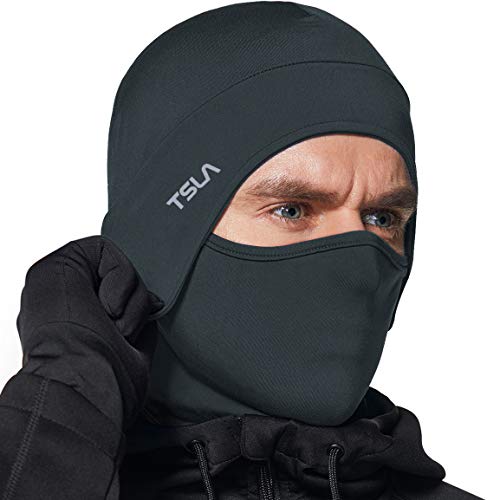
The TSLA Thermal Fleece Skull Cap is sold as a winter ski and cycling under-helmet liner, and its listing publishes a fabric type of 86 percent polyester and 14 percent elastane, the highest stretch content in this group. That extra elastane gives it a close, secure fit that stays put over the ears, and the inside is lined with a quick-dry micro fleece that the listing describes as specialised for blocking cold air and keeping warmth in.
The shape is a plain skull cap with no brim and no extra panels, cut to sit flat under a helmet and to double as a running beanie off the bike. Care instructions on the listing are specific: no fabric softener, no bleach and no iron. If your winter riding mixes hard efforts with long, cold descents, this shell-and-fleece balance is what the cap is built around.
Specs
- Brand: TSLA
- Fabric: 86% polyester / 14% elastane
- Lining: Quick-dry micro fleece
- Fit: Snug one size, men and women
- Use: Cycling under-helmet liner, skiing, running
3. Hikenture Winter Skull Cap Helmet Liner

The Hikenture Winter Skull Cap is the detail-focused option in this roundup. Its fabric is 90 percent polyester and 10 percent spandex with a fleece lining, and it adds two features the plainer caps leave out: shaped ear flaps that extend coverage below the ear, and glasses holes at the sides so sunglass arms pass through the fabric instead of digging in under it. For riders who wear prescription glasses or clear lenses on winter evenings, those slits remove a pressure point that builds up over a ride.
Sizing is published rather than implied: the listing gives a fit range of 20 to 24 inches of head circumference, with an elastic closure and a stated weight of 36 grams, so the cap adds almost nothing under the helmet. It is machine washable, and the fleece lining runs through the ear flaps as well as the crown, keeping the coldest zone covered by the warmest part of the cap.
Specs
- Brand: Hikenture
- Fabric: 90% polyester / 10% spandex
- Lining: Fleece, including ear flaps
- Fit: Head circumference 20-24 in, elastic closure
- Features: Glasses holes, machine washable, 36 g
4. ROCKBROS Thermal Fleece Helmet Liner

ROCKBROS builds this helmet liner from 88 percent polyester and 12 percent spandex with a thermal fleece lining, and like the Hikenture it includes glasses holes at the sides for eyewear arms. The published fit range is 52 to 61 centimetres of head circumference, roughly 21 to 24 inches, in a one-size cap with an elastic closure. That wide stated range suits riders who find one-size liners usually run small.
The liner is a black, brimless skull cap intended purely as an under-helmet layer for winter riding, and it is machine washable for regular training use. Coverage extends over the ears, and the fleece lining is the thermal layer rather than a separate insert, which keeps the profile slim. Against the Hikenture, this one publishes the wider circumference range, while the Hikenture adds shaped ear flaps and a stated weight.
Specs
- Brand: ROCKBROS
- Fabric: 88% polyester / 12% spandex
- Lining: Thermal fleece
- Fit: One size, head circumference 52-61 cm (21-24 in)
- Features: Glasses holes, elastic closure, machine washable
5. OutdoorEssentials Skull Cap Helmet Liner

The OutdoorEssentials Skull Cap is a winter fleece cycling cap sold as a helmet liner for men and women, listed under the model name Helmet Liner – OE – BG – 2. It follows the same formula as the rest of this group: a brimless, close-fitting skull cap in a fleece build, shaped to sit under a bike helmet on cold rides and to work as a running cap off the bike. Its Amazon record is thinner than the others here, and the listing data available does not publish a fabric percentage, so no blend is claimed for it.
What the record does confirm is the product’s purpose and format: a winter fleece under-helmet cap aimed at outdoor training rather than fashion knitwear. Riders who want every specification printed before they buy should compare the fuller listings above; riders who simply want a basic fleece liner will find this one matches the job description without extras.
Specs
- Brand: OutdoorEssentials
- Model: Helmet Liner – OE – BG – 2
- Build: Winter fleece skull cap, fabric blend not published in the listing record
- Fit: One size, men and women
- Use: Under-helmet cycling liner, running
Key Factors When Choosing a Cycling Beanie
Start with your helmet, not the thermometer. A cycling beanie has to share space with the helmet’s liner and retention system, so thin construction and flat seams matter more than headline warmth. All five caps here are single-layer stretch fabrics with brushed or fleece faces, which is the right architecture.
Next, match the lining to your coldest regular ride. A brushed thermal lining, like the Tough Headwear cap uses, suits mixed winter training. A full micro-fleece or fleece lining, as on the TSLA, Hikenture and ROCKBROS caps, suits colder, steadier riding. Then check the published fit data where it exists: two of these listings state head-circumference ranges, and choosing by measurement beats guessing from a one-size label.
Finally, sweat the small features. Glasses holes remove a real pressure point for eyewear wearers, and ear flaps extend coverage where wind bites first. A ponytail port matters if you ride with long hair, and since none of these five listings publishes one, treat it as a product-page check rather than an assumption.
Frequently Asked Questions
Can I wear a regular winter beanie under a cycling helmet?
A regular knit beanie is usually too thick and too loosely woven for helmet use. It lifts the helmet higher on the head, creates pressure points at the seams, and holds sweat against the skin. A cycling beanie is a thin skull cap with flat seams and full ear coverage, so the helmet keeps its normal fit while the cap handles insulation.
How cold does it need to be before a cycling beanie helps?
Most riders reach for a thermal skull cap once rides start in single-digit temperatures above freezing or lower, and earlier if the route is windy or involves long descents. Ears and the forehead lose comfort first because they face the wind unprotected, and a thin beanie adds so little bulk that there is no penalty for wearing one on a merely cool morning.
Do cycling beanies work with glasses and sunglasses?
Yes, and two of the beanies in this roundup make it easier with glasses holes: short slits above the ears that let the arms of your glasses pass through the fabric. Without them, the arms sit between the cap and your head and can press uncomfortably under a helmet strap. If you ride in prescription glasses or clear winter lenses, prioritise that feature when comparing models.
How should a cycling beanie fit under a helmet?
It should sit snug and smooth, covering the ears fully, with no folds or bunched fabric at the crown. Your helmet should then go on at close to its normal retention setting; needing to open the dial several clicks usually means the cap is too thick for that helmet. Where a listing gives a head-circumference range, measure around your forehead at ear level and choose by measurement.
Conclusion
The best cycling beanies share a simple formula: a thin stretch fabric, a brushed or fleece lining, full ear coverage and a shape that respects how a helmet fits. The Tough Headwear cap is the proven all-rounder, the TSLA brings the highest stretch content and a quick-dry micro fleece, the Hikenture and ROCKBROS liners add glasses holes, and the OutdoorEssentials cap covers the basic fleece-liner brief. Pick by fit range and lining first.
FAQ
Can I wear a regular winter beanie under a cycling helmet?
How cold does it need to be before a cycling beanie helps?
Do cycling beanies work with glasses and sunglasses?
How should a cycling beanie fit under a helmet?
More from Amazon
Programs that pair well with the guide above. Offers and eligibility are set by Amazon and may change.
Free shipping on eligible items, Prime Video and more. Eligible new members can start with a free trial.
Start a Prime free trialA Prime membership for ages 18-24 with a trial period. Eligibility is set by Amazon.
See Prime for Young AdultsAudiobooks and podcasts to listen to on the go. Eligible new members can start with a free trial.
Try Audible freeAd-free music streaming. Eligible new subscribers can start with a free trial.
Try Music Unlimited freeAs an Amazon Associate we earn from qualifying purchases.