Key takeaways
- Compare the best studded fat bike tires for ice riding: five studded options by size, stud type, casing, and fit, so icy trails feel steady and controlled.
Introduction
Ice changes winter riding: a trail that felt grippy in fresh snow can turn into a skating rink after a thaw and a freeze, and a tire without studs has almost nothing to hold onto. Wide tires help by floating over soft snow, but on hard ice only metal studs bite into the frozen surface and keep the front wheel steering where you point it.
That is why studded fat bike tires exist. They pair the wide footprint of a fat tire with rows of metal pins set into the tread blocks. The tread handles snow and slush, while the studs handle ice, frozen ruts, and hardpack. This guide compares five studded fat bike tires for ice riding, covering 26-inch and 20-inch options. As an Amazon Associate, I earn from qualifying purchases.
Before ordering, read the size printed on your current tire sidewall and check your frame and fork clearance. A tire that is too wide will rub, and a tire with the wrong diameter will not mount at all. New studded tires also need a short break-in: ride gently on pavement for the first miles and let the studs seat fully before leaning hard into an icy corner.
How to Choose Studded Fat Bike Tires for Ice Riding
Match the size exactly
Fat bike tire sizes have two numbers: wheel diameter and tire width. Common sizes here are 26 x 4.0, 26 x 4.6, 26 x 4.8, and 20 x 4.0. The diameter must match your rims, and the width must fit between your fork legs, chainstays, and seatstays with room to spare. Check the bike maker’s stated maximum tire width.
Stud material and stud count
Studs are usually steel or carbide-tipped aluminum. Steel studs are tough and affordable, and they suit riders who want a simple, durable setup. Carbide-tipped studs stay sharp longer and bite harder into glare ice. Placement matters too: center studs aid braking, shoulder studs aid cornering.
Casing and TPI
Casing threads per inch, written as TPI, describes how fine the fabric inside the tire is. A higher TPI casing, such as 120 TPI, is usually more supple and conforms better to uneven ice at low pressure. A lower TPI casing, such as 26 or 60 TPI, is usually stiffer and tougher, which can suit heavier riders and rougher trails.
Tubeless or tube setup
Some studded fat tires are tubeless-ready, which means they can be set up without an inner tube when paired with sealant and a compatible rim. A tubeless setup lets you run very low pressure without pinch flats.
Tire pressure on ice
Low pressure is the fat bike’s secret weapon. Dropping pressure widens the contact patch, puts more studs on the ice, and lets the tire wrap around frozen ruts instead of skittering across them.
E-bike compatibility
Not every studded fat tire is rated for e-bike use. Some makers state that their winter tires are not recommended for power-assist bikes, because the extra torque and weight can wear the casing and pull studs loose sooner.
Comparison Table
| Tire | Size | Studs | Casing and Bead | Best For |
|---|---|---|---|---|
| 45NRTH Dillinger 5 Tire | 26 x 4.6 | 258 concave aluminum carbide studs | 60 or 120 TPI, tubeless ready, folding bead | Dedicated ice and hardpack riding |
| Vee Tire Snow Shoe XL Studded Tire | 26 x 4.8 | Studded, silica compound | Folding bead, clincher | Maximum float on snow and ice |
| Vee Tire Snowball Studded Tire | 20 x 4.0 | 120 steel studs | 26 TPI, wire bead, clincher | Compact 20-inch fat bikes and e-bikes |
| Rad Power eBike Studded Tire | 20 x 4.0 | Studded fat tire | Fat tire, clincher | Rad Power 20-inch fat-tire e-bikes |
| WEEROCK Fat Snow Bicycle Tire | 20 x 4.0 or 26 x 4.0 | High-density carbide studs | Knobby tread, clincher | Budget two-tire winter setup |
5 Studded Fat Bike Tires for Ice Riding
1. 45NRTH Dillinger 5 Tire

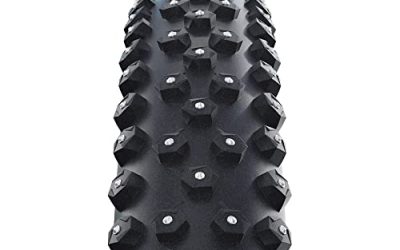
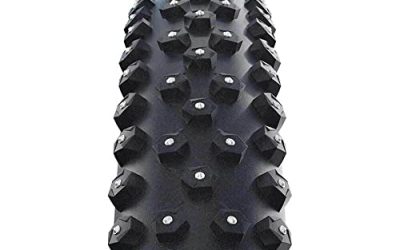
The Dillinger 5 is the most purpose-built ice tire in this guide. It is a 26 x 4.6 studded fat bike tire with 258 concave aluminum carbide studs set into an aggressive directional tread. The wide casing gives float, while the studs give the bite that snow alone cannot provide. Directional center lugs aid rolling and braking, and braced side lugs support cornering.
The 120 TPI casing option is the more supple of the two, which helps the tire conform to uneven frozen ground at low pressure. The tire is tubeless ready, so riders with compatible rims can run sealant and very low pressure without an inner tube.
The maker does not recommend this tire for power-assist bikes, since added torque and weight can cause early casing wear and stud loss, so it suits standard fat bikes on icy singletrack and hardpack trails.
- Specs:
- Size: 26 x 4.6
- Studs: 258 concave aluminum carbide studs
- Casing: 60 TPI or 120 TPI options
- Bead: Folding, tubeless ready
- Tread: Directional center lugs with braced side lugs
- Intended use: Extreme winter cycling on ice and hardpack
2. Vee Tire Snow Shoe XL Studded Tire

At 26 x 4.8, the Vee Tire Snow Shoe XL is the widest tire in this guide, and that width is its main advantage. A wider tire spreads the bike’s weight over a larger patch of snow, which keeps the front wheel from diving into soft drifts and helps the bike stay on top of the surface. Its silica compound is formulated to stay flexible in cold weather.
This is a folding-bead clincher tire, so it packs down for storage and mounts like a standard clincher. The model name is Snow Shoe XL, and the listing gives part number 57427. Confirm the exact variant and studded configuration on the product page before ordering, since this line has also been sold in non-studded versions.
For riders whose winter routes mix deep snow with icy patches, the Snow Shoe XL’s width is a real asset. It offers more float than any other tire here, which keeps the bike moving when snow gets deep between icy stretches.
- Specs:
- Size: 26 x 4.8
- Studs: Studded design
- Compound: Silica rubber compound
- Bead: Folding bead, clincher
- Bike type: Fat bike
- Model name: Snow Shoe XL
- Part number: 57427
3. Vee Tire Snowball Studded Tire
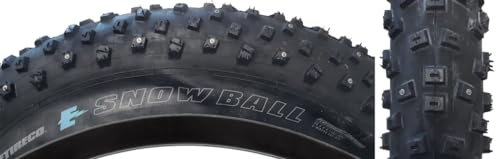
The Vee Tire Snowball is a 20 x 4.0 studded fat bike tire built for smaller-wheel fat bikes and fat-tire e-bikes. The listing describes 120 steel studs placed to grip snow, ice, hardpack, loose dirt, and grass.
The casing is 26 TPI with a wire bead, which makes for a sturdy, straightforward tire that holds its shape well. The listing describes the tire as e-bike rated, which makes it a natural fit for a 20-inch fat-tire e-bike used for winter commuting or trail riding.
This tire is a close match for the keyword in design but not in wheel size: it is a genuine studded fat bike tire for ice, just built for 20-inch wheels rather than the 26-inch wheels most full-size fat bikes use.
- Specs:
- Size: 20 x 4.0
- Studs: 120 steel studs
- Casing: 26 TPI
- Bead: Wire bead, clincher
- Bike type: Fat bike and mountain bike
- E-bike rating: Described as e-bike rated
- Intended use: Snow, ice, hardpack, and loose surfaces
4. Rad Power eBike Studded Tire

The Rad Power eBike Studded Tire is a 20 x 4.0 studded fat tire sold for Rad Power fat-tire e-bikes. The listing gives part number TIR-20X4STUD-RAD and describes the tire type as a studded fat tire for winter e-bike riding. For owners of a compatible Rad Power bike, that direct fit is the main appeal.
It is a genuine studded fat tire for ice riding, but it is built around one maker’s 20-inch fat-tire e-bike platform, so riders with other 20 x 4.0 fat bikes should check the listing’s fit guidance before ordering.
For a Rad Power owner who rides through winter, this tire covers the most important need: a studded 20-inch fat tire that fits the bike without guesswork.
- Specs:
- Size: 20 x 4.0
- Studs: Studded fat tire design
- Tire type: Studded fat tire
- Bike type: Fat bike
- Part number: TIR-20X4STUD-RAD
- Intended use: Studded winter riding on fat-tire e-bikes
5. WEEROCK Fat Snow Bicycle Tire

The WEEROCK Fat Snow Bicycle Tire is the budget-friendly option here, sold as a two-tire set with a choice of sizes and configurations. The listing covers 20 x 4.0 and 26 x 4.0 sizes, with studded and non-studded variants and options with or without inner tubes. The studded version uses high-density carbide studs set into a knobby tread, with a listed pressure range of 5 to 30 PSI.
That range of choices is useful, but it demands care when ordering. The same listing covers studded and non-studded tires, so select the studded option and the size that matches your bike. The knobby tread pattern is designed to shed snow and grip loose surfaces, while the carbide studs are aimed at icy patches and frozen hardpack.
For riders who want to stud both wheels without a premium outlay, a two-tire set is practical, but keep speeds moderate on glare ice.
- Specs:
- Size: 20 x 4.0 or 26 x 4.0
- Studs: High-density carbide studs on the studded variant
- Pressure range: 5 to 30 PSI
- Tread: Knobby tread
- Tire type: Clincher
- Material: Rubber
- Package: Two tires, with tube options available
Which Tire Should You Pick?
Start with wheel size, because it narrows the field fast. If your fat bike takes 26-inch tires and you ride mostly glare ice and frozen hardpack, the 45NRTH Dillinger 5 is the most focused ice tire here, with its carbide studs, tubeless-ready casing, and directional tread. If your winter routes mix deep snow with ice, the Vee Tire Snow Shoe XL offers the widest footprint in the guide, which helps the bike stay on top of soft snow.
If your bike takes 20-inch tires, the choice is between the two 20 x 4.0 studded options and the WEEROCK set. The Vee Tire Snowball suits compact fat bikes and fat-tire e-bikes, with 120 steel studs and an e-bike rating. Rad Power owners should look at the Rad Power studded tire first, since it is made for their bikes. Budget-minded riders who need two tires at once can consider the WEEROCK set, taking care to select the studded variant and the correct size.
Frequently Asked Questions
Do studded fat bike tires work on glare ice?
Yes, that is exactly what the studs are for. Metal studs bite into hard ice where rubber alone slides. Studs do not make ice safe at any speed, though. Ride smoothly, avoid sudden braking and sharp lean angles, and keep tire pressure low.
Can I ride studded tires on dry pavement?
Yes, but expect more noise, more rolling resistance, and faster stud wear than on snow and ice. New studs need a gentle break-in on pavement anyway, so a few easy miles on hard surfaces help seat them.
What tire pressure should I run on ice?
Run low pressure, within the range printed on the tire sidewall. Many winter riders use single-digit pressures in soft snow and low-teen pressures on hard ice. Check pressure with a gauge before each ride, since cold air lowers pressure.
Do I need studded tires on both wheels, or just the front?
Both wheels is the better setup for ice riding. The front tire steers and brakes, so a studded front tire prevents the most common winter crash: the front wheel washing out. The rear tire drives the bike forward, so a studded rear tire keeps power reaching the ground instead of spinning on ice.
Conclusion
Studded fat bike tires turn winter from a season to endure into a season to ride. The studs grip ice that rubber cannot, while the wide casing floats over snow that would swallow a narrow tire. The five tires here cover the main choices: a premium carbide-studded tire for ice, the widest tire for deep snow, two 20-inch options for compact bikes and e-bikes, and a budget two-tire set.
The right pick starts with the size on your current tire sidewall and the kind of surface you ride most. Match the diameter and width, choose carbide studs for the hardest ice and steel studs for durable all-around winter use, and run pressures low enough to keep the studs in contact with the ground. With the right studded fat tires and a smooth riding style, icy trails become a place to ride with confidence instead of a reason to stay home.
FAQ
Which Tire Should You Pick?
Do studded fat bike tires work on glare ice?
Can I ride studded tires on dry pavement?
What tire pressure should I run on ice?
Do I need studded tires on both wheels, or just the front?
More from Amazon
Programs that pair well with the guide above. Offers and eligibility are set by Amazon and may change.
Free shipping on eligible items, Prime Video and more. Eligible new members can start with a free trial.
Start a Prime free trialA Prime membership for ages 18-24 with a trial period. Eligibility is set by Amazon.
See Prime for Young AdultsAudiobooks and podcasts to listen to on the go. Eligible new members can start with a free trial.
Try Audible freeAd-free music streaming. Eligible new subscribers can start with a free trial.
Try Music Unlimited freeAs an Amazon Associate we earn from qualifying purchases.