Our Top Picks
The best Segway electric scooter for most adult riders on this list looks to be the Ninebot MAX G2 on paper, because its title pairs a 22 mph limit and up to 43 miles of claimed range with dual brakes and suspension. If you want more power, the MAX G3 and GT3 climb the speed ladder; if you want to spend less, the E2 Pro and E3 Pro cover shorter, calmer rides. Everything below comes from the listing titles, so treat each figure as a seller claim.
Top picks at a glance

Segway ZT3 Pro Electric Scooter, Up to 24.9 MPH, 43.5-Mile Range | 1600W peak motor, dual suspension, Flash Charge, off-road design for adults, and UL 2272 and UL 2271 certification


As an Amazon Associate we earn from qualifying purchases. Product prices and availability are accurate as of the date/time indicated.

Segway Ninebot E2 Pro Electric Scooter, 15.5 MPH Top Speed, UL Certified | 24.9-Mile Range, Power by 350W Motor, Cruise Mode, UL 2272 & 2271 Certified


As an Amazon Associate we earn from qualifying purchases. Product prices and availability are accurate as of the date/time indicated.

Segway Ninebot E3 Pro Electric Scooter, 34-Mile Range, UL Certified | 20 mph Max Speed, 400W nominal power, Dual Elastomer Suspension, Traction Control, UL2272 2271 Certified


As an Amazon Associate we earn from qualifying purchases. Product prices and availability are accurate as of the date/time indicated.

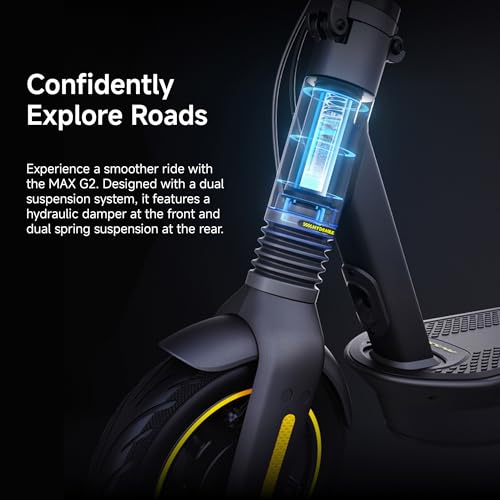
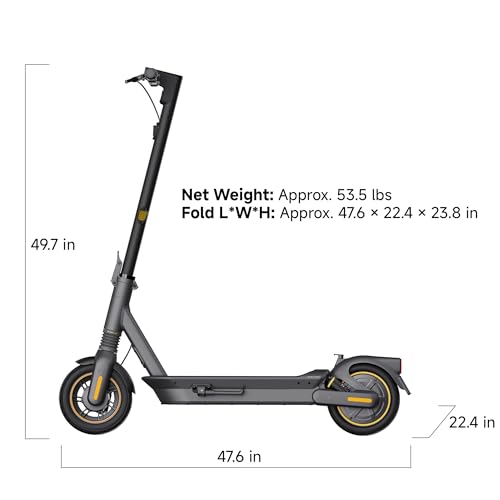
Segway Ninebot MAX G2 Electric Scooter, 22 MPH Max Speed, UL Certified | Power by 450W Motor, Up to 43 Miles Range, w/t 10-inch Tires , Dual Brakes & Suspension, UL-2272 2271 Certified






As an Amazon Associate we earn from qualifying purchases. Product prices and availability are accurate as of the date/time indicated.

Segway Ninebot MAX G3 Plus Electric Scooter, 28 MPH, 56-Mile Range | 2200W Max Power, 56 Miles Range, 11-inch Self-Sealing Tires, Dual Suspension, UL-2272/2271 Certified


As an Amazon Associate we earn from qualifying purchases. Product prices and availability are accurate as of the date/time indicated.

Segway Ninebot S2 Electric Self-Balancing Scooter, UL Certified | 10.5-inch tubeless tires, 11.2 mph and 21.7-mile range, height-adjustable for riders 4'3"-6'6", UL 2272 certified


As an Amazon Associate we earn from qualifying purchases. Product prices and availability are accurate as of the date/time indicated.

Segway Ninebot F3 Electric Scooter, 44-Mile Range, UL Certified


As an Amazon Associate we earn from qualifying purchases. Product prices and availability are accurate as of the date/time indicated.

Segway SuperScooter GT3 Electric Scooter, Up to 31 MPH, 45-Mile Range | 2400W peak motor, dual hydraulic suspension, self-sealing tires, Flash Charge, UL 2272/2271 certified


As an Amazon Associate we earn from qualifying purchases. Product prices and availability are accurate as of the date/time indicated.

Segway Ninebot MAX G3 Electric Scooter, Up to 28 MPH, 50-Mile Range | Adults and teens: 2000W peak motor, dual hydraulic suspension, disc brakes, fast charging, UL 2272 and UL 2271 certified


As an Amazon Associate we earn from qualifying purchases. Product prices and availability are accurate as of the date/time indicated.
| Model | Key point from the title | Price tier | Best for |
|---|---|---|---|
| Segway Ninebot E2 Pro | 15.5 mph, 24.9-mile range, 350W motor, cruise mode | Budget | Short, relaxed commutes |
| Segway Ninebot S2 | Self-balancing design, 11.2 mph, 21.7-mile range | Budget | Riders who want a different format |
| Segway Ninebot E3 Pro | 20 mph, 34-mile range, dual elastomer suspension | Budget | Everyday city riding on a budget |
| Segway Ninebot F3 | 44-mile range; little else stated | Mid-range | Range-first buyers who will read the listing |
| Segway Ninebot MAX G2 | 22 mph, 43-mile range, 10-inch tires, dual brakes and suspension | Mid-range | All-round commuting |
| Segway ZT3 Pro | 24.9 mph, 43.5-mile range, 1600W peak, off-road design | Mid-range | Rougher surfaces |
| Segway Ninebot MAX G3 | 28 mph, 50-mile range, 2000W peak, hydraulic suspension | Premium | Faster, longer rides |
| Segway Ninebot MAX G3 Plus | 28 mph, 56-mile range, 2200W max, 11-inch self-sealing tires | Premium | Maximum range in the MAX line |
| Segway SuperScooter GT3 | 31 mph, 45-mile range, 2400W peak, hydraulic suspension | Premium | Performance-minded adults |
What is shifting in the Segway scooter lineup
Scooter listings in this category increasingly lead with certification marks, and every title here mentions UL 2272, UL 2271 or both. That reflects a wider push, as far as general industry coverage suggests, toward safer lithium battery and electrical design after publicized e-mobility fire incidents. Some landlords, universities and transit operators now ask riders to show certified equipment, so a mark on the listing has become a practical buying filter rather than a footnote.
A second pattern is the split between commuter models and performance models. The lower end of the list talks about cruise mode, traction control and moderate speeds, while the upper end advertises peak motor ratings in the 2000W range, hydraulic suspension and fast or Flash charging. The gap between those groups is wider than the price gap suggests: braking distances, weight and handling all change once top speed passes the mid-20s mph.
Range claims keep creeping up as well, with several titles quoting more than 40 miles. Those numbers are useful for comparing models against each other, but they are produced under idealized conditions, and the way a seller frames a claim can vary. Expect real-world distance to be noticeably lower and leave a reserve rather than riding the battery down.
Finally, tires and suspension are getting more attention. Self-sealing and tubeless tires, bigger diameters and dual suspension appear across mid-priced and premium titles. They help with potholes and rough pavement, though they add complexity and weight. As always, local speed and helmet rules vary, so check them before you ride.
How the list was put together
We built this list from the nine listings supplied for this category, reading each title for stated speed, range, motor, suspension, tires and certification. Sources were published specifications, manufacturer documentation and buyer reviews. Nobody on the team used or measured these units. Where a title is silent on a detail such as weight, folding or water resistance, we say to check the listing instead of guessing. Price tiers are relative within this set only.
The nine Segway scooters, one by one
Segway ZT3 Pro: the off-road-minded mid-range pick
The title calls the ZT3 Pro an off-road design for adults, with up to 24.9 mph, a 43.5-mile claimed range, a 1600W peak motor, dual suspension, Flash Charge and both UL certifications. That combination suits riders whose route includes gravel paths, cracked pavement or park trails rather than only smooth bike lanes. A scenario: a rider who crosses a compacted dirt park trail on the way to a train station.
- Pro: dual suspension and an off-road positioning aim at rougher surfaces.
- Pro: speed and range sit in the same band as the MAX G2 for a little more motor.
- Con: the title says nothing about weight, so check the listing before planning stairs or car trunks.
- Con: peak motor ratings are momentary figures, not continuous output.
Because “Pro” and “off-road” are marketing language, read the full listing for what the manufacturer actually states about terrain, slope and water exposure. Seller-supplied speed and range numbers are best treated as ceilings. A rider who mostly stays on smooth pavement may find that the added capability goes unused, so weigh your real surfaces against the extra cost and bulk before choosing it over a MAX-line model.
Check the listing for tire type, folding mechanism, water resistance and rider weight limit. Question to ask first: how much of my route is genuinely rough, and is that worth carrying extra mass the rest of the time?
Segway Ninebot E2 Pro: the gentle entry point
The E2 Pro lists 15.5 mph, a 24.9-mile range, a 350W motor, cruise mode and UL certification. It is the lowest-speed standard scooter in this group, and for many riders that is a feature: slower speeds are easier to manage on shared paths, around pedestrians and in tight spaces. A fitting scenario is a 2 to 3 mile trip to a campus or office on mostly flat streets.
- Pro: cruise mode can reduce thumb fatigue on steady stretches.
- Pro: lowest tier here, with certification stated in the title.
- Con: 350W will likely feel limited on steeper hills, especially for heavier riders.
- Con: the title does not describe suspension or tire size, so check the listing.
A scooter at this tier also tends to be the easiest to live with in daily routines: smaller motor, lower speed and generally simpler hardware. That does not make it risk-free, so a helmet, working lights and sensible speed on shared paths still apply. If your commute might grow over time, consider whether the 24.9-mile claim leaves enough margin or whether moving up a tier now would save a second purchase later.
Confirm braking setup, tire type and folded dimensions. Question to ask first: do I have a hill on my route steeper than the motor class suggests it can handle?
Segway Ninebot E3 Pro: more suspension on a budget
The E3 Pro’s title lists a 34-mile range, 20 mph, 400W nominal power, dual elastomer suspension, traction control and UL 2272 and 2271 certification. Notably, it states nominal rather than peak power, which makes the wattage easier to compare with other scooters that quote continuous ratings. A fit would be a daily 5 mile city commute with some rough patches.
- Pro: dual suspension and traction control at the entry tiers.
- Pro: 20 mph is plenty for most bike lanes.
- Con: elastomer suspension is simpler than hydraulic systems and can feel firmer.
- Con: title omits tire size and weight.
Traction control is a notable inclusion in a title at this tier, but a title cannot tell you how it behaves on wet leaves, painted road markings or metal plates, so do not treat it as a substitute for slower, careful riding in poor conditions. Read the listing for brake type and the specifics of the suspension, since both shape comfort and stopping confidence on the kind of broken pavement many commuters meet.
Check tire type, brake design and weight limits. Question to ask first: is the smoother ride from suspension worth more to me than the savings on the simplest model?
Segway Ninebot MAX G2: the balanced commuter
This listing claims 22 mph, up to 43 miles, a 450W motor, 10-inch tires, and dual brakes and suspension, with UL certification. The 10-inch tires and dual brakes are the details that stand out, because they influence comfort and stopping more than a few extra miles of claimed range. A scenario: a 6 mile commute split between a bike lane and a rough side street.
- Pro: larger tires and dual brakes at a mid-range tier.
- Pro: range claim leaves headroom for a daily round trip.
- Con: 450W may feel modest on long climbs.
- Con: title does not name the suspension type, so check the listing.
Many buyers will find this the sensible middle of the lineup because it avoids the weight and cost that normally come with the highest motor ratings. Its title does not list a peak wattage, so do not compare its 450W figure with the peak numbers on the G3 or GT3 listings as if they were the same measure. If your route includes steep hills, look for further detail on climbing ability in the listing before relying on it.
Look for weight, lighting, kickstand and water-resistance details. Question to ask first: is my daily round trip under about 20 realistic miles, leaving a comfortable reserve?
Segway Ninebot MAX G3: the step up in power
The MAX G3 title promises up to 28 mph, 50 miles, a 2000W peak motor, dual hydraulic suspension, disc brakes and fast charging, and says it is for adults and teens. That is a big jump in motor rating from the G2, and it changes the character of the scooter. A scenario: a rider with a hilly 8 mile commute who wants confident acceleration and stronger braking.
- Pro: disc brakes and hydraulic suspension suit higher speeds.
- Pro: long claimed range for multi-stop days.
- Con: higher speed raises both risk and the importance of a helmet and protective gear.
- Con: the mention of teens does not replace the manufacturer’s age and weight guidance.
The step from the G2 is large enough that you should think of it as a different kind of vehicle, not just a bigger number. Braking distances, handling at speed and the energy involved in a fall all rise. The mention of teens in the title is a marketing line, so confirm age, weight and height limits in the manual and apply any local age and helmet rules before a younger rider uses it.
Check weight and folding. Question to ask first: where is it legal and sensible to use 28 mph where I ride?
Segway Ninebot MAX G3 Plus: maximum range in the MAX line
The G3 Plus lists 28 mph, a 56-mile range, 2200W max power, 11-inch self-sealing tires and dual suspension with UL certification. Its distinguishing features are the longest claimed range here and the largest tires. A scenario: a rider who charges only two or three times a week and covers mixed pavement.
- Pro: the longest range claim in this set.
- Pro: self-sealing tires help with small punctures.
- Con: the title leaves out brake type and weight.
- Con: the premium tier makes it hard to justify for short trips.
Because the G3 and G3 Plus share a 28 mph claim, the real question is what the extra range, bigger tires and higher max power rating actually deliver for your routes. If you cover under 15 miles a day and can charge each night, the plain G3 may already provide more range than you need, and the Plus becomes a convenience purchase rather than a capability upgrade.
Compare it directly against the MAX G3 listing and see what the price difference actually buys. Question to ask first: will I really ride far enough to use the extra range?
Segway SuperScooter GT3: the performance flagship
The GT3 title lists up to 31 mph, 45 miles, a 2400W peak motor, dual hydraulic suspension, self-sealing tires and Flash Charge. It has the highest speed and motor rating in this group, but not the longest range, which is a useful reminder that performance and range are different goals. A scenario: an experienced adult rider on open roads or long paths where such speed is permitted.
- Pro: highest stated speed and motor rating here.
- Pro: hydraulic suspension and self-sealing tires suit higher speeds.
- Con: most expensive here, with less range than the G3 Plus.
- Con: speed demands better protective gear and stricter attention to local law.
At this level, protective gear is a baseline rather than an optional extra: a certified helmet, gloves and sturdy footwear at minimum, and many riders add padded protection. Check whether your local rules even allow a scooter that can reach 31 mph on the roads you plan to use. Many places cap scooter speed or restrict where they can be ridden, and the listing speed does not override those rules.
Check weight, braking and lights. Question to ask first: can I use this speed legally and safely, or would a lower tier match my routes better?
Segway Ninebot F3: range with few stated details
The F3 title mentions only a 44-mile range and UL certification. That is thin, and it means the buyer must do the legwork on motor, speed, tires, brakes and suspension. The price tier suggests it targets commuters, but we cannot confirm that from the title. A scenario: a rider who values range and is happy to read the full listing.
- Pro: long claimed range for its tier.
- Pro: certification stated.
- Con: no speed, motor or suspension information in the title.
- Con: hard to compare directly with listings that spell out specs.
A sparse title is not proof of a weak product, but it makes verification your job. Open the full listing and the manufacturer documentation, write down speed, motor, tires, brakes, suspension and weight, and compare them line by line with the MAX G2 above. If the details are not clearly published, consider that a reason to pick a model whose specifications are easier to confirm before you pay.
Check everything about speed, brakes, tires, weight and warranty. Question to ask first: does the full listing reveal enough to justify choosing it over the MAX G2?
Segway Ninebot S2: a different kind of scooter
The S2 is described as an electric self-balancing scooter with 10.5-inch tubeless tires, 11.2 mph, 21.7 miles, UL 2272 certification and height adjustment for riders 4’3″ to 6’6″. This is a different class from the stand-up kick-style models around it, so a direct comparison on speed or range is not meaningful. Treat it as an alternative format rather than a weaker version of the same thing. A scenario: a family or campus setting where several people of different heights share one unit.
- Pro: wide height range stated.
- Pro: tubeless tires.
- Con: lower speed, shorter range and a learning curve for balance.
- Con: lists UL 2272 only, not UL 2271.
Because the format differs, think carefully about learning time and about where you would use it. Self-balancing designs generally reward practice in an open, flat space before riding near people or traffic, and the manufacturer’s guidance on rider weight and operation should be read before the first ride. Also note that only UL 2272 appears in the title, so confirm battery certification details on the listing if that matters to your building or workplace.
Check rider weight limit and how it is operated. Question to ask first: do I actually want a self-balancing design, or a conventional scooter?
Buying guide: what to look for in a Segway electric scooter
Start by writing down three facts about your own use: the distance you ride on a typical day, the worst surface or hill on the route, and how often you must carry the scooter. Those three answers eliminate most of this list before you compare a single feature.
Speed and motor
Match top speed to where you ride, not to the biggest number. A 15 to 20 mph scooter fits most bike lanes and shared paths, while 28 mph and above belongs on roads where it is legal. Peak motor ratings, such as 2000W or 2400W, describe short bursts; nominal ratings, like the E3 Pro’s 400W, describe sustained output. Compare like with like.
Range and battery
Claimed range is an upper bound. Plan around roughly 60 to 70 percent of it, then add a reserve. Charge on a hard surface, away from flammable items, using the supplied charger, and follow the manufacturer’s instructions and local codes. Do not leave a scooter charging unattended for long periods.
Brakes, tires and suspension
Dual brakes, disc brakes and traction control matter more than the last 10 miles of range. Larger tires smooth cracks and tram tracks; self-sealing and tubeless designs reduce flat risk. Hydraulic suspension is more sophisticated than elastomer, but it may need more maintenance.
Weight, folding and storage
None of the titles state weight. If you climb stairs or lift a scooter into a car, find the weight in the listing and test your own comfort threshold. A scooter you cannot carry becomes a scooter you avoid using.
Rider fit, load and extras
Check the stated rider weight limit and the handlebar and deck dimensions against your height and shoe size. Look for lights, a bell or horn, mudguards and a kickstand, and budget for a helmet, a lock and gloves. Accessories that are not mentioned in the title may or may not be included, so confirm them on the listing.
Certification and local rules
UL 2272 generally refers to the electrical system of personal e-mobility devices and UL 2271 to batteries for light electric vehicles. Marks are a screening filter, not a safety guarantee. Check helmet laws, speed caps and where scooters are permitted in your city.
Worked example: choosing by commute
Assume a rider commutes 7 miles each way, five days a week, with no chance to charge at work. The round trip is 14 miles. Planning on 65 percent of claimed range, a 24.9-mile claim yields about 16 miles of usable distance, which is barely enough. A 43-mile claim gives about 28 miles, leaving a comfortable reserve. These are estimates under stated assumptions, not measurements.
| Spec concept | What to look for | Why it matters |
|---|---|---|
| Claimed range | At least double the daily distance | Real range falls with hills, wind and heavy riders |
| Brakes | Dual or disc brakes, plus traction control if offered | Stopping distance rises quickly with speed |
| Tires | Larger, self-sealing or tubeless | Comfort on rough pavement and fewer flats |
| Weight | Stated in the listing; compare with your own stairs and trunk | Carrying burden shapes how often you ride |
| Certification | UL 2272 and 2271 noted on the listing | Screens electrical and battery design |
Mistakes buyers make
- Buying on top speed alone, then riding below it most of the time while carrying the extra weight.
- Treating claimed range as guaranteed range and discovering the gap on the first hilly day.
- Comparing peak wattage on one listing with nominal wattage on another.
- Skipping a helmet and gloves, particularly on the 28 mph and 31 mph models.
- Ignoring local laws on speed, sidewalks and helmets.
- Charging indoors on carpet or next to flammable items and leaving it unattended.
- Skipping the manual: charging, storage, folding and speed-mode instructions differ by model, and following the manufacturer’s instructions protects both you and the battery.
- Assuming the self-balancing S2 is simply a slower version of the others.
Verdict by use case
- Budget commuter: E2 Pro for flat, short trips; E3 Pro if you want suspension and more speed.
- All-round commuter: MAX G2 for the combination of 10-inch tires, dual brakes and claimed range.
- Rough surfaces: ZT3 Pro, since the title stresses off-road design and dual suspension.
- Fast, long rides: MAX G3, or G3 Plus if you need the longest range claim.
- Performance: GT3, for experienced adult riders where its speed is legal.
- Shared household: S2, if a self-balancing format and height range matter.
For further reading, see our guides to commuter electric scooters, high-performance scooters for adult riders and scooters for teens.
Frequently asked questions
Which Segway electric scooter is best for a daily commute?
On paper, the Ninebot MAX G2 and MAX G3 are the strongest fits, because their listings pair a sizeable claimed range with 10-inch-class tires, dual brakes and suspension. For shorter, flatter commutes the E2 Pro or E3 Pro can be enough. Match the claimed range to at least twice your daily distance, then check the listing for weight and folding details before you decide.
Are the range figures in the listings realistic?
Treat them as best-case seller claims. Range figures usually come from light riders, flat ground, moderate speed and mild weather. Hills, headwinds, cold temperatures, heavier riders and frequent acceleration all shorten real distance, often by a third or more. A practical habit is to plan around roughly 60 to 70 percent of the claimed number and leave a reserve so the battery is not drained to zero.
Do I need a certified scooter, and what do UL 2272 and UL 2271 mean?
Certification is not a guarantee of safety, but it is a useful screening step. UL 2272 is generally described as a standard for the electrical system of personal e-mobility devices, and UL 2271 as a standard for batteries in light electric vehicles. Several buildings, apartment managers and transit systems ask for such marks. Confirm the exact certificates on the listing and follow the manufacturer’s charging instructions.
Is a faster scooter always better?
No. Higher top speed means longer stopping distances, more crash energy and often more weight to carry. Many riders spend most of their time well below the top speed on shared paths and city streets. Prioritize braking, tires, lighting, stability and weight first, then choose the speed tier that is legal where you ride and comfortable for your experience level.
Can teenagers ride these scooters?
Only the MAX G3 listing mentions teens, and only alongside adults. For any model, check the manufacturer’s stated minimum age, weight limits and rider height range, and look at local rules on age and helmets. A lower-speed model is usually the more sensible starting point for a younger rider, with an adult confirming fit, braking and safe riding habits.
Do these scooters need much maintenance?
Routine care is modest but real. Check tire pressure or tire condition, brake feel, fasteners, lights and cable routing on a regular schedule, and keep the deck and connectors clean and dry. Self-sealing or tubeless tires reduce flat risk but do not remove it. Follow the manufacturer’s manual for intervals, and have a qualified shop handle brake, battery or motor repairs.