Key takeaways
- Best trailer hitch locks compared: coupler locks and receiver pin locks, with coupler sizes, fit notes and a clear guide to choosing one.
The Master Lock 379ATPY coupler lock is the best overall pick for most owners of utility trailers, campers and boat trailers. A trailer hitch lock is a keyed device that blocks a thief from hooking your trailer to another vehicle (a coupler lock) or from pulling your ball mount out of the truck’s receiver (a receiver pin lock). The Master Lock fits the three common coupler sizes, installs in seconds and does not need any hardware. Pick the Rhino USA coupler kit if you want a heavier steel build, and choose one of the two receiver pins if your goal is to keep the ball mount attached to the vehicle while it is parked.
Quick List
- Rhino USA Coupler Lock Kit – best for owners who want a heavy steel coupler lock for a 2-5/16 inch coupler.
- Master Lock Black Coupler Lock (379ATPY) – best all-around lock for utility, boat and camper trailers.
- Master Lock Red Hitch Lock – best for people who want a visible red lock that covers three coupler sizes.
- JUSTTOP Receiver Pin Lock – best for locking a ball mount into a 2 inch or 2-1/2 inch receiver.
- Rhino USA 2 inch Hitch Pin – best for Class III and IV receivers that live outdoors in bad weather.
- RETRUE Adjustable Coupler Lock – best for a bright, easy-to-spot lock that adjusts to different couplers.
Which One Is Right for You?
| If you… | Choose |
|---|---|
| Park a trailer at home and want the simplest lock to use every day | Master Lock Black Coupler Lock (379ATPY) |
| Want a thicker steel kit for a camper or boat trailer with a 2-5/16 inch coupler | Rhino USA Coupler Lock Kit |
| Own more than one trailer with different coupler sizes | Master Lock Red Hitch Lock |
| Leave the truck parked and worry about the ball mount being pulled | JUSTTOP Receiver Pin Lock |
| Have a Class III or IV receiver exposed to rain, mud and road salt | Rhino USA 2 inch Hitch Pin |
| Want a lock that is easy to see in a dark yard or storage lot | RETRUE Adjustable Coupler Lock |
Think about where the trailer sleeps at night, how often you hitch and unhitch, and how many different trailers or vehicles share the same lock. A driveway camper, a boat on a lakeside lot and a landscaping trailer behind a work truck all have different risks and different habits. The first decision is where the weak point is. If the trailer sits detached from the truck, a coupler lock is the right tool, because it stops anyone from dropping the coupler on a ball. If the trailer stays hitched, or if the ball mount itself is the target, a receiver pin lock is the right tool. Many owners end up using one of each, since the two locks protect different links in the towing chain.
All 6 Picks in Detail
1. Rhino USA Coupler Lock Kit – Best for a Heavy Steel Build
As an Amazon Associate we earn from qualifying purchases at no extra cost to you.

The Rhino USA kit is built around a 2-5/16 inch coupler, which is the size found on many larger RV, camper and car-hauler trailers. The listing describes it as an anti-theft steel lock for RVs, campers, trailers, boats and caravans, and it is sold as a kit rather than a bare lock. That wording suggests a more rugged package than a basic latch, though the exact contents and dimensions are not spelled out in the listing name, so confirm what is included before you order.
- Sized for 2-5/16 inch couplers, per the listing title
- Steel construction described as heavy-duty and anti-theft
- Marketed for RV, camper, trailer, boat and caravan use
- Kit format; included hardware and key count: confirm on listing
- Does not state compatibility with smaller 1-7/8 or 2 inch couplers
Pros
- Solid steel feel suits long-term outdoor storage
- Targets the larger coupler size that universal locks sometimes struggle with
Cons
- Limited to one coupler size, so it is not a fit for every trailer you own
- Heavier and bulkier to store than a small latch lock
If you tow only 2-5/16 inch trailers, this is the stronger-looking choice over the Master Lock black model, but it gives up that lock’s flexibility.
2. Master Lock Black Coupler Lock (379ATPY) – Best for Everyday Trailer Storage

This is the lock to start with if you own a utility trailer, a small camper or a boat trailer and want something that works without fuss. Master Lock lists model 379ATPY as a universal latch-style coupler lock for tongue-type couplers in 1-7/8 inch, 2 inch and most 2-5/16 inch sizes. The wording “most 2-5/16 inch” is worth noticing, because a few unusual couplers can be too large or oddly shaped, so check the latch area of your own coupler before you buy.
- Universal coupler lock for RVs, campers, boat and utility trailers
- Fits 1-7/8 inch, 2 inch and most 2-5/16 inch couplers, per the manufacturer
- Latch style that closes over the coupler, so no ball or pin is needed
- Black finish; retailer listings describe a zinc body (confirm on listing)
- Keyed different, with two keys in the package per manufacturer information
- Limited lifetime warranty, according to the manufacturer
Pros
- Fits the three common coupler sizes
- Quick to install and remove
- Well-known brand with easy-to-find replacement keys
Cons
- Not as visually imposing as an oversized steel kit
- Rare coupler shapes may not seat correctly
Compared with the red Master Lock in this list, it is the more clearly documented option, since the model number tells you exactly what you are buying.
3. Master Lock Red Hitch Lock – Best for Multiple Coupler Sizes
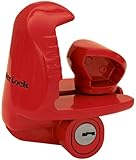
This red Master Lock is listed as a universal hitch lock for boat, RV, utility and camper trailers, and the title names the same three sizes covered by the black model: 1-7/8 inch, 2 inch and 2-5/16 inch. The listing does not give a model number in its name, so treat the black 379ATPY as the better-documented sibling and verify the red lock’s details on its product page. Its main practical difference is color, and that matters more than it sounds in a shared storage lot.
- Universal design for boat, RV, utility and camper trailers
- Covers 1-7/8 inch, 2 inch and 2-5/16 inch couplers, per the listing title
- Red finish for visibility
- Latch-style design; locking hardware and body material: confirm on listing
- Key count and keying: confirm on listing
Pros
- One lock for several trailers
- Bright color makes it obvious the trailer is secured
Cons
- Model number is not in the listing title, so checking the page is a must
- Same limits as any latch lock: it does not secure the wheels
It is the better choice than the RETRUE adjustable lock for owners who prefer a name-brand mechanism and a fixed, simple design.
4. JUSTTOP Receiver Pin Lock – Best for 2 Inch and 2-1/2 Inch Receivers

Unlike the coupler locks above, this one goes into the receiver tube on the back of a truck, SUV or car. The listing describes a 5/8 inch diameter pin, 3-1/2 inches long, for Class III and IV hitches with 2 inch and 2-1/2 inch receivers. A pin lock like this replaces the ordinary clip or cotter pin that holds the ball mount in place, so a thief cannot simply slide the mount out and walk off with it.
- 5/8 inch diameter pin, 3-1/2 inches long, per the listing title
- Made for Class III and IV hitches
- Works with 2 inch and 2-1/2 inch receivers
- Keyed locking head; key count and finish: confirm on listing
- Replaces the standard hitch pin and clip
Pros
- Protects the ball mount or hitch accessory as well as the trailer connection
- Covers two receiver sizes in one pin
Cons
- Does nothing to stop someone from towing a trailer by its coupler
- Pin length must suit your receiver and mount, so measure first
Compared with the Rhino USA hitch pin, it has the broader size range, while the Rhino adds weather protection.
5. Rhino USA 2 Inch Hitch Pin – Best for Weather-Exposed Receivers

The Rhino USA pin is aimed at 2 inch receivers on Class III and IV hitches. Its listing highlights a patented locking design that is weatherproof and debris-protected, and manufacturer-side descriptions mention a slide cap that keeps mud and grime out of the lock. That is useful for any vehicle that drives on salted winter roads or dusty work sites, since a lock that corrodes shut is worse than no lock at all.
- Sized for 2 inch receivers, per the listing title
- Fits Class III and IV hitches
- Patented locking receiver pin design
- Weatherproof, debris-protected construction, as described in the listing
- Pin diameter is commonly 5/8 inch for this size; confirm on listing
Pros
- Cover design helps keep dirt out of the keyway
- Clearly matched to the most common receiver size
Cons
- Limited to 2 inch receivers
- Like every pin lock, it leaves the trailer coupler unprotected
Choose it over the JUSTTOP pin when weather exposure is the bigger concern and your receiver is a standard 2 inch. Before installing any hitch pin, clean the receiver holes, slide the mount fully home and confirm the pin passes cleanly through both walls without forcing it.
6. RETRUE Adjustable Coupler Lock – Best for High Visibility

The RETRUE lock is described as a universal, adjustable trailer coupler lock in bright yellow. Adjustable means the clamp can be set to suit more than one coupler width, and the color makes the lock hard to miss. A highly visible lock can discourage opportunists who prefer easy targets, although it should not be mistaken for a high-security device. The listing name leaves out materials, size ranges and key details, so confirm all of that on the product page.
- Universal coupler lock with an adjustable fit
- Bright yellow finish
- Supported coupler sizes: confirm on listing
- Material and lock mechanism: confirm on listing
- Number of keys included: confirm on listing
Pros
- Adjustable design can suit different couplers
- Very easy to see in low light, which also helps you remember to remove it before driving
Cons
- Fewer specifications are stated in the listing name than for the Master Lock options
- Adjustable parts can be a weaker point than a fixed-body latch
It makes the most sense as a secondary lock beside the Master Lock black model, which is better documented. One practical use is a second trailer in the yard: a yellow lock on one and a black lock on the other lets you tell at a glance which key goes where.
Specs Compared
| Product | Lock type | Fits | Material | Color |
|---|---|---|---|---|
| Master Lock Black (379ATPY) | Coupler latch lock | 1-7/8, 2 and most 2-5/16 inch couplers | Confirm on listing (retail pages mention zinc) | Black |
| Rhino USA Coupler Lock Kit | Coupler lock kit | 2-5/16 inch couplers | Steel | Confirm on listing |
| Master Lock Red | Coupler latch lock | 1-7/8, 2 and 2-5/16 inch couplers | Confirm on listing | Red |
| JUSTTOP Receiver Pin Lock | Receiver pin lock, 5/8 inch by 3-1/2 inch | Class III and IV, 2 and 2-1/2 inch receivers | Confirm on listing | Confirm on listing |
| Rhino USA 2 inch Hitch Pin | Receiver pin lock | Class III and IV, 2 inch receivers | Confirm on listing | Confirm on listing |
| RETRUE Adjustable Lock | Adjustable coupler lock | Confirm on listing | Confirm on listing | Bright yellow |
How We Chose These
We built this list from current catalog listings, comparing what each product name and description states about fit, lock type and intended use. We cross-checked coupler and receiver sizes against manufacturer product pages where they were available, and we sorted the group by the job each lock does: coupler locks for detached trailers and pin locks for receivers. Where a listing does not state a value, such as material or key count, the table says to confirm it on the product page rather than guess. We favored clear size compatibility, a recognizable locking approach and honest limits over marketing claims. We did not rank on security strength alone, because no single listing documents break-in resistance in a comparable way.
What to Look For
Coupler lock or receiver pin lock?
The two types guard different things. A coupler lock sits on the trailer’s coupler, the socket that drops over the hitch ball, and keeps the latch from opening or the coupler from seating on any ball. A receiver pin lock replaces the pin that goes through the square receiver tube on your vehicle, which stops the ball mount or other accessory from being removed. If your trailer is parked alone, the coupler lock does the real work. If your truck is parked with the trailer attached, the pin lock secures the connection from the vehicle side. For serious protection, use both and add a wheel lock or a chain through the frame.
Match the coupler size
Standard trailer couplers come in three common sizes: 1-7/8 inch, 2 inch and 2-5/16 inch. The number is the diameter of the ball the coupler is made for, and it is usually stamped on the coupler body. Lighter utility trailers often use 1-7/8 or 2 inch couplers, while larger campers, car haulers and heavier boat trailers commonly use 2-5/16 inch. Check the stamp, then confirm that the lock lists the same size. A lock rated for 2-5/16 inch only will not necessarily clamp a 1-7/8 inch coupler securely.
Match the receiver and pin
Most pickup and SUV hitches use a 2 inch square receiver and a 5/8 inch pin, a pairing common on Class III and Class IV hitches. Larger Class V receivers can be 2-1/2 inch, and some use thicker pins. A pin that is too thin will rattle, and one that is too thick will not fit through the holes. Measure the hole in the receiver, and measure the usable length from the outside of the receiver wall through the mount, because a pin that is too short cannot lock properly. A quick rule: usable pin length needs to exceed the receiver width plus both walls of the ball mount shank, with room for the lock head and clip to sit outside.
Weather and corrosion
Locks live outside, so rust and grit matter. Look for covers, sealed keyways or coatings, and apply a light spray lubricant to the keyway a couple of times per season. Salt used on winter roads is a frequent cause of seized locks. Keep the keys somewhere safe at home, not in the truck, and keep a spare. Always remove a coupler lock before towing, because driving off with one attached can damage the coupler or the lock.
Daily use and key habits
The best lock is the one you actually use every time. A coupler lock that needs a minute of fiddling tends to stay in the glovebox, while a latch that clicks shut in seconds becomes routine. Before you buy, picture the full sequence: unhitching, lowering the coupler onto the jack, closing the latch over it and turning the key. Make sure you can do all of it with gloves on, in the rain, without kneeling in mud. Keyed-different locks need separate keys for each unit, so label the keys or keep them on a ring with a tag. If you own several trailers, a set of keyed-alike locks is easier to manage, and some makers sell them in multi-packs. Finally, give the key a home. Hang it on a hook inside the house, never on the truck’s key ring that stays in the cab.
Safety limits to remember
A hitch pin lock is a load-bearing part of the connection, so never use a pin that is the wrong diameter just to make it fit. Safety chains and any breakaway cable on the trailer are separate, and a lock should never take their place. Also remember that a lock is a deterrent. Determined thieves can defeat any of these with tools, so the goal is to make your trailer slower and noisier to take than the one next to it. Worked example: if you own a 2 inch coupler utility trailer and a truck with a 2 inch receiver, pair a 379ATPY-style coupler lock with a 5/8 inch locking pin and you cover both ends of the connection.
Questions
Do I need both a coupler lock and a receiver pin lock?
Not always, but they cover different risks. The coupler lock protects the trailer when it is parked alone, and the pin lock protects the ball mount on your vehicle. If you leave a trailer hitched for long periods, using both is a sensible approach.
How do I know which coupler size I have?
Look for the size stamped on the coupler body, typically reading 1-7/8 inch, 2 inch or 2-5/16 inch. If you cannot read it, measure the inside of the socket or check the ball size you normally use. Match the lock to that number.
Will a hitch lock stop a determined thief?
No lock is theft-proof. These products slow thieves down and make an easy target less attractive. Combine a lock with a visible location, good lighting and a wheel lock or chain for better results.
Can I tow with a coupler lock attached?
No. Remove it before hitching up, since it occupies the coupler’s latch area. Driving off with one in place can damage both the lock and the coupler.
What does Class III or Class IV mean on a pin lock?
These classes describe the towing rating of the hitch, and both commonly use a 2 inch receiver opening. A pin listed for those classes is intended for that receiver size. Always confirm your hitch’s own rating and the pin diameter.
Are adjustable coupler locks as good as fixed ones?
Adjustable locks fit more couplers, but they have more moving parts. A fixed latch with a clear size range is simpler and often easier to trust. Whichever type you choose, test the fit on your own coupler before you rely on it.
Update History
- October 20, 2026 – Initial publication; product set drawn from current catalog listings.
- Check the product page for current specifications and availability before buying.
Sources
- Manufacturer product and specification pages for Master Lock and Rhino USA
- Retailer listing titles and specification fields for all six products
- Hitch class and receiver size explainers from towing and RV accessory publishers