Key takeaways
- Automatic shutoff: Choose a timer that suits your routine. A two-hour setting is useful for warming a bed before sleep; a longer timer may be convenient for reading but should not replace supervision.
- Overheat protection: Look for wording that describes monitoring or protection against excessive temperature, not just a general claim that the product is “safe.”
- Low-voltage construction: Some designs use a low-voltage power supply, which can reduce the voltage carried through the blanket. It does not eliminate the need to follow the instructions.
- Recognized electrical certification: In the United States, look for marks from established testing organizations such as UL, ETL, or CSA where applicable.
- Detachable controls: This is primarily a cleaning advantage, but it also makes it easier to inspect the cord and connection before each use.
The best heated blankets for most shoppers are machine-washable, low-voltage blankets with at least five heat settings, a clearly marked automatic shutoff, and a controller that can be disconnected before washing.
Our top picks
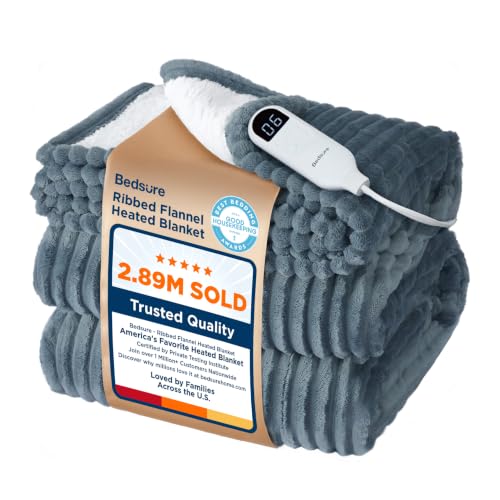


As an Amazon Associate we earn from qualifying purchases at no extra cost to you. Ratings are shown as listed on Amazon.
Best heated blankets by sleeping situation
| Situation | Best choice | Why it fits | Typical market range |
|---|---|---|---|
| One person in a shared bed | Dual-control electric blanket | Separate temperature zones prevent disagreements over warmth | $60–$150 |
| Cold feet or a small sofa | 50 x 60-inch heated throw | Focused coverage, lower weight, and easier storage | $35–$90 |
| Full-bed coverage | Queen or king heated blanket | Longer drop and more even coverage than a throw | $70–$180 |
| Frequent washing | Machine-washable blanket with detachable controller | Less handling stress on the wiring and simpler cleaning | $45–$140 |
| Light sleepers | Thin fleece or microplush blanket with a dimmable controller | Quiet controls and less bulky insulation | $45–$120 |
Prices are typical U.S. market ranges rather than fixed prices. Construction, size, fabric, and dual-zone controls can move a blanket well outside these bands.
What separates a good heated blanket from a frustrating one?
Fabric feel: choose for direct skin contact and layering
Microplush and sherpa fabrics feel soft and warm immediately, but they are usually thicker and may trap more heat even when the electrical heating is turned off. Fleece is lighter, dries faster, and tends to be easier to fold. Cotton or cotton-blend blankets feel more like conventional bedding and can suit people who dislike synthetic textures, although they may feel less fluffy and can take longer to dry.
For use under a duvet, choose a thinner fleece or cotton-blend design. A thick sherpa blanket under another heavy comforter can become uncomfortable and makes it harder to judge how warm the electrical setting really is. For a sofa throw, plush fabric is more forgiving because the blanket is not constrained by fitted bedding.
Heat settings: more is useful only when the steps are meaningful
Most household heated blankets offer five to ten settings. The useful feature is not the highest number; it is a genuinely low setting for overnight comfort and small enough increments to avoid jumping from cool to too warm. A preheat mode can warm cold bedding quickly, but it should not be treated as a reason to leave the blanket running unattended.
Look for a controller with separate buttons for power, temperature, and timer. A backlit display is helpful at night, but an overly bright display can disturb light sleepers. Some controls remember the last setting, while others return to a default level after every power cycle. The latter is less convenient but can reduce the chance of accidentally restarting at a high temperature.
Controller design and cord placement
A controller should be large enough to operate by touch, with raised or distinctly shaped buttons. Tiny membrane buttons and confusing temperature icons are inconvenient in a dark bedroom. Dual-control blankets should have two independent controllers, each connected to its own side.
Check where the controller connects to the blanket. A detachable connection near the edge makes washing easier, while a permanently attached controller is a warning sign for anyone who expects to launder the blanket regularly. Keep the controller and power plug outside the blanket rather than placing them beneath your body or between folded layers.
Head-to-head: heated throw versus heated bed blanket
| Characteristic | Heated throw | Full bed blanket |
|---|---|---|
| Common dimensions | 50 x 60 inches | Full/queen: about 90 x 90 inches; king: about 100 x 90 inches |
| Typical weight | 2–4 pounds | 4–8 pounds, depending on size and fabric |
| Heating zones | Usually one | One or two; dual controls are common on larger sizes |
| Best use | Sofa, reading chair, desk, or targeted warmth | Prewarming and maintaining warmth across a mattress |
| Storage | Simple to fold and store | Needs a larger, loose storage space |
| Typical automatic shutoff | About 2–10 hours | About 2–10 hours |
A throw is the better value when only one person needs warmth or when you move between rooms. It is not a substitute for a bed-sized blanket if you want consistent coverage from shoulders to feet. Conversely, buying a king blanket for a single chair wastes energy, adds weight, and creates more fabric to wash.
Safety features that deserve priority
- Automatic shutoff: Choose a timer that suits your routine. A two-hour setting is useful for warming a bed before sleep; a longer timer may be convenient for reading but should not replace supervision.
- Overheat protection: Look for wording that describes monitoring or protection against excessive temperature, not just a general claim that the product is “safe.”
- Low-voltage construction: Some designs use a low-voltage power supply, which can reduce the voltage carried through the blanket. It does not eliminate the need to follow the instructions.
- Recognized electrical certification: In the United States, look for marks from established testing organizations such as UL, ETL, or CSA where applicable.
- Detachable controls: This is primarily a cleaning advantage, but it also makes it easier to inspect the cord and connection before each use.
Never use a heated blanket while it is folded, bunched, tucked tightly under a mattress, or covered by heavy objects. Do not use one with damaged wiring, scorch marks, frayed cords, cracked controllers, or a connector that becomes unusually hot. Keep pets from chewing the cord, and follow the manufacturer’s guidance for use by children, people with reduced heat sensitivity, or anyone who may not be able to respond to discomfort. If that guidance is unclear, ask a healthcare professional before use.
Washable construction and long-term ownership
“Machine washable” does not mean “wash it any way you like.” Disconnect the controller and power cord completely, use the cycle and water temperature specified on the care label, and avoid bleach unless the manufacturer explicitly permits it. Do not dry-clean an electrically heated blanket. Dry it fully before reconnecting power; residual moisture is a bigger concern than a slightly wrinkled finish.
The wiring and connector are usually the first parts to suffer. Repeated tight folding, sitting on the controller, pulling the cord to unplug it, and storing the blanket while damp can shorten its useful life. Fold loosely along natural sections instead of compressing it into a small cube. If the care instructions allow a dryer, use the recommended low-heat setting and remove the blanket promptly to prevent overheating or permanent creases.
Fabric also wears before the heating element in frequent-use blankets. Plush surfaces can flatten in high-contact areas, while cotton can shrink if washed or dried too hot. A removable cover is not universal, but it can reduce washing frequency and protect the outer fabric.
A simple sizing calculation before you buy
Measure the mattress width and decide how much side drop you want. For example, a 60-inch-wide queen mattress with a desired 12-inch drop on each side requires approximately 84 inches of blanket width:
60 inches + 12 inches + 12 inches = 84 inches.
A blanket around 90 inches wide provides that coverage, with some allowance for movement. If you use a heated blanket as a top layer, check the manufacturer’s intended orientation and avoid tucking the heated portion tightly under the mattress. For a throw, measure from your shoulders to your feet while seated or reclined. A 50 x 60-inch throw covers most torsos and legs in a chair, but taller users may prefer a 60 x 70-inch model.
Which features are worth paying for?
Spend more for dual controls when two people share a bed, a softer fabric when the blanket will touch bare skin, and a detachable controller when regular washing matters. A larger number of heat levels is a low priority after about five useful settings. Likewise, decorative stitching and extra-thick pile do not necessarily indicate better heating or safer construction.
For occasional sofa use, a washable heated throw with one controller and a short automatic timer is usually the sensible purchase. For nightly bed use, prioritize the correct mattress size, separate controls, a low setting, clear timer operation, and durable cord connections. Those details matter more than maximum heat or a fashionable outer fabric.
Final recommendation
The best heated blankets balance comfortable fabric with controllable warmth and easy ownership. Choose a lightweight fleece throw for targeted warmth, a plush throw when tactile softness matters most, or a full-size dual-control blanket for shared beds. Whatever the format, select a machine-washable model with detachable controls, automatic shutoff, overheat protection, recognized electrical certification, and dimensions that match the way you actually sleep or sit.