Key takeaways
- Best for general work: a cotton canvas or duck jacket with a quilted body and flannel lining, such as the construction used by Carhartt and similar workwear brands.
- Best for cold, dry weather: a heavyweight wool-blend jacket or wool overshirt from brands such as Filson or Pendleton.
- Best for casual wear and travel: an uninsulated flannel shirt-jacket with a 6–8 oz cotton shell and a relaxed fit.
- Best for wet conditions: a water-resistant synthetic or waxed-cotton jacket worn over a flannel shirt; traditional cotton flannel alone is not reliable rain protection.
- Best budget approach: a midweight flannel overshirt layered over a fleece rather than buying one bulky jacket that is too warm indoors.
The best flannel jackets for men are the ones that match the job: choose a 10–12 oz wool or heavy cotton shell for hard wear, a quilted flannel-lined jacket for cold work, and a lighter 6–8 oz cotton overshirt for travel and casual layering.
“Flannel jacket” covers several different garments, from shirt-jackets with a soft brushed face to rugged canvas coats lined with flannel and insulation. The right choice depends less on the pattern than on fabric weight, wind resistance, warmth, pocket layout, and how much room remains for a sweater or hoodie.
Our top picks


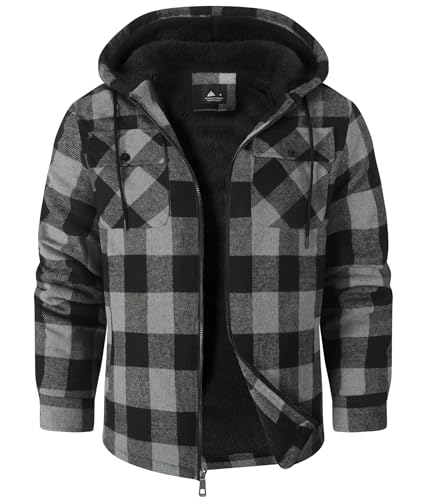
As an Amazon Associate we earn from qualifying purchases at no extra cost to you. Ratings are shown as listed on Amazon.
Best flannel jackets by situation
- Best for general work: a cotton canvas or duck jacket with a quilted body and flannel lining, such as the construction used by Carhartt and similar workwear brands.
- Best for cold, dry weather: a heavyweight wool-blend jacket or wool overshirt from brands such as Filson or Pendleton.
- Best for casual wear and travel: an uninsulated flannel shirt-jacket with a 6–8 oz cotton shell and a relaxed fit.
- Best for wet conditions: a water-resistant synthetic or waxed-cotton jacket worn over a flannel shirt; traditional cotton flannel alone is not reliable rain protection.
- Best budget approach: a midweight flannel overshirt layered over a fleece rather than buying one bulky jacket that is too warm indoors.
Head-to-head: what separates the main jacket types?
| Jacket type | Typical shell | Typical insulation | Approx. weight | Best temperature range* | Primary advantage |
|---|---|---|---|---|---|
| Light flannel overshirt | 6–8 oz cotton | None | 1.0–1.5 lb | 50–65°F | Easy layering and indoor comfort |
| Heavy wool flannel jacket | 12–18 oz wool or wool blend | None or thin lining | 2.0–3.5 lb | 35–55°F | Warmth, odor resistance, and wind-blocking ability |
| Quilted flannel-lined work jacket | 8–12 oz cotton duck or canvas | 40–100 g synthetic fill | 2.5–4.0 lb | 25–50°F | Durability and dependable warmth |
| Insulated synthetic shirt-jacket | Polyester or cotton-polyester | 60–120 g synthetic fill | 1.5–2.5 lb | 30–55°F | Low maintenance and lighter weight |
| Waxed-cotton flannel-lined jacket | 6–10 oz waxed cotton | Flannel or light quilted lining | 2.0–3.5 lb | 35–55°F | Better drizzle and abrasion resistance |
*Temperature ranges are broad estimates for a moderately active wearer with a base layer. Wind, humidity, activity level, and personal tolerance can shift them substantially.
Fabric weight: the first specification to check
Fabric weight gives a useful starting point, but it is not the whole warmth story. A 12 oz cotton duck jacket may block wind better than an 8 oz wool jacket, while a 100 g insulated jacket can be warmer than either in still air.
For everyday casual wear, 6–8 oz cotton flannel is comfortable and packs reasonably well. It is usually too light for extended outdoor work in winter. Heavy 10–12 oz flannel feels more substantial and resists abrasion, but it can become stiff and warm indoors. Wool flannel in the 12–18 oz range offers excellent warmth for its thickness and continues to insulate when slightly damp, although it costs more and usually needs gentler care.
For demanding work, look for a tightly woven cotton duck or canvas outer shell rather than relying on the word “flannel.” The flannel may be only the lining. Reinforced seams, bar-tacked pocket corners, metal snaps, and a durable zipper often matter more than a heavier plaid.
Insulation and lining: warmth without unnecessary bulk
A flannel lining adds comfort but provides limited insulation by itself. Quilted polyester fill is more predictable for cold conditions. Around 40–60 g of synthetic insulation suits active shoulder-season use; 80–100 g is better for stationary work or colder mornings. More fill also means a bulkier jacket and less room for a thick midlayer.
Check whether the sleeves are flannel-lined, quilted, or smooth nylon. Full flannel lining feels comfortable over a T-shirt but can drag against a wool sweater. Smooth sleeve linings slide over layers more easily. A jacket with a flannel body lining and slick sleeves is often the most practical compromise.
Wool-lined jackets can be warm and durable, but they are heavier and less convenient to wash. Synthetic insulation is usually easier to maintain and dries faster. Neither choice makes a cotton shell waterproof; for sustained rain, use a rain shell over the jacket.
Fit over layers: use measurements, not just the size label
A work jacket should fit differently from a fitted overshirt. Measure a jacket you already like across the chest, then compare that measurement with the manufacturer’s garment chart. As a useful target, allow approximately 4–6 inches of extra chest room over your actual body measurement for a shirt and light sweater. Choose closer to 6–8 inches for active work over a hoodie or thick fleece.
- Shoulders: the seam should sit near the shoulder edge without pulling when you reach forward.
- Armholes: too-tight armholes restrict tool use even when the chest measurement looks adequate.
- Sleeves: cuffs should cover the wrist while reaching, but should not interfere with gloves.
- Hem: a work jacket often benefits from a 1–3 inch longer back to cover the waistband while bending.
- Collar: a stand or convertible collar blocks drafts better than a flat shirt collar.
If you are between sizes, choose the larger size for work and layering, but check the sleeve length. An oversized body can be adjusted with a hem drawcord or snap tabs; sleeves that are too long are less convenient to fix.
Pocket utility matters more than pocket count
For work, prioritize two large lower pockets that accept a gloved hand, secure chest pockets for a phone or pencil, and an interior pocket that keeps valuables away from tools. A pocket should be deep enough to hold the intended item without forcing the jacket open when you sit.
Patch pockets are easy to access and can be repaired, but they may catch on equipment. Welt pockets look cleaner and shed rain more effectively, though their openings are often narrower. Zippered pockets are useful for travel, while snap-flap pockets are quicker when wearing gloves. A dedicated phone pocket is only valuable if it sits high enough to remain comfortable under a seat belt or tool belt.
Decision matrix: choose by use, not by appearance
| Your situation | Recommended specification | Why it fits | Likely trade-off |
|---|---|---|---|
| Occasional weekend wear, under $100 | 6–8 oz cotton flannel, relaxed cut, no insulation | Versatile and inexpensive to layer | Limited wind and rain protection |
| Daily outdoor work | 8–12 oz duck shell, 60–100 g insulation, reinforced pockets | Handles abrasion and cold starts | Heavy and warm indoors |
| Frequent travel | 1.5–2.5 lb synthetic jacket, smooth sleeves, secure inner pocket | Dries quickly and layers easily | May look less traditional |
| Cold, dry commuting | 12–18 oz wool flannel, lined body, longer hem | Warmth without bulky fill | Higher cost and more careful cleaning |
| Variable weather | Light flannel overshirt plus packable rain shell | Two useful layers cover more conditions | Requires carrying a second garment |
Durability and ownership realities
The first failure points are usually cuffs, pocket corners, zipper bases, and the lower back hem. Repeatedly carrying sharp tools in open pockets accelerates damage, while leaning against rough lumber or vehicle hardware wears the elbows and side seams. Bar-tacks, double-needle stitching, metal snaps, and replaceable zipper pulls are useful signs of repairable construction.
Do not wash every jacket according to the same routine. Cotton flannel and canvas can usually be machine-washed cold or warm with mild detergent, then air-dried or tumble-dried on low. High heat can shrink cotton and weaken elastic components. Wool should follow its care label; frequent washing can cause felting and distortion, so airing it out and spot-cleaning are often preferable.
Brush sawdust and dirt out before washing, empty the pockets, close zippers and snaps, and avoid fabric softener on technical or flame-resistant garments. Reproof waxed cotton only when water stops beading; excess wax can make the fabric sticky and transfer onto car seats. A jacket that costs $150 and lasts five years of regular seasonal use costs about $30 per year, while a $60 jacket replaced every year costs the same over that period but creates more fit and waste problems.
Price expectations in 2026
Basic cotton flannel overshirts generally occupy the $40–$90 range. Better-constructed shirt-jackets and lined casual jackets commonly cost $90–$180. Heavy work jackets from established workwear brands often fall between $100 and $220, while heavyweight wool, waxed cotton, and premium heritage construction can reach $200–$400 or more.
Spend extra on construction when the jacket will be worn weekly outdoors. For occasional casual use, a simpler jacket with the right fit and useful pockets is usually a better purchase than a premium fabric you will avoid washing or wearing in rough conditions.
Bottom line
For one versatile choice, select a midweight, lightly insulated jacket with an 8–10 oz durable shell, flannel body lining, smooth sleeves, room for a sweater, and at least three secure pockets. Choose heavyweight wool for dry cold and a lighter uninsulated flannel overshirt for travel or indoor-to-outdoor use. The best flannel jackets for men are not necessarily the heaviest or most rugged; they are the ones whose warmth, fit, and maintenance demands match how often and where you will wear them.