Key takeaways
- Minimum height: About 2.5 to 3 inches suits many low cars; 4 to 5 inches is common for standard vehicles.
- Maximum height: Around 14 to 20 inches works for many cars. Trucks may need 20 to 24 inches or more, depending on the axle or frame lifting point.
- Overall footprint: A long frame and wide wheels improve stability but may not fit between a narrow garage bay or under a low bumper.
What's inside
- Decide These 3 Things First
- Size: Match Capacity, Height, and Footprint
- Material: Steel Is Heavy, Aluminum Is Easier to Move
- Construction: Look Beyond the Ton Rating
- Comfort and Performance: Small Features Matter
- Price Tiers: Pay for Fit and Frequency
- Warranty: Confirm What Is Actually Covered
- Delivery and Assembly: Plan for a Heavy Package
- Spec Checklist
- Red Flags
- FAQ
Choosing a floor jack capacity is not as simple as matching the number on the box to your vehicle’s curb weight. A common mistake is assuming that a 3-ton jack can safely lift a 6,000-pound SUV, or that the jack supports the entire vehicle once one wheel leaves the ground. In practice, a floor jack lifts only part of the vehicle, but it must also have enough reserve capacity for uneven weight distribution, shifting loads, and the height you need.
- Decide These 3 Things First
- Size: Match Capacity, Height, and Footprint
- Material: Steel Is Heavy, Aluminum Is Easier to Move
- Construction: Look Beyond the Ton Rating
- Comfort and Performance: Small Features Matter
- Price Tiers: Pay for Fit and Frequency
- Warranty: Confirm What Is Actually Covered
- Delivery and Assembly: Plan for a Heavy Package
- Spec Checklist
- Red Flags
- FAQ
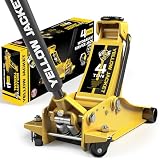
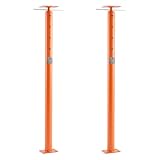
Other buyers focus only on maximum capacity and overlook minimum height, maximum lift, jack weight, saddle size, and whether the product is an automotive jack or a house-support jack. The examples in this guide include automotive models such as a 3-ton steel jack and a 4-ton low-profile jack, as well as VEVOR house floor jacks rated for up to 18,000 pounds. Those categories are not interchangeable. A house floor jack is designed for temporary structural support or leveling, not for lifting a car so you can work underneath it.
As an Amazon Associate we earn from qualifying purchases at no extra cost to you. Product prices and availability are accurate as of the date shown and are subject to change.


The best approach is to calculate the real load, add a sensible safety margin, and then compare the jack’s physical design with your vehicle and workspace. Here is how to choose a floor jack capacity in 2026 without paying for capability you cannot use—or buying a jack that is too small for the job.
Decide These 3 Things First
- What are you lifting? Find the vehicle’s curb weight on the driver’s door label, owner’s manual, or manufacturer specifications. Do not use gross vehicle weight rating unless you are deliberately planning for a fully loaded vehicle.
- Where will you lift it? A low-profile sports car may need a minimum height below 3 inches, while a crossover or pickup may require 5 to 6 inches of clearance at the lifting point. Measure the actual jacking point, not just the ground clearance.
- How often will you use it? Occasional tire changes call for a different balance of price and convenience than weekly brake work, restoration, or commercial service.
For an automotive jack, a useful rule is to choose a rated capacity of at least half the vehicle’s curb weight, then move up a size if you routinely carry heavy cargo, lift one end of a large vehicle, or want extra reserve. A 4,000-pound vehicle may work with a 2-ton jack for many one-end lifting tasks, but a 3-ton model offers a more comfortable margin and is often more stable.
Size: Match Capacity, Height, and Footprint
Capacity is usually listed in tons: 1 ton equals 2,000 pounds. A 2-ton jack is rated for 4,000 pounds, a 3-ton jack for 6,000 pounds, and a 4-ton jack for 8,000 pounds. That rating is the maximum supported load, not a recommendation to operate at the limit.
For most home garages, a 2-ton jack is suitable for compact cars and many midsize sedans. A 3-ton jack is the versatile choice for crossovers, half-ton pickups, and heavier sedans. A 4-ton jack makes sense for large SUVs, full-size trucks, or frequent shop use, provided its larger frame fits under the vehicle.
Check three dimensions before buying:
- Minimum height: About 2.5 to 3 inches suits many low cars; 4 to 5 inches is common for standard vehicles.
- Maximum height: Around 14 to 20 inches works for many cars. Trucks may need 20 to 24 inches or more, depending on the axle or frame lifting point.
- Overall footprint: A long frame and wide wheels improve stability but may not fit between a narrow garage bay or under a low bumper.
Never substitute a house floor jack for an automotive floor jack. The VEVOR house models listed at 18,000 pounds may support a very high static load, but their 19-to-36-inch or 53-to-93-inch height ranges and structural-jacking design address a different task.
Material: Steel Is Heavy, Aluminum Is Easier to Move
Steel remains the most common choice because it resists twisting and keeps the cost down. A compact steel jack may weigh roughly 45 to 75 pounds, while a large 3- or 4-ton shop-style model can weigh 70 to more than 100 pounds. That weight is inconvenient if you store the jack on a shelf, but it can make the tool feel planted on a smooth concrete floor.
Aluminum jacks are typically easier to carry and may weigh 35 to 55 pounds in comparable designs. They are attractive for track-day use or a garage where the jack must be moved frequently. Hybrid models combine an aluminum frame with steel lifting components, offering a middle ground.
Material alone does not determine safety. Look for a thick, well-supported frame, protected hydraulic components, strong caster mounts, and a saddle that does not flex noticeably under load. Avoid choosing an aluminum jack solely because its advertised capacity is high; compare its construction and warranty with equivalent steel models.
Construction: Look Beyond the Ton Rating
A good floor jack should have a broad base, smooth casters, and a saddle that contacts the manufacturer-approved lifting point securely. A removable or replaceable saddle is useful because rubber pads wear out and can become slippery or damaged.
Dual-pump designs can reach the vehicle’s underside in fewer handle strokes, especially when the saddle starts low and the vehicle has a high lift point. That does not necessarily mean the jack raises the vehicle faster throughout the entire stroke, so treat claims such as “quick lift” as a convenience feature rather than a measured performance guarantee.
Check the handle length and clearance around the hydraulic body. A handle of about 40 to 50 inches can provide better leverage and keep your hands away from the vehicle, but it needs room to swing. A locking handle is useful for storage, while a two-piece handle may be easier to ship and store.
For any automotive repair, use jack stands after lifting. A floor jack is a lifting device, not a permanent support. Choose stands with a combined rating that exceeds the vehicle’s weight and place them at approved support points.
Comfort and Performance: Small Features Matter
Look for a controlled lowering valve that lets you lower the load gradually rather than dropping it abruptly. A padded handle can protect painted doors and bumpers when the handle swings upward. Full-size rear casters, typically 2.5 to 3 inches in diameter, roll more easily over minor concrete joints than very small wheels.
Lift speed depends on the pump design, handle stroke, oil condition, temperature, and load. A jack that reaches its maximum height in 5 to 8 strokes at light load may require more strokes under a heavy vehicle. Do not judge performance by maximum capacity alone.
Low-profile automotive jacks often trade some maximum height for underbody access. If your car has only 3.5 inches of clearance at the approved lift point, a jack with a 4-inch minimum height is unusable, regardless of whether it is rated for 2 or 4 tons.
Price Tiers: Pay for Fit and Frequency
Budget, $50 to $130: Expect basic steel construction, a 1.5- to 3-ton rating, smaller wheels, and fewer refinements. The Jack Boss 3-ton example is listed at $129.99, which illustrates the upper end of this tier. Budget jacks can work well for seasonal tire changes when stored indoors and used on level concrete.
Midrange, $130 to $275: This tier commonly includes 3- or 4-ton capacities, low-profile frames, better casters, dual pumps, larger saddles, and improved finish quality. The Yellow Jacket 4-ton example is listed at $249.99. Choose this tier if you perform brake, suspension, or wheel work several times a year.
Premium, $275 and up: Premium jacks emphasize smoother controls, stronger components, serviceable parts, lower rolling resistance, and longer warranties. They are easier to justify for frequent use, multiple vehicles, or a professional garage. A premium jack is not automatically safer if its minimum height or lifting-point design does not fit your vehicle.
Warranty: Confirm What Is Actually Covered
Warranty length can range from 90 days to several years. Read whether coverage applies to the hydraulic cylinder, seals, pump, casters, saddle, and frame separately. Some warranties cover manufacturing defects but exclude leaks caused by incorrect oil, overload, outdoor storage, or normal wear.
A useful warranty should identify the authorized service process, replacement-part availability, and whether you must pay shipping. Hydraulic seals and wheels are wear items, so a jack with replaceable parts may be more valuable than one with a longer but restrictive warranty.
Delivery and Assembly: Plan for a Heavy Package
A 3-ton steel jack can weigh 50 to 80 pounds, and larger 4-ton models may exceed 90 pounds. Check the packaged weight if you live in an apartment or need to carry the box up stairs. Inspect the carton for crushed corners, leaking oil, bent handles, or damaged wheels before accepting delivery.
Assembly usually involves installing the handle, tightening a few bolts, and removing shipping restraints. Allow 10 to 20 minutes for setup, then test the jack without a vehicle. If the pump feels spongy or the saddle will not rise smoothly, follow the manufacturer’s bleeding procedure rather than placing a vehicle on it immediately.
Spec Checklist
| Spec | Budget | Mid | Premium |
|---|---|---|---|
| Typical capacity | 1.5–3 tons | 3–4 tons | 3–6 tons |
| Minimum height | 3.5–5 inches | 2.75–4 inches | 2.5–3.5 inches |
| Maximum height | 14–18 inches | 18–22 inches | 20–24 inches |
| Approximate jack weight | 35–65 pounds | 50–85 pounds | 60–110 pounds |
| Typical price | $50–$130 | $130–$275 | $275–$600 or more |
| Best use | Occasional tire and brake work | Frequent home-garage repairs | Heavy vehicles or professional use |
Red Flags
- The product lists only a maximum load but gives no minimum or maximum height.
- The seller does not distinguish automotive lifting from house or structural support.
- The capacity is high, but the jack has a narrow base, tiny casters, or no clear saddle specification.
- There is no overload guidance, maintenance information, or lowering-control instruction.
- The warranty excludes hydraulic leaks without explaining how seals or cylinders are serviced.
- The jack arrives with oil leakage, bent metal, cracked welds, or wheels that do not rotate freely.
- The vehicle’s approved lifting point is lower than the jack’s minimum height.
FAQ
What capacity floor jack do I need for a 4,000-pound vehicle?
A 2-ton jack may be adequate for lifting one end of a 4,000-pound vehicle, because it is not supporting the entire vehicle at once. However, a 3-ton model provides more reserve and is usually the better all-purpose choice, especially for SUVs, loaded vehicles, or uneven surfaces.
Is a 3-ton jack better than a 2-ton jack?
Not in every situation. A 3-ton jack generally offers more capacity and stability, but it may be heavier, longer, and taller at its lowest setting. Choose the highest capacity that still fits your vehicle’s lifting points and your storage space.
Can I use a floor jack without jack stands?
Use the floor jack only to raise the vehicle. Once it is lifted, support it with appropriately rated jack stands positioned at the manufacturer-approved support points. Never place any part of your body under a vehicle supported only by a hydraulic jack.
Are house floor jacks suitable for cars?
No. House floor jacks are intended for structural support, leveling, or temporary building work. Even when their load rating is much higher than an automotive jack’s rating, their height range, saddle design, base, and operating controls may not be suitable for a vehicle.