Key takeaways
- Lithium: $80–$180 purchase price, plus little or no direct maintenance cost. Replacement may be necessary if capacity drops substantially or the battery is repeatedly stored in high heat.
- Lead acid: $100–$220 purchase price, plus possible replacement costs if the internal battery is neglected or reaches the end of its service life. A replacement battery, when available, may cost roughly $40–$100, not including labor.
What's inside
Choosing between a lithium and lead acid jump starter is less about which technology is universally better and more about how you will store and use it. A lithium unit is usually a compact emergency tool that lives in a glove box, kitchen cabinet, or apartment closet. A lead acid model is closer to a portable battery station: heavier, larger, and often better suited to repeated use, higher sustained loads, or a garage workshop.
That distinction matters for home buyers. You may need to start one car once or twice a year, or you may want a dependable backup for several vehicles, inflators, lights, and small 12-volt accessories. You should also consider where the device will live, whether someone in the household can comfortably lift it, and whether it will be maintained regularly. In 2026, both types remain useful, but they solve different problems.
As an Amazon Associate we earn from qualifying purchases at no extra cost to you. Product prices and availability are accurate as of the date shown and are subject to change.



Quick Verdict
Choose a lithium jump starter if you want the smallest, lightest, and easiest-to-store option for occasional emergency starts. Most lithium models weigh about 1.5 to 4 pounds, fit in a small vehicle compartment, and include USB ports for charging phones. They are especially practical for apartments, compact cars, and households that do not want another bulky item in the garage.
Choose a lead acid jump starter if you value a larger built-in battery, repeated jump-start capability, and useful 12-volt power more than portability. These units commonly weigh 15 to 30 pounds and may include an air compressor, work light, AC inverter, or multiple outlets. They make more sense for a garage, multiple vehicles, older cars, trucks, and homeowners who expect to use the unit as a general power station.
For a single modern car and occasional emergencies, lithium is the better default. For a household utility tool that will be used frequently, lead acid is often the more capable choice.
Side by Side
| Factor | Lithium jump starter | Lead acid jump starter |
|---|---|---|
| Comfort | Usually 1.5–4 lb; easy to carry with one hand | Usually 15–30 lb; often needs two hands |
| Durability | Handles storage well, but electronics and lithium cells dislike extreme heat | Rugged housings are common, but the battery can be damaged by deep discharge |
| Price range | About $60–$250 | About $90–$250, with premium power-station models costing more |
| Maintenance | Recharge every few months; avoid storing fully depleted | Needs regular charging, often monthly or every few months |
| Space needed | Roughly 6–10 inches long; fits in a drawer or glove box | Often 12–20 inches long and 8–12 inches tall |
| Look | Streamlined, consumer-electronics styling | Industrial case, thick cables, handles, and control panels |
| Resale | Limited; battery aging reduces appeal quickly | Limited; condition and battery health matter greatly |
| Power delivery | High short-duration starting current; modest accessory runtime | Strong 12-volt reserve and better support for repeated accessory use |
| Best for | One or two vehicles, apartments, travel, and occasional emergencies | Garages, multiple vehicles, frequent use, and utility-focused households |
Where Lithium Wins
The biggest advantage is portability. A lithium jump starter can be small enough to keep in a center console or emergency kit instead of taking up valuable trunk space. Its short, integrated cables and simple buttons are also less intimidating for a driver who has never used a booster pack. Many include reverse-polarity protection, spark-resistant connections, LED lights, and USB-A or USB-C charging ports.
Lithium models are particularly useful when the jump starter must travel. You can carry one between a garage and a second car without treating it like exercise equipment. A 2-pound unit is also easier for an older adult or teenager to position near a battery than a 20-pound lead acid pack.
They generally recharge faster and hold a charge more effectively during storage than traditional lead acid batteries. That does not mean they are maintenance-free. A lithium starter left in a hot vehicle for years can lose capacity, and a completely drained unit may be difficult to recover. Check the charge indicator several times a year and recharge it before storage drops too low.
Lithium also tends to deliver impressive peak-current ratings in a small enclosure. However, peak amps are not a standardized apples-to-apples measurement. A higher number on the box does not guarantee better real-world performance, especially when the vehicle has a large engine, a severely discharged battery, or very cold weather. Match the unit to the engine size and follow the manufacturer’s vehicle limits.
One point worth clarifying when shopping online: products such as Life Extension Lithium 1000 mcg Lithium Orotate, priced at about $12, and Pure Encapsulations Lithium Orotate 5 mg, priced around $27.50, are dietary supplements, not batteries or vehicle jump starters. Their shared use of the word “lithium” can create confusing search results, but they have nothing to do with portable automotive power equipment.
Where Lead Acid Jump Starter Wins
Lead acid jump starters are heavier because they use a larger sealed battery, but that extra mass can be useful. They often provide more stored energy for repeated starts, 12-volt accessories, and longer operation of built-in lights or compressors. If you maintain several cars, help neighbors, or work on vehicles at home, the larger format is easier to justify.
Many lead acid units include an air compressor for topping off tires, a 12-volt outlet for accessories, and sometimes a power inverter for low-wattage AC devices. These features turn the pack into a garage utility station rather than a single-purpose emergency device. The Schumacher Electric Car Battery Jump Starter & Power Station DSR119, for example, is the kind of product shoppers may consider when they want jump-starting and broader power-station functionality; its listed price is about $109.99.
A lead acid design can also feel more substantial and repair-oriented. Thick cables, a large clamp set, and a stable base are helpful when working under the hood. The tradeoff is that you need a suitable storage spot, and moving the unit across a driveway or up stairs is less convenient.
Maintenance is the main limitation. Lead acid batteries gradually self-discharge and can suffer permanent damage if left empty. Keep the unit connected to its recommended charger when possible, or set a calendar reminder to recharge it at least every few months. Never assume the charge indicator is accurate after years of neglect. Before an emergency, test that the compressor, lights, cables, and charging system still work.
Cost Over 5 Years
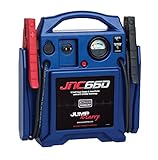
Upfront prices overlap more than many shoppers expect. A basic lithium jump starter commonly costs $60–$120, while a higher-capacity model with USB-C charging and a stronger clamp system may cost $120–$250. Lead acid models usually start around $90 and run $150–$250 when they include an air compressor, inverter, or power station features. The Clore Automotive Jump-N-Carry JNC660, a well-known lead acid-style option, is listed at about $126.02.
Over five years, estimate the total cost this way:
- Lithium: $80–$180 purchase price, plus little or no direct maintenance cost. Replacement may be necessary if capacity drops substantially or the battery is repeatedly stored in high heat.
- Lead acid: $100–$220 purchase price, plus possible replacement costs if the internal battery is neglected or reaches the end of its service life. A replacement battery, when available, may cost roughly $40–$100, not including labor.
A carefully maintained lead acid unit can be economical if you use its compressor and power outlets regularly. A lithium model may be cheaper in practical terms because it avoids unused bulk and is more likely to be available when needed. The lowest five-year cost is therefore tied to correct storage, not just the initial price.
Which One for Your Home
Small apartment
Pick lithium. Storage is limited, and a compact unit can live in a hall closet or car without competing with cleaning supplies and seasonal items. Choose a model rated for your engine size, with protected clamps, a clear charge indicator, and a USB-C port if you want it to serve as an emergency phone charger.
Family with kids or pets
Lithium is usually easier to lift and store securely, but choose a model with a rugged case and automatic safety protections. Keep it out of reach of children and away from loose metal objects that could contact the clamps. If the household has multiple vehicles and regularly handles flat tires, a lead acid power station with an air compressor may provide more value.
Rental home
Choose lithium unless you have a dedicated garage or frequent vehicle problems. A small jump starter is easier to move when you relocate and does not require a permanent charging area. It is also less likely to become abandoned in a basement or shed. Store it indoors rather than in an unheated outdoor space or a hot vehicle.
Long-term home
Either type can work. Select lithium for a streamlined emergency kit, or lead acid for a garage-centered setup with several vehicles, tire inflation needs, and occasional 12-volt projects. If you prefer one tool that can also run lights and accessories, the lead acid format deserves the extra floor space.
FAQ
Is lithium or lead acid better for a car jump starter?
Lithium is better for portability and occasional emergency use. Lead acid is better for repeated starts, larger accessory loads, and garage utility. The correct choice also depends on engine size, climate, and the manufacturer’s starting-current rating.
Can a lithium jump starter replace a lead acid battery charger?
No. A jump starter is designed to provide a short burst of starting power, not to recharge a vehicle battery fully. Use a dedicated battery charger or maintainer for regular battery care.
How often should a jump starter be charged?
Follow the manual, but checking lithium models every three to six months is sensible. Lead acid units may need charging monthly or every few months, especially if the indicator shows a declining charge. Do not store either type completely discharged.
Will a jump starter work in cold weather?
Both technologies can lose performance in low temperatures. Keep the unit indoors until needed, use a fully charged pack, and confirm that its rating suits your vehicle. Cold weather also reduces the available power of the car’s own battery, so a jump starter may need more than one attempt.