Key takeaways
- When a car battery dies at home, the real decision is not simply which product is more powerful. It is whether you want an independent backup that can start a vehicle without another driver—or a simple set of cables that…
What's inside
When a car battery dies at home, the real decision is not simply which product is more powerful. It is whether you want an independent backup that can start a vehicle without another driver—or a simple set of cables that depends on a second vehicle but costs much less. That distinction matters in an apartment parking lot, a busy family driveway, and a home where a dead battery may sit untouched for months.
In the jump starter vs jumper cables comparison, both tools can deliver the current needed to start a vehicle. A portable jump starter contains its own rechargeable battery. Jumper cables transfer power from a working vehicle to the vehicle with the dead battery. Your driving habits, storage space, comfort with basic car maintenance, and willingness to recharge equipment should determine the better fit.
As an Amazon Associate we earn from qualifying purchases at no extra cost to you. Product prices and availability are accurate as of the date shown and are subject to change.



Quick Verdict
Choose a jump starter if you want the fastest, most self-contained solution. It is especially useful for one-car households, apartment residents, solo drivers, and anyone who may need help when no other vehicle is nearby. Many current models also include an LED light, USB charging ports, a storage case, and safety alerts for reversed connections.
Choose jumper cables if you want the lowest-cost, longest-lasting option and can count on access to another 12-volt vehicle. Good cables can remain usable for many years, do not need charging, and are easy to replace. They are also a practical choice for a household with multiple vehicles.
For many homes, owning both is the most resilient arrangement: cables for routine emergencies and a jump starter for situations where no helper vehicle is available.
Side by Side
| Factor | Jump starter | Jumper cables |
|---|---|---|
| Comfort | One person can usually connect and start the vehicle; models commonly weigh about 2 to 5 pounds. | Simple to use, but a second person and a second vehicle are normally required. |
| Durability | Electronic controls and a lithium battery can be affected by heat, freezing temperatures, or age. | Heavy-gauge cables can last for a decade or longer if clamps and insulation stay intact. |
| Price range | About $50 to $200 for consumer models; larger units cost more. | About $15 to $60 for common 12- to 20-foot cables. |
| Maintenance | Recharge every few months and before road trips; inspect the case and leads. | Keep dry, untangled, and free of corrosion; no charging is required. |
| Space needed | Typically about 7 to 10 inches long and 3 to 5 inches wide, depending on capacity. | Usually stores in a 10- to 16-inch bag, with cable length often 16 to 20 feet. |
| Look | Compact, modern case; displays and lights can make the device feel more approachable. | Utilitarian appearance with thick insulated leads and metal clamps. |
| Resale | Limited resale value because rechargeable batteries lose capacity over time. | Modest but more stable resale value if the insulation and clamps remain clean. |
| Best for | Solo drivers, apartments, emergencies without a helper, and roadside independence. | Multi-car homes, low-cost preparedness, and occasional use with a willing helper. |
Ratings such as 4,000 or 6,000 peak amps on a jump starter should not be treated as a direct measure of everyday starting performance. Engine size, battery condition, temperature, cable quality, and the vehicle’s electrical system all affect the outcome. Match the device to your vehicle’s gasoline or diesel engine requirements rather than choosing only by the largest number on the box.
Where Jump Starter Wins
The biggest advantage is independence. A jump starter can work in a driveway, parking garage, trailhead, or roadside shoulder without positioning another car nose-to-nose with yours. That is valuable for people who leave early for work, travel alone, or do not want to ask a stranger for assistance.
Connection is generally straightforward: switch the unit off, attach the positive clamp to the positive battery terminal, attach the negative clamp to the recommended grounding point, and then follow the manufacturer’s starting instructions. Smart clamps on many models provide alerts for reversed polarity, poor connections, or unsafe conditions. Those protections do not eliminate the need to read the manual, but they can reduce common mistakes.
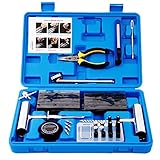
Jump starters are also more versatile. Depending on the model, you may get an LED flashlight, emergency strobe, USB-A or USB-C charging, and enough stored energy to recharge a phone. A unit such as the OXILAM Jump Starter 6000A, listed at $59.99, is an example of the all-in-one format, with a 12V jump box, display, light, and USB and Type-C ports. The S ZEVZO ET03, also listed at $59.99, follows a similar portable format with an LCD display, storage case, USB ports, and an LED light.
There are tradeoffs. A jump starter is only useful if it has charge. Lithium batteries gradually age, even when rarely used, and extreme heat inside a parked car can shorten their life. A depleted unit may need several hours to recharge, so it should be checked every few months and before winter or a long trip. Never use a visibly swollen, cracked, wet, or overheated battery pack.
Where Jumper Cables Wins
Cables win on simplicity, price, and storage life. They contain no rechargeable battery, electronics, or charging port. If the insulation is flexible, the clamps are clean, and the cable is not cut or frayed, a set can remain ready for years. That makes cables a dependable backup in a home garage.
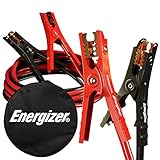
They are also less expensive. The Energizer Jumper Cables in a 16-foot, 6-gauge configuration are listed at $19.96, while TOPDC 4-gauge, 20-foot heavy-duty cables are listed at $28.99. Longer 20-foot cables can be easier to position between vehicles, particularly in a crowded driveway, while 4-gauge cables generally offer more capacity than 6-gauge cables. Thicker cable is heavier, though, and can be less convenient to coil.
The limitation is dependence. You need another compatible vehicle, a driver willing to help, and enough room to park safely. The procedure also requires more attention to connection order and clamp placement. Keep both vehicles off while connecting, avoid allowing the clamps to touch, and follow the vehicle and cable instructions. Some hybrid and electric vehicles have specific jump-start points or restrictions, so consult the owner’s manual rather than assuming the main traction battery can be used.
Cost Over 5 Years
For a basic comparison, assume one midrange jump starter costs $60 to $120 and one cable set costs $20 to $40. The cable set has no recurring charging cost, so its five-year ownership cost is roughly the purchase price. The Energizer and TOPDC examples fall within that range at $19.96 and $28.99.
A jump starter priced near $60 has a five-year cost of about $60 if it remains healthy. A $100 model costs about $20 per year over five years. However, portable battery packs are not guaranteed to retain useful capacity for that entire period. If the unit needs replacement after three years, a $60 purchase followed by another $60 purchase brings the five-year total to about $120. Occasional electricity use adds only a small amount to the cost; replacement and forgotten charging are the more important factors.
In practical terms, cables are the budget winner. A jump starter earns its higher cost through convenience and independence, not necessarily through lower ownership expense. Buying both can cost approximately $80 to $160 initially, depending on the jump starter, while covering both emergency scenarios.
Which One for Your Home
Small apartment
Choose a jump starter if you have one vehicle or park away from a private garage. It takes less space than a bulky set of long cables and does not require access to a neighbor’s car. Store it indoors at a moderate temperature and keep it charged. If budget is the priority and a trusted neighbor is usually available, a compact cable set still works.
Family with kids or pets
A jump starter is often the more convenient primary tool because one adult can handle the emergency while children or pets remain safely inside the vehicle. Look for a clear status display, built-in light, reverse-polarity protection, and cables long enough to reach the battery without awkward positioning. Keep the device secured and out of reach; it is not a toy or a general-purpose battery for unsupervised use.
Rental home
Renters should consider storage and vehicle access. A jump starter works well when parking is shared or when the property has no garage. Cables are a sensible low-cost addition if you regularly park beside a partner’s or roommate’s vehicle. Neither option requires installation, so both can move with you to a new home.
Long-term home
For a garage with two or more vehicles, start with heavy-duty jumper cables and add a jump starter if you take long trips or want a backup for solo use. Keep cables in a visible emergency bin and inspect them once a year. A jump starter can live on a shelf rather than permanently in a hot trunk, which may help preserve its battery.
FAQ
Are jump starters safer than jumper cables?
They can be easier for one person because many include reverse-polarity and connection alerts, but neither option is risk-free. Both require correct terminal identification, ventilation, and compliance with the vehicle owner’s manual. Do not jump a battery that is frozen, leaking, cracked, or visibly damaged.
Can a jump starter replace jumper cables?
For many drivers, yes. A properly sized jump starter can start a vehicle without another car. Cables remain valuable as a low-cost backup and may be useful when a jump starter is discharged, damaged, or incompatible with the vehicle.
How often should a jump starter be charged?
Check its charge every two to three months and recharge it according to the manufacturer’s instructions. Recharge it before a long trip or the coldest part of the year. Do not leave it in a hot vehicle year-round if the instructions recommend indoor storage.
What gauge jumper cables should I buy?
Six-gauge cables are suitable for many passenger cars, while four-gauge cables are a stronger choice for larger vehicles, SUVs, trucks, or frequent use. A 16-foot length suits many driveways; 20 feet gives more positioning flexibility but adds weight and storage bulk.