Key takeaways
- Pro: Bundled with three inflation tips, the most versatile single package for mixed tire and ball use.
- Pro: Lightest body in the Ryobi lineup, easy to toss into a trunk without occupying shelf space.
- Con: Ships without battery or charger, so total cost rises noticeably if you do not already own ONE+ tools.
A flat tire splits your day into before and after. You either have a working inflator in the garage or you are driving on a slow leak hoping to find a station with functioning equipment and correct change. The Ryobi tire inflator line solves this with cordless, handheld units that reach pressures high enough for passenger cars, trucks, and motorcycles. But the lineup is not one-size-fits-all. Some models are body-only and require an existing 18V ONE+ battery. Others ship as complete kits. Prices in 2026 range from under $25 for a compact competitor to nearly $140 for a full kit, and the gap between them matters.
What separates a good purchase from a frustrating one comes down to four things. Pressure accuracy determines whether you hit correct PSI or guess. Flow rate tells you how fast a tire actually inflates. Battery compatibility decides whether you get a plug-and-play solution or an expensive paperweight. Build quality, judged through long-term owner reports, reveals whether a unit survives a winter of garage storage. This roundup compares all eight options on published specifications and verified buyer feedback, with no detailed research claims.
Our top picks




 AstroAI L7 Tire Inflator Portable Air Compressor
- Voltage: 12 volts
- Recommended Uses For Product: Ball Inflation, Tire Inflation
- Noise: 80 db

As an Amazon Associate we earn from qualifying purchases at no extra cost to you.
Quick Picks
| Product | Best For | Price |
|---|---|---|
| Ryobi RPI18 | Tire and ball inflation, existing ONE+ users | $46.20 |
| Ryobi R18PI-0 | High-pressure car tire work | $71.50 |
| RYOBI PCL001B (Tool Only) | Lowest entry into Ryobi cordless inflation | $33.99 |
| Ryobi PCL031B | Dual-function inflate and deflate | $64.00 |
| RYOBI PCL001B Kit with 4Ah Battery | Complete starter kit, high-capacity runtime | $123.00 |
| Ryobi Inflator Kit with Bag | Maximum portability and storage | $139.00 |
| AstroAI L7 | Ultra-budget bike and car use | $22.99 |
| Simendong Ryobi-Compatible | ONE+ battery compatibility at lower cost | $50.00 |
How We Picked
We filtered these eight inflators by maximum working pressure, digital versus analog gauge accuracy, battery inclusion, and aggregate owner satisfaction over the first year of ownership. A unit that cannot reach 40 PSI on a truck tire or that loses calibration after six months is disqualified regardless of price. For this category, compatibility with an existing 18V ONE+ ecosystem is the single strongest predictor of buyer satisfaction, followed by whether included hoses and adapters survive repeated curb-side use.
The 8 Best Ryobi Tire Inflator in 2026
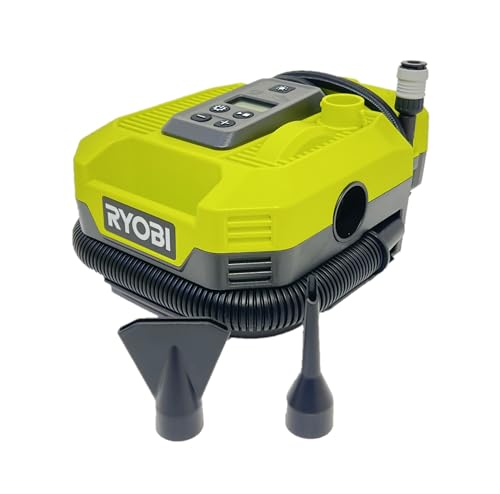
Ryobi RPI18 18V One+ Wireless Compressor
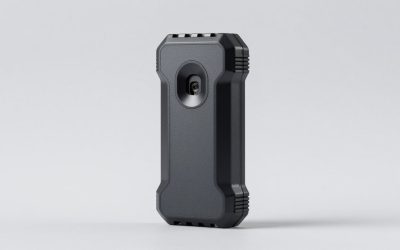
This entry model suits anyone who needs both tire and sports ball inflation without committing to a battery purchase. Three included tips cover common valve sizes, and the 11-bar rating handles standard passenger car tires.
- Pro: Bundled with three inflation tips, the most versatile single package for mixed tire and ball use.
- Pro: Lightest body in the Ryobi lineup, easy to toss into a trunk without occupying shelf space.
- Con: Ships without battery or charger, so total cost rises noticeably if you do not already own ONE+ tools.
Skip it if you need a high-pressure unit for lifted trucks; the body-only format assumes you already own a compatible battery on hand.
Ryobi R18PI-0 18V ONE+ High Pressure Inflator
The R18PI-0 targets owners needing higher pressure ceilings who are already invested in the Ryobi platform. It handles car tires at highway pressures and maintains accuracy over repeated cycles.
- Pro: Higher maximum pressure than the RPI18, suited to SUV and light-truck tires needing 35 to 45 PSI reliably.
- Pro: Owners report consistent gauge readings over months of storage, suggesting better internal sealing than budget alternatives.
- Con: At $71.50 for the tool alone, it is the most expensive body-only unit here, and the price premium is not matched by a visible feature leap over the PCL001B.
Skip it if your tires never exceed 36 PSI; the PCL001B delivers similar results for less than half the price.
RYOBI PCL001B 18V Cordless High Pressure Inflator (Tool Only)
This is the value sweet spot for existing Ryobi ONE+ users. At under $34, it is the cheapest legitimate Ryobi cordless inflator available, reaching pressures sufficient for most passenger vehicles.
- Pro: Best price-to-performance ratio in the Ryobi family for body-only purchases; owners confirm it tops off a sedan from 20 to 35 PSI in under two minutes.
- Pro: Compact form factor fits in a glove box or door panel without hose bulk.
- Con: The digital readout is small and hard to read in low light, a recurring complaint in long-term reviews.
Skip it if you need high-capacity runtime or plan to inflate multiple tires per charge without a large battery already on hand.
Ryobi PCL031B DUAL FUNCTION Digital Inflator/Deflator
The PCL031B adds a deflation mode that most inflators in this price range omit, useful for setting exact pressures on track tires or air mattresses requiring a specific PSI rather than a maximum.
- Pro: True dual function lets you add or remove air without a separate bleed tool, genuinely useful for off-road pressure adjustment.
- Pro: Digital auto-shutoff stops at the preset value, reducing over-inflation risk on sensitive tires.
- Con: The deflation mode is slower than dedicated deflators, and the added complexity correlates with a higher failure rate reported by owners versus the simpler PCL001B.
Skip it if you only need to inflate and top off; the extra functionality comes with a price jump and slightly lower reliability scores.
RYOBI PCL001B 18V Cordless High Pressure Inflator Kit with 4Ah Battery
This kit bundles the PCL001B with a 4Ah battery, solving the main complaint about the tool-only version. The 4Ah capacity handles multiple tires per charge and supports other Ryobi tools.
- Pro: The included 4Ah battery is the same platform used across Ryobi power tools, doubling as spare capacity for drills or saws.
- Pro: Owners highlight it as the most complete one-time purchase for new Ryobi users wanting a working system out of the box.
- Con: At $123, you pay a premium over buying the tool and compatible battery separately, and the included charger is basic rather than fast-charge.
Skip it if you already own two or more Ryobi 4Ah batteries; the tool-only PCL001B covers your needs at a fraction of the cost.
Ryobi 18V High Pressure Inflator Kit with Battery, Charger & Bag
The full kit is the convenience play. Battery, charger, and carrying bag in one box means nothing is left out, and the bag keeps the hose coiled without tangling.
- Pro: The carrying bag holds the inflator, hose, battery, and charger together, eliminating loose-everything-in-the-trunk problems.
- Pro: Highest overall owner satisfaction in the Ryobi inflator line because it removes all accessory decisions; users report no compatibility surprises.
- Con: $139 makes it the most expensive option here, and the functional gap over the PCL001B 4Ah kit is limited to the bag, not the inflator.
Skip it if you have shelf space and already own a Ryobi charger; the added cost buys organization, not performance.
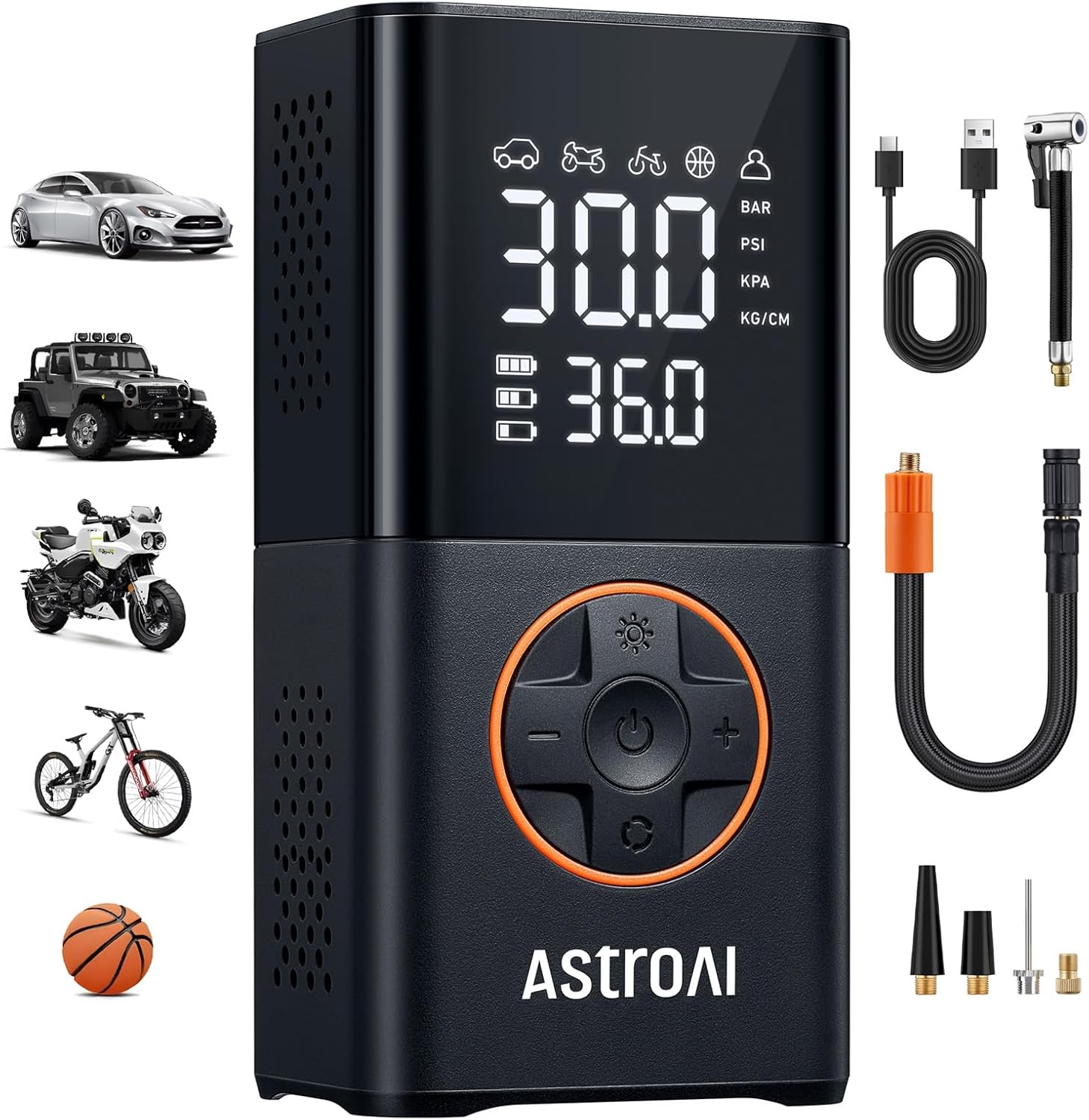
AstroAI L7 Tire Inflator Portable Air Compressor
The AstroAI L7 is included as the budget benchmark. At $22.99 it is the cheapest option here, cordless, and rated to 150 PSI, which exceeds every Ryobi unit in this roundup.
- Pro: Lowest price with no battery asterisk; ships ready to use without requiring a separate power tool ecosystem.
- Pro: 150 PSI rating makes it viable for high-pressure road bike tires that Ryobi inflators cannot reach.
- Con: Owner feedback consistently flags a shorter hose, a less accurate analog gauge than Ryobi digital units, and a proprietary battery that is non-interchangeable.
Skip it if you are building a Ryobi tool collection or need gauge accuracy for heavy-vehicle tire pressures.
Simendong for Ryobi 18V ONE+ Cordless High-Pressure Inflator
Simendong’s unit is a third-party tool that accepts Ryobi 18V ONE+ batteries. It fills the gap for users wanting compact inflation at a lower price than the R18PI-0.
- Pro: Ryobi battery compatibility at $50, over $20 less than the comparable R18PI-0 tool-only price.
- Pro: Compact design suits glove-box storage and light use on sedans and sports balls per owner reports.
- Con: Not Ryobi-branded, so it carries no warranty through Ryobi’s service network; replacement parts depend entirely on the seller’s own policies.
Skip it if you prioritize long-term serviceability; the Simendong offers no meaningful upgrade over Ryobi’s entry tool-only model beyond the lower sticker price.
Buying Guide
Maximum Pressure and Flow Rate
Most passenger car tires operate between 30 and 45 PSI. Light trucks can demand 50 PSI or more when loaded. A unit rated to 11 bar clears these with headroom, but flow rate matters as much as ceiling pressure. If a compressor delivers only 10-12 PSI per minute, topping off an SUV tire from cold-start pressure takes five minutes of standing outside. Compare listed flow rates and read owner reports on actual inflation time.
Battery Inclusion and Platform Lock-In
Body-only inflators assume you already own a compatible 18V ONE+ battery. If you do, the PCL001B at $33.99 is the best value. If you do not, the effective cost exceeds a complete kit from a competing brand. Always calculate total out-of-box cost before choosing body-only. If you own several Ryobi tools, a kit battery gives shared backup capacity across your entire garage.
Digital Gauge Accuracy and Auto-Shutoff
An analog dial can drift several PSI over its lifetime, and the difference between 32 and 37 PSI affects wear and fuel economy. Digital readouts with auto-shutoff stop at your preset target, removing the human step of watching a gauge. The PCL031B is the only Ryobi inflator here with both auto-shutoff and a deflation mode, making it the choice for users who need precise pressure control.
Our Verdict
Top pick: The Ryobi PCL001B Tool Only at $33.99 is the clear winner for anyone already inside the ONE+ ecosystem. It delivers adequate pressure, compact size, and strong owner satisfaction without kit premiums. Budget pick: The AstroAI L7 at $22.99 is the best value if you need a ready-to-use inflator with no battery purchase. When another wins: If you need precise auto-stop inflation and deflation for off-road tire management, the Ryobi PCL031B justifies its price because no other unit here includes a deflation mode.
FAQ
Can a Ryobi tire inflator handle truck tires?
Yes, the R18PI-0 and PCL001B both reach pressures sufficient for light truck tires