Key takeaways
- Pro: Excellent value-to-performance ratio with an accessible entry price.
- Pro: Optimized tread pattern provides low rolling resistance and quiet cabin noise.
- Con: Limited grip on packed snow or slush compared to dedicated winter tires.
Finding the right replacement tires often turns into a frustrating compromise between upfront price, long-term treadwear, and baseline safety in wet or dry conditions. When shopping specifically for Goodyear tires, drivers face a sprawling lineup of touring, standard passenger, grand touring, and specialized trailer options spanning dozens of load indices and speed ratings. A poorly matched tire can ruin a vehicle’s fuel economy, degrade steering response, or produce excessive highway cabin noise, while the right set delivers predictable braking and year-round stability across varied road surfaces.
To identify the best options for your vehicle, our editorial team evaluated published technical specifications, speed and load ratings, pricing data, and verified owner feedback. What separates a standout Goodyear tire from a mediocre fitment comes down to compounding design, shoulder rib stability, and tread pattern efficiency. Whether you are outfitting a daily commuter sedan, a family crossover, a heavy luxury SUV, or a commercial tow trailer, matching the exact demands of your chassis with the correct tire model ensures safety and maximum value across the life of the rubber.
Our top picks



As an Amazon Associate we earn from qualifying purchases at no extra cost to you.
Quick Picks
| Product | Best for | Price |
|---|---|---|
| Assurance Finesse 225/65R17 | Compact Crossovers & Daily Commuting | $105 |
| Assurance Finesse 235/60R18 | Midsize SUVs & Balanced Comfort | $148.07 |
| Eagle Touring 235/55R20 | Modern Crossovers & Responsive Handling | $198.89 |
| Endurance 225/75R15 | Heavy-Duty Towing & Travel Trailers | n/a |
| Eagle Touring 285/45R22 | Full-Size Luxury SUVs & Large Wheel Packages | $211.45 |
| Assurance All-Season 205/55R16 | Budget Compact Sedans & City Driving | $119.99 |
| Eagle RS-A 245/45R18 | Sport Sedans & Spirited Driving | $143.28 |
| Assurance Finesse 255/55R20 | Three-Row SUVs & High-Load Touring | n/a |
How We Picked
Our comparative evaluation focuses on four fundamental criteria: load-carrying capacity relative to vehicle class, speed rating adequacy for highway stability, wet and dry traction engineering as verified through tread pattern analysis, and long-term cost-to-treadwear value based on real-world owner longevity reports. By analyzing manufacturer compound details alongside aggregated driver reviews, we prioritize tires that maintain structural integrity under load, resist hydroplaning, and deliver quiet, composed highway operation throughout their tread life.
The 8 Best Goodyear Tires in 2026
Goodyear Assurance Finesse 225/65R17 102H
This tire is tailored for owners of compact crossovers such as the Toyota RAV4 and Honda CR-V who need a smooth-riding, quiet replacement tire for standard city and highway commuting. The 102 load index and H speed rating provide adequate stability and heat resistance for everyday family hauling.
- Pro: Excellent value-to-performance ratio with an accessible entry price.
- Pro: Optimized tread pattern provides low rolling resistance and quiet cabin noise.
- Con: Limited grip on packed snow or slush compared to dedicated winter tires.
Skip this tire if you regularly drive on unpaved gravel roads or in severe sub-freezing winter weather.
Goodyear Assurance Finesse 235/60R18 103H
Designed for midsize crossovers and wagons requiring an 18-inch fitment, this size offers a wider contact patch and a 103 load index for improved payload capacity and braking stability under heavier vehicle weight.
- Pro: Smooth absorption of road imperfections and minor potholes.
- Pro: Predictable wet-weather tracking supported by wide circumferential grooves.
- Con: Steering feedback feels somewhat numb during aggressive cornering.
Skip this tire if your vehicle requires a higher V or Z speed rating for dynamic sport performance.
Goodyear Eagle Touring 235/55R20 102V
Engineered for contemporary midsize crossovers and luxury utility vehicles, the Eagle Touring combines a V-speed rating with an all-season compound to deliver sharper steering response and confident highway tracking.
- Pro: Crisp turn-in response and high-speed directional stability.
- Pro: Biting sipes enhance light-traction grip in damp, cool conditions.
- Con: Stiffer sidewall construction can transmit slightly more road texture into the cabin.
Skip this tire if you prioritize plush, pillowy ride softness over precise handling characteristics.
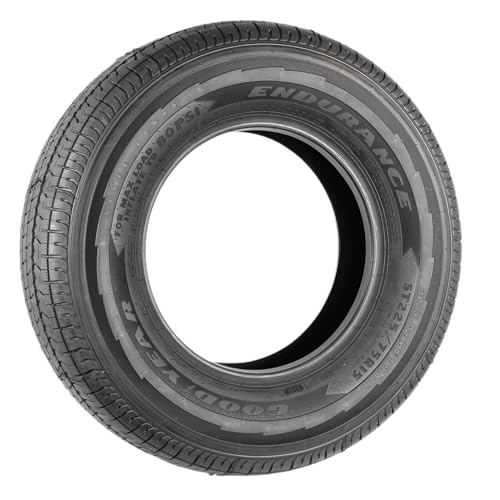
Goodyear Endurance 225/75R15 117N
Built exclusively for specialty trailer applications, the Endurance features a high 117 load index and reinforced internal construction designed to carry heavy towable RVs, boat haulers, and utility cargo trailers without sidewall fatigue.
- Pro: High-capacity radial structure resists heat buildup and highway scrubbing.
- Pro: Specialized tread compounding resists environmental cracking and ozone degradation.
- Con: Dedicated trailer tire; strictly not for use on passenger or motorized vehicles.
Skip this tire entirely if you are shopping for a passenger vehicle, light truck, or SUV fitment.
Goodyear Eagle Touring 285/45R22 114H XL
This extra-load (XL) tire is built specifically for full-size luxury SUVs and modern trucks riding on factory 22-inch wheels, offering a substantial 114 load capacity to support heavy vehicle gross weights comfortably.
- Pro: Broad footprint delivers commanding dry braking and confident highway composure.
- Pro: XL casing withstands the high dynamic loads of heavy three-row luxury platforms.
- Con: Higher replacement cost and potential for faster shoulder wear if alignment drifts.
Skip this tire if you frequently venture off paved surfaces onto rough, rocky terrain.
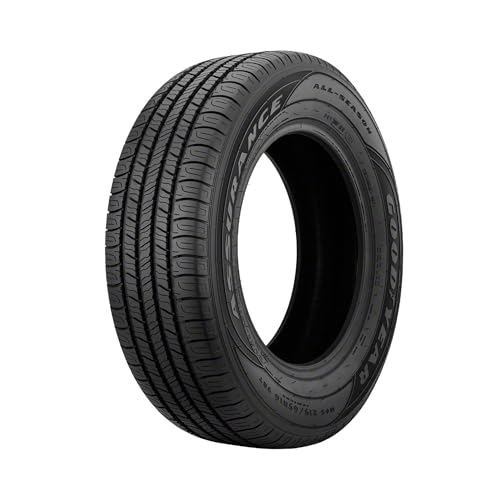
Goodyear Assurance All-Season 205/55R16 91H
A benchmark replacement tire for compact sedans and hatchbacks, this 16-inch option is built for budget-conscious owners seeking dependable wet and dry traction, low rolling resistance, and balanced all-weather longevity.
- Pro: Highly competitive pricing for standard compact vehicle fitments.
- Pro: Solid center rib enhances on-center highway tracking and braking stability.
- Con: Modest traction limits when pushed hard on tight, wet highway ramps.
Skip this tire if your vehicle demands ultra-high-performance grip or a higher load rating.
Goodyear Eagle RS-A 245/45R18 96V
Geared toward sport sedans and coupes, the Eagle RS-A utilizes an asymmetric tread design to deliver firm lateral stability, responsive cornering power, and reliable all-season road holding.
- Pro: Asymmetric shoulder design promotes responsive handling and confident turn-in.
- Pro: Excellent high-speed tracking and dry pavement grip.
- Con: Tread life can decline rapidly under aggressive, high-torque driving habits.
Skip this tire if maximum tread longevity and ultra-quiet cruising are your primary purchase goals.
Goodyear Assurance Finesse 255/55R20 107V
Targeted at larger premium crossovers and three-row family haulers, this 20-inch Assurance Finesse model features a reinforced 107 load rating and a V-speed rating to handle high weights at brisk highway velocities.
- Pro: High 107 load rating ensures strong stability under full passenger capacity.
- Pro: Multi-pitch tread pattern keeps road hum subdued on coarse asphalt.
- Con: Moderate snow performance compared to three-peak mountain snowflake rated tires.
Skip this tire if you require specialized off-road tread blocks or an all-terrain construction.
Buying Guide
Understanding Load and Speed Ratings
Matching the alphanumeric service description on your tire sidewall to your vehicle’s factory placard is non-negotiable. The load index (such as 91, 102, or 114) indicates the maximum weight each tire can support safely at maximum inflation. Exceeding this limit causes excessive heat generation and structural degradation. Speed ratings (such as H for up to 130 mph or V for up to 149 mph) indicate not only top-speed tolerance, but also the tire’s ability to dissipate heat and maintain structural rigidity during extended highway driving and quick directional changes.
Tread Pattern: All-Season vs. Grand Touring vs. Specialty
Goodyear’s lineup separates into specific design philosophies. The Assurance series focuses on grand touring comfort, symmetric or mildly directional tread, long tread life, and sound suppression for daily commuting. The Eagle family emphasizes lateral grip, asymmetric tread blocks, and stiffer shoulders for drivers wanting responsive steering. Specialized products like the Endurance radial discard comfort parameters entirely, utilizing dense steel belts and rigid compounds to withstand trailer sway and high tongue weights.
Sizing and Fitment Details
Always verify the full metric tire specification on your driver-side door jamb before buying. A size like 225/65R17 outlines the section width in millimeters (225), the aspect ratio or sidewall height as a percentage of width (65%), and the rim diameter in inches (17). Deviating from recommended aspect ratios or widths without proper wheel clearance calculations can cause speedometer calibration errors, rubbing against suspension components, or compromised anti-lock braking system calibrations.
Our Verdict
For most crossover and sedan owners, the Goodyear Assurance Finesse 225/65R17 earns our top overall recommendation thanks to its accessible $105 price, quiet cruising demeanor, and strong daily all-season competence. If you drive a compact car on a tight budget, the Goodyear Assurance All-Season 205/55R16 delivers exceptional baseline reliability at $119.99. However, if you are outfitting a travel trailer or heavy utility hauler rather than a passenger vehicle, the Goodyear Endurance 225/75R15 is the unequivocal winner due to its heavy-duty internal construction.
FAQ
How do I check if a Goodyear tire fits my vehicle?
Check the tire placard located on your vehicle’s driver-side door jamb or your owner’s manual for the exact metric size, minimum load index, and speed rating. Compare those dimensions directly against the tire specifications listed on the sidewall before making a purchase.
What is the difference between Goodyear Assurance and Goodyear Eagle tires?
The Assurance family is engineered primarily for ride comfort, low noise, long tread life, and all-weather passenger commuting. In contrast, the Eagle lineup focuses on performance, delivering stiffer sidewalls, asymmetric tread designs, and enhanced cornering grip.
Can I use the Goodyear Endurance radial on my truck or SUV?
No, the Goodyear Endurance is a dedicated trailer tire (ST fitment) designed exclusively for non-driven, towed trailer axles. It lacks the steering, braking, and lateral cornering characteristics required for passenger or motorized vehicle safety.
How often should I rotate my Goodyear tires to preserve tread life?
Goodyear recommends rotating tires every 5,000 to 7,500 miles, or whenever you perform regular oil changes. Consistent rotation patterns ensure even treadwear across front and rear axles, maximizing tire lifespan and maintaining uniform wet-weather grip.