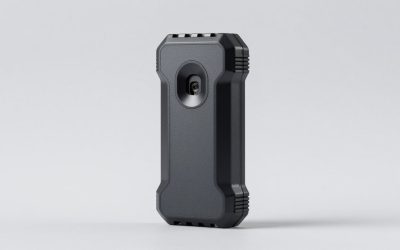
Navigating the modern landscape of speed enforcement requires more than just buying the flashiest gadget on the shelf. As police radar technology continues to evolve, finding a device that suits your driving style means cutting through confusing marketing claims and focusing on the core specifications that actually impact performance. Whether you commute daily on congested highways or take frequent cross-country road trips, the right detector acts as an early warning system without driving you crazy with constant false alarms.
Choosing the wrong unit often leads to buyer’s remorse, either because the device triggers incessantly from grocery store automatic doors or fails to warn you in time against instant-on radar guns. To make an informed decision, you need to understand how sensitivity, filtering technology, mounting compatibility, and software ecosystem features interact. This guide breaks down the critical factors you must weigh before spending your hard-earned money on a new countermeasure device.
As an Amazon Associate we earn from qualifying purchases at no extra cost to you.

Understanding Core Band Coverage
The foundation of any reliable radar detector is its ability to accurately identify various frequencies used by law enforcement. Traditional units look for X, K, and Ka bands, alongside laser. While X-band is largely obsolete in most regions, some rural areas still utilize it, meaning a comprehensive detector should technically retain the option to toggle it on or off. K-band is heavily used by standard mobile patrols and automatic door openers, making advanced filtering crucial. Ka-band is the primary frequency for high-performance highway patrol radar guns, demanding maximum sensitivity and fast processing speeds.
Laser detection, strictly speaking, is fundamentally different from radar. Laser operates via a concentrated beam of light rather than radio waves. By the time a standard windshield detector alerts you to a laser hit, you have usually already been clocked. Therefore, while band coverage is essential, your evaluation should focus heavily on how well the device processes Ka-band threats rather than relying solely on its laser detection capabilities.
False Alert Filtering and GPS Integration
A detector that constantly screams false alarms becomes background noise, causing drivers to ignore it entirely when a genuine threat appears. Modern radar detectors utilize digital signal processing to analyze incoming frequencies and differentiate between police radar and harmless sources like vehicle blind-spot monitoring systems, traffic flow sensors, and retail store motion detectors.
Built-in GPS technology takes false alert filtering a step further by allowing the device to learn your regular routes. Once you manually lock out stationary false triggers—such as a persistent automatic door at your local pharmacy—the detector will automatically mute that specific frequency whenever you approach those geographic coordinates. When evaluating units, look for models with robust GPS databases and seamless lockout capabilities, as this feature drastically improves daily driving comfort.
Sensitivity Versus Usability
It is tempting to assume that maximum detection range is the only metric that matters, but raw sensitivity without context is counterproductive. High-end units boast incredible long-range detection, pulling in signals over hills and around sharp highway bends. However, ultra-sensitive units also pick up distant background noise that is irrelevant to your immediate driving environment.
Consider your typical driving conditions when evaluating sensitivity settings. If you mostly drive in dense urban environments, a hyper-sensitive detector run on maximum settings will overwhelm you with alerts. Conversely, open interstate driving rewards long-range capability. Look for detectors that offer adjustable sensitivity modes, such as City, Highway, and Auto, allowing you to tailor the unit’s responsiveness to your current location.
Mounting Options and Windshield Compatibility
Physical installation factors are frequently overlooked during the purchasing process, yet they directly impact how effectively the unit operates. A radar detector must have a clear, unobstructed line of sight through the windshield to effectively capture radar and laser signals. Tinted windshields, particularly metallic or infrared-rejecting films, can severely degrade a detector’s performance by blocking incoming frequencies.
Evaluate the mounting hardware included with the device. Suction cup mounts should be sturdy enough to prevent bouncing on rough roads, while magnetic quick-release mounts offer convenience if you prefer to take the unit down when parking in public areas. Additionally, consider the power source; hardwiring kits provide a clean, professional look by hiding wires behind the headliner, whereas standard 12-volt cigarette lighter plugs offer plug-and-play simplicity.
Bluetooth Connectivity and Companion Apps
Modern radar detectors increasingly rely on smartphone integration to expand their capabilities far beyond traditional hardware limitations. Bluetooth-enabled units can pair with iOS and Android devices, running companion apps that crowd-source real-time alerts from other drivers on the road. This ecosystem transforms your detector into a community-driven warning network for red-light cameras, speed traps, and hidden police cruisers.
When reviewing connectivity features, examine the reliability of the app ecosystem and whether software updates can be performed over the air. Units that allow firmware updates ensure your device stays current as law enforcement agencies adopt new tactics or frequency adjustments. If you prefer a standalone device that requires no phone pairing, you can save money by skipping Bluetooth models, though you will miss out on live community threat reporting.
When to Spend More on a High-End Unit
Deciding how much to budget for a radar detector depends entirely on your driving habits and risk tolerance. Entry-level units provide basic frequency alerts and decent range, making them suitable for casual drivers who want a minimal safety net. However, stepping up to a mid-range or premium detector yields massive improvements in filtering technology, processing speed, and display clarity.
You should consider investing in a high-end unit if you drive long distances across state lines, frequently travel through unfamiliar rural jurisdictions, or commute during high-enforcement hours. Premium models feature dual-antenna designs, directional arrows that show you where the threat is coming from, and superior algorithms that virtually eliminate false alerts. Paying extra for these advanced features translates to a significantly quieter, more reliable driving experience.
Related Guides
If you are ready to compare specific models currently on the market, check out our comprehensive top-ranked 2026 detectors guide to find the right pick for your daily commute or road trips.
FAQ
Are radar detectors legal to use?
Radar detector legality varies significantly by jurisdiction. They are completely legal in most passenger vehicles at the federal level and across the majority of states, but they are banned in Virginia and Washington, D.C., as well as in all commercial vehicles nationwide. Always check local state laws before operating a detector.
Do I need a custom-installed unit or a windshield mount?
Windshield-mounted units are affordable, portable, and easy to transfer between different cars, making them the most popular choice for everyday drivers. Custom-installed, professionally integrated systems are permanently wired into the vehicle’s bumper and grille, offering a stealth appearance and superior multi-directional defense at a much higher cost.
How do I stop false alerts from store doors?
False alerts from automatic doors and blind-spot monitors are usually mitigated through built-in GPS lockout features or advanced digital signal processing. By manually saving stationary false alert locations into the device’s memory, the detector will automatically silence those specific frequencies on subsequent passes.
Will a radar detector protect me from laser speed guns?
Traditional radar detectors offer very limited protection against laser speed guns because laser operates via a narrow, focused light beam rather than widespread radio waves. By the time a standard windshield unit detects a laser hit, the officer has already obtained your speed, meaning you typically need active laser jammer systems for true laser defense.