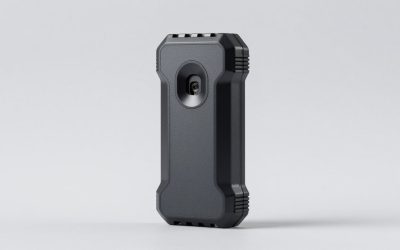
Towing heavy machinery, large fifth-wheel campers, or triple-axle commercial trailers demands far more braking capability than hauling a light utility load. As vehicle towing capacities push higher in 2026, the strain placed on your tow vehicle’s stopping system makes a dedicated brake controller one of the most critical safety components in your rig setup. A heavy-duty trailer brake controller manages the electrical signal sent to your trailer’s brakes, ensuring that thousands of pounds of rolling momentum stop smoothly alongside your truck rather than pushing violently against it.
Choosing the wrong controller can lead to cooked truck brakes, flat-spotted trailer tires, or dangerous jackknives during sudden stops. With scores of options on the market boasting various displays, mounting styles, and algorithms, you need to cut through the marketing noise to focus on what actually keeps your load controlled. This decision guide breaks down the technical specifications, sizing realities, and feature tradeoffs you need to evaluate before purchasing a heavy-duty unit.
As an Amazon Associate we earn from qualifying purchases at no extra cost to you.

Proportional vs. Time-Delayed: Why Sensing Technology Matters
Trailer brake controllers fall into two main operational categories: time-delayed and proportional. Time-delayed controllers apply a pre-set braking power that ramps up over a fixed time duration whenever you step on the brake pedal. While these units are inexpensive and simple, they operate completely independently of how hard you are actually stopping. Whether you are tapping the pedal in heavy traffic or slamming on the brakes at highway speeds, a time-delayed controller delivers the exact same programmed power curve, often causing harsh lurching or delayed stopping force.
Proportional brake controllers utilize internal accelerometers and gyroscopes to detect the precise rate of deceleration of your tow vehicle. The moment you press the brake pedal, the controller senses how fast the truck is slowing down and instantly delivers a corresponding proportional voltage to the trailer brakes. When hauling 10,000 pounds or more, proportional sensing is non-negotiable. It provides smooth, synchronized braking that matches your real-world stopping intensity, saving wear on both vehicle braking systems.
Axle Ratings and Amperage Capacity
Heavy-duty trailering frequently involves dual or triple axles equipped with four to six braking hubs, and in commercial applications, quad axles with eight brakes. Every electric brake magnet on a trailer draws approximately 3 to 4 amps of current at maximum voltage output. If your controller cannot handle the cumulative current draw of all your trailer’s brake magnets, the internal circuit breaker will trip or thermal protection will shut the unit down precisely when you need braking power most.
Standard light-duty controllers are generally rated for one or two axles (up to 12 amps total output). For heavy-duty applications, you must choose a controller rated for three or four axles with a minimum continuous output capacity of 15 to 20 amps. Look for heavy-duty units constructed with robust internal heat sinks and heavy-gauge power transistors designed to handle prolonged electrical loads without overheating on long downhill mountain descents.
Electric vs. Electric-Over-Hydraulic (EOH) Compatibility
Standard electric drum brakes use direct electromagnetic actuators that physically push brake shoes against the drum surface when energized. However, heavy commercial trailers, large boat trailers, and high-capacity equipment haulers often utilize Electric-Over-Hydraulic (EOH) braking systems. EOH systems use an electric signal from the brake controller to power a hydraulic pump, which in turn pressurizes hydraulic lines to actuate heavy-duty disc or drum brakes.
EOH pumps require a continuous, uninterrupted electrical signal and slightly higher voltage response curves to overcome hydraulic pressure delays. Standard brake controllers often misinterpret the initial resistance of an EOH pump as a electrical short or fault code, resulting in erratic braking or complete system failure. Always verify that a heavy-duty brake controller explicitly features a selectable EOH compatibility mode before using it on hydraulic-actuated trailers.
User Interface, Boost Settings, and Manual Controls
When managing heavy loads on changing road grades, real-time feedback and quick adjustments are essential for driver safety. Avoid controllers that rely on basic single-color LED lights to indicate braking force. Select units equipped with digital displays that present real-time output voltage, connection status, and direct diagnostic warning codes. Clear numerical feedback lets you fine-tune settings precisely based on load weight and road surface conditions.
High-quality heavy-duty controllers also include customizable boost settings. The boost feature increases the initial baseline voltage applied to the trailer brakes the moment you tap the brake pedal, overcoming the initial inertia of a heavy load before proportional braking kicks in fully. Finally, ensure the manual override control—typically a spring-loaded lever or slider—is mounted within comfortable reach. The manual override allows you to apply trailer brakes independently of the truck, which is the primary method for straightening out severe trailer sway.
Wiring Requirements and Physical Installation Pitfalls
Even the highest-rated brake controller will fail if fed through inadequate electrical wiring. Heavy-duty multi-axle setups demand minimum 12-gauge, and preferably 10-gauge, power and ground wiring connected directly to the vehicle battery. Thin factory wiring or weak ground connections create voltage drops, causing erratic brake application, loss of power under heavy braking, or false error warnings on the display.
Physical mounting orientation is equally crucial for proportional units. Internal accelerometers rely on accurate positioning to sense forward inertia correctly. While modern controllers offer 360-degree mounting flexibility, they must be rigidly secured to a solid vehicle panel. Mounting a controller to a loose plastic dash trim piece introduces excess vibration, causing internal sensors to miscalculate vehicle deceleration and trigger random brake lockups on smooth roads.
Factory-Integrated Controllers vs. Aftermarket Heavy-Duty Units
Many modern heavy-duty pickup trucks come equipped with factory-integrated brake controllers built directly into the dashboard. These factory units offer clean integration and often communicate with the vehicle’s electronic stability control system. For standard recreational towing, factory controllers perform admirably and provide a clutter-free cab environment.
However, dedicated aftermarket heavy-duty controllers still hold significant advantages for heavy commercial use or multi-trailer fleets. High-end aftermarket units offer more aggressive customizable boost curves, higher total amperage limits for multi-axle trailers, and downloadable memory profiles for different trailers. Furthermore, aftermarket controllers can easily be transferred between vehicles, allowing fleet managers or commercial haulers to retain their preferred braking setup across multiple tow rigs.
Related Guides
To see how top-performing models compare in real-world stopping distance and stress tests, read our detailed evaluation of the best heavy duty trailer brake controllers available today.
FAQ
Can I use a standard brake controller for a heavy-duty triple-axle trailer?
No, standard controllers are generally rated for only one or two axles and lack the current capacity for triple-axle configurations. Connecting a light-duty controller to six brake magnets can overheat the controller’s internal circuitry and trigger emergency shutdowns. Always choose a heavy-duty controller explicitly rated for three or four axles.
What does the boost feature do on a heavy-duty brake controller?
The boost feature increases the initial baseline voltage sent to the trailer brakes the exact moment you press the tow vehicle’s brake pedal. This helps overcome the massive rolling momentum of a heavy load before proportional inertia sensors register vehicle deceleration. Boost levels can be adjusted or turned off depending on whether the trailer is empty or fully loaded.
Why are my trailer brakes locking up at low speeds in parking lots?
Low-speed brake lockup usually occurs because the controller’s gain setting is set too high or the boost level is overly aggressive for low speeds. When rolling slowly, the controller detects slight inertia changes and applies excessive voltage relative to your speed. Reducing the gain or dropping the boost setting during low-speed maneuvering prevents tire skidding.
Do electric-over-hydraulic (EOH) trailer brakes require a special controller?
Yes, EOH braking systems rely on an electric motor to pressurize hydraulic fluid, which requires consistent electrical output and specific voltage timing. Standard controllers may read the electrical draw of the hydraulic pump as a system fault or deliver pulsing voltage that causes jerky braking. Ensure your controller includes a dedicated EOH operational mode.