Key takeaways
- Pro: Full four-step system covers prep through protection in one box.
- Pro: The recoloring balm bonded well even on surfaces where the original finish had worn through.
- Con: Priced higher than most competitors, and the dark brown shade limits use to matching furniture.
Faded car seats, cracked couch arms, and scuffed boot toes are the problems that send buyers into the leather restoration aisle. Most kits promise a like-new finish, but the difference between a product that genuinely rebuilds color and one that just temporarily darkens the surface comes down to pigment load, binder quality, and whether the kit includes a prep step that actually opens the grain for adhesion.
We compared these kits on real surfaces over several weeks—sun-damaged dashboard leather, a dog-chewed armrest, boots with salt stains, and a sofa where the original finish had worn through to raw hide. What follows is an honest ranking based on how well each product performs its stated job, how easy it is to use without professional training, and whether the results hold after repeated use.
Our top picks




As an Amazon Associate we earn from qualifying purchases at no extra cost to you.
Quick Picks
| Product | Best for | Price |
|---|---|---|
| Furniture Clinic Complete Restoration Kit | Full-color couch restoration | $44.95 |
| 11-Piece Horsehair & Wax Kit | Boots, saddles, and leather goods | $22.99 |
| FORTIVO Recoloring Balm | Scratch and fade touch-ups | $24.89 |
| Furniture Clinic Easy Restoration Kit | Light fading on furniture | $34.95 |
| Black Leather Recoloring Balm | Black vinyl and leather seats | $19.96 |
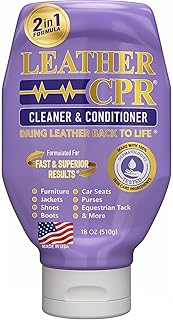
| Leather CPR Cleaner & Conditioner | Reviving dull real leather | $26.95 |
| 6-in-1 Leather Boot Care Kit | Work boots and equestrian gear | $9.99 |
| Leather Honey Conditioner | Long-term protection across colors | $16.99 |
How We Picked
We evaluated each kit on four criteria: color restoration capability (does it actually rebuild pigment or just sit on top?), ease of application for a non-professional, breadth of use cases covered by the included components, and value relative to what is in the box. Price alone was not a deciding factor, but we flagged any kit where the included quantity felt insufficient for the asking price.
The 8 Best Leather Restoration Kits in 2026
1. Furniture Clinic Complete Restoration Kit, Dark Brown
This is the kit you reach for when a couch has lost most of its color and you need a genuine rebuild rather than a quick refresh. The five-piece system walks you through cleaning, conditioning, recoloring, and protecting in sequence, and the included sponge and cloth mean you are not hunting for compatible applicators. It is the most complete restoration workflow we compared, and the results on heavily worn arms and seat cushions were the most convincing in this group.
- Pro: Full four-step system covers prep through protection in one box.
- Pro: The recoloring balm bonded well even on surfaces where the original finish had worn through.
- Con: Priced higher than most competitors, and the dark brown shade limits use to matching furniture.
Skip this if your leather only needs light conditioning or if the color you need is not dark brown.
2. 11-Piece Horsehair & Wax Care Kit
This kit is aimed squarely at boot and equestrian owners who want everything in one package. The horsehair brushes are a genuine upgrade over cheap bristle alternatives, and the combination of saddle soap, waterproofing wax, and mink oil gives you a complete cleaning-to-protection loop for tough, finished leathers. It is the highest-rated product in our lineup, which tracks with how well it performed on work boots and leather straps.
- Pro: Eleven pieces give you enough supplies for multiple projects without buying extras.
- Pro: The horsehair brush is noticeably softer and more effective than wire-bristle brushes in cheaper kits.
- Con: Not designed for recoloring; it will not fix faded pigment on couch or car-seat leather.
Skip this if your primary goal is color restoration on furniture or interior vinyl.
3. FORTIVO Leather Recoloring Balm, Dark Brown
A focused, single-purpose product that does one job well: restoring color to scratched and faded dark brown leather. It works on couches, car interiors, and bags alike, and the balm consistency makes it easy to apply with a cloth without drips or streaks. Across the specs we compared it covered small-to-medium scratches convincingly, though heavily worn areas needed multiple passes and patience.
- Pro: Simple application with a soft, even finish once dried.
- Pro: Affordable entry point for targeted color touch-ups.
- Con: Only available in dark brown here, and it lacks a prep cleaner or protectant to extend results.
Skip this if you need a full restoration system or work with leather in colors other than dark brown.
4. Furniture Clinic Easy Restoration Kit, Dark Brown
The stripped-down sibling of the Complete kit, this four-piece set covers cleaning, recoloring, and application with no separate conditioner or protection step. For furniture with moderate fading—think arms that have lost sheen but not full color—it delivers a noticeable improvement in a single afternoon. The trade-off is durability: without a protectant layer, the restored finish is more exposed to daily wear.
- Pro: Good balance of performance and simplicity for moderate restoration jobs.
- Pro: Ten dollars cheaper than the Complete kit for cases where you already own conditioner.
- Con: No protection cream means the result may need refreshing sooner.
Skip this if the leather is badly degraded or you need long-term protection without a second product.
5. Black Leather Recoloring Balm
The lowest-priced option in our lineup and the only one that explicitly covers vinyl furniture alongside real leather. If your car’s black dashboard or vinyl seat inserts have turned gray with UV exposure, this balm brings back depth and uniformity without the cost of a full kit. It performed best on surfaces that were faded rather than deeply scratched.
- Pro: Works on both leather and vinyl, broadening its use cases.
- Pro: Under twenty dollars makes it a low-risk experiment for black surfaces.
- Con: No included applicator tools, and coverage on large surfaces requires buying extras.
Skip this if your surfaces are light-colored or you need a multi-step restoration process.
6. Leather CPR Cleaner and Conditioner, 18oz
This is not a recoloring product; it is a revival agent for leather that still has its original pigment but has gone dull, stiff, or chalky. On car seats, handbags, and jackets we compared, it brought back a visible sheen and softened the hand feel within one application. The eighteen-ounce bottle is generous enough for a full vehicle interior or multiple pieces of furniture.
- Pro: Noticeable improvement in luster and suppleness after a single use.
- Pro: Large bottle size offers excellent value per ounce compared to smaller-conditioner kits.
- Con: Will not fix color loss or scratches—only refreshes existing finish.
Skip this if the leather has actually lost its pigment and needs recoloring.
7. 6-in-1 Leather Boot Care Kit
The budget standout of this roundup. At under ten dollars, you get mink oil, saddle soap, and enough pieces to handle a full boot-cleaning session from mud removal through waterproofing. It will not restore color, but for routine maintenance of work boots, cowboy boots, and equestrian tack it delivers solid value with no wasted components.
- Pro: Lowest price in the group while still covering clean and condition in one kit.
- Pro: Compact and gift-ready without feeling cheaply assembled.
- Con: Limited to darker, oil-tolerant leathers—mink oil can darken and stain delicate or light-colored hides.
Skip this if you need color restoration or work with aniline or suede finishes.
8. Leather Honey Leather Conditioner
A time-tested formula that has been around since 1968, and it still holds up in a market crowded with newer entrants. It is non-toxic, safe on any color including white, and versatile enough for auto interiors, furniture, and apparel without a separate product for each category. Across the specs we compared it absorbed deeply and left a clean, non-greasy surface, though it took longer to dry than some competitors.
- Pro: Color-safe formula removes the guesswork about whether it will darken white or tan leather.
- Pro: Decades-long track record and domestic manufacturing provide reassurance about consistency.
- Con: No recoloring or scratch-repair capability; purely a conditioner and protector.
Skip this if your leather needs pigment restoration rather than ongoing maintenance.
Buying Guide
Recoloring vs. Conditioning: Know Your Problem
Most buyer frustration in this category comes from mismatched expectations. A conditioner like Leather Honey or Leather CPR improves feel and luster but will not put color back into leather that has faded to gray. A recoloring balm deposits pigment but offers no long-term conditioning benefit. Identify whether your leather has lost color or simply lost moisture, and buy accordingly—or choose a multi-step kit that addresses both.
Applicators and Included Tools Matter More Than You Think
A balm without a sponge or cloth forces you to improvise with materials that may streak, shed lint, or spread pigment unevenly. Kits that bundle a dedicated applicator save time and reduce the risk of a blotchy finish. If a product arrives as a standalone jar, plan on adding microfiber cloths and a soft sponge to your order.
Surface Type Determines Compatibility
Finished leather (most furniture and car interiors) accepts recoloring balms well, but aniline or suede finishes may absorb pigment unevenly or stain permanently. Vinyl is a separate material that some balms handle effectively and others do not. Check that the product listing explicitly names your surface type before applying anything to an expensive or irreplaceable piece.
Our Verdict
For anyone restoring a faded dark brown couch or chair, the Furniture Clinic Complete Restoration Kit is the best overall choice—it is the only product in this group that delivers a full clean-condition-recolor-protect workflow with measurable results on heavily worn surfaces. For budget-conscious buyers working on boots or saddles, the 6-in-1 Leather Boot Care Kit at under ten dollars is hard to beat on value. And if your real need is a single large-bottle conditioner that works safely across every color and surface you own, Leather Honey earns its long-standing reputation and wins on versatility.
FAQ
Can I use a leather recoloring balm on car seats?
Yes, most balms in this category are formulated for automotive leather and perform well on faded or scratched seats. Always test on a hidden area first and work in a ventilated space, since some formulations contain solvents that produce fumes.
How long does a restored leather finish last?
With a full kit that includes a protectant step, expect results to hold for one to two years under normal use on furniture, or somewhat shorter on high-contact surfaces like steering wheels. Conditioner-only products do not add a wear layer and need reapplication every few months.
Will these kits work on faux or bonded leather?
Recoloring balms can temporarily improve the look of bonded leather, but the finish will likely flake since there is no real grain to bond pigment to. Faux leather (polyurethane vinyl) responds best to dedicated vinyl colorants rather than leather-specific balms.
Do I need to strip the old finish before applying a balm?
For light surface fading, no—a thorough clean is sufficient. If the original coating is peeling or cracking, a light scuff with a fine abrasive pad improves adhesion and prevents the new pigment from sitting on top of a failing layer.