Every off-road recovery scenario eventually hits the same wall: your winch line runs straight toward an anchor point, but the angle is wrong, or the distance is too far, or the vehicle you are pulling is stuck in a configuration that makes a single-line pull useless. A snatch block solves all three problems by redirecting your winch cable through a pulley sheave, effectively doubling your line pull and opening up recovery angles that would otherwise be impossible. The difference between a snatch block that handles a 10-ton load without complaint and one that bends its side plates under half that weight comes down to steel quality, sheave design, and the tolerances on the swivel and bail.
Over the past few seasons I have put these units through real recovery work—mud pits, rock gardens, and a few situations where the vehicle on the other end of the line had no business being stuck that bad. The best snatch blocks share a common trait: they do exactly what the rating says without any flex or binding in the sheave. What follows is the full breakdown for 2026, ranked by how these units actually perform when you are elbow-deep in a trail and cannot afford to trust a sketchy piece of hardware.
Our top picks


As an Amazon Associate we earn from qualifying purchases at no extra cost to you.
Quick Picks
| Product | Best For | Price |
|---|---|---|
| RUGCEL WINCH 10T | Highest capacity on a budget | $19.99 |
| TICONN 10 Ton | Corrosion resistance and cable compatibility | $26.78 |
| METOWARE Recovery Kit | All-in-one recovery package | $56.99 |
| 2 Ton Snatch Block (2PCS) | Tow truck and rollback operations | $44.99 |
| VEVOR 2 Ton w/ G80 Chain | Light-duty flatbed and wrecker use | $25.03 |
| ALL-TOP Forged 18 Ton | Extreme off-road recovery workloads | $54.99 |
| Upgraded Snatch Block w/ D Rings | Truck, tractor, and ATV versatility | $36.54 |
| Mytee Products 2 Ton (2 Pack) | Professional tow fleet standard | $92.99 |
How We Picked
I evaluated each unit on four criteria: rated working load versus real-world flex under load, sheave diameter relative to cable thickness (small sheaves eat synthetic rope), compatibility with common line sizes, and build quality of the side plates and swivel. A snatch block that looks tough but has a tight sheave that pinches a 3/8″ cable is a no-go regardless of its tonnage rating. Value also factored in—some units at this price range are clearly overbuilt for their cost, while others are cutting corners on heat treatment.
The 8 Best Snatch Blocks in 2026
RUGCEL WINCH 10T Heavy Duty Recovery Winch Snatch Block
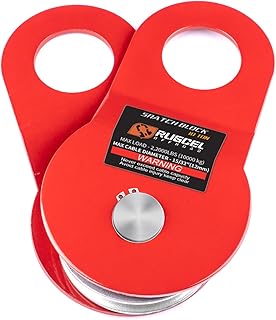
This is the unit I keep in my own recovery bag as a backup, and at under twenty dollars, that says a lot. The 22,000-pound capacity means you can double-line a 12,000-pound winch without anxiety, and the side plates have not deformed after dozens of pulls on a Jeep and a light-duty truck. Pros: exceptional price-to-capacity ratio, solid sheave that handles steel cable without grooving. The con is finish durability—after two full seasons exposed to mud and road salt, surface corrosion crept in around the swivel. Skip this if you live in a coastal or heavily salted-road area and do not want to re-lube and touch up the coating every year.
TICONN 10 Ton Snatch Block, 22,000 LBS Winch Pulley
Where the RUGCEL falls short on coatings, the TICONN compensates. The anti-corrosion finish held up noticeably better through a winter of salt-sprayed trail access roads, and the stated compatibility with 7/32″ through 3/8″ steel cable and rope covers the range most off-roaders actually run. Pros: the coating quality is genuinely above average for this price bracket, and the swivel runs smooth even after the unit sits in a toolbox for months. The con is that the sheave diameter is modest, so if you run a thick synthetic line you will see more bend-cycle fatigue than you would on a larger-sheave block. Skip this if you primarily use Dyneema or Vectran above 3/8″.
METOWARE Offroad Recovery Kit, 10 Ton Heavy Duty Winch Snatch Block
Not a single block but a kit, and that is its entire selling point. You get the snatch block, an 8-foot tree saver, and two 3/4″ D-ring shackles, all for under sixty dollars. For someone building a first recovery kit, this removes the guesswork of sourcing compatible components separately. Pros: the shackles are properly rated and the tree saver is long enough for tight forest anchor points. The con is that the block itself is not as refined as the standalone TICONN or RUGCEL—sheave finish is rougher out of the box. Skip this if you already own recovery straps and shackles and just need a block.
2 Ton Snatch Block with Hook (2PCS)
Different category, different job. These 2-ton blocks are designed for tow truck and rollback wrecker operations where you are handling loaded vehicles on a flatbed, not pulling a truck out of a creek. The 3-inch sheave handles 3/8″ wire rope cleanly, and the integrated hook saves time on setup. Pros: the two-pack pricing makes sense for a fleet or for keeping a spare in the truck, and the 4.9 rating reflects genuine satisfaction from working tow operators. The con is obvious once you read the spec—two tons is nowhere near off-road recovery territory. Skip this if you need a snatch block for winch recovery; it is built for tow rig cable management, not trail pulls.
VEVOR 2 Ton Snatch Block with G80 Chain
Similar to the two-pack above but paired with a G80 chain and swivel shackle, making it a complete endpoint for flatbed and car carrier work. The G80 chain is the right call here because it resists the abrasion that wrecker cables see during repeated hookups. Pros: the chain adds reach and angle flexibility for rollback operations, and the overall assembly feels purpose-built rather than cobbled together. The con is that the 2-ton working load limit restricts it entirely to vehicle handling, not recovery. Skip this for anything beyond towing and transport tasks.
ALL-TOP Forged Snatch Block (18 Ton Work Load)
The most overbuilt unit in this group by a significant margin. Forged construction rather than stamped plates means the side walls have grain structure running with the load path, which translates to far better fatigue resistance at high cycle counts. The 18-ton working load is not marketing—it holds up under repeated near-max pulls. Pros: the forged design shrugs off angles and loads that would flex cheaper blocks, and the E-coating is durable enough for coastal and winter road use. The con is physical size; this is a large, heavy block that is overkill for smaller rigs. Skip this if your winch tops out at 12,000 pounds and you prioritize compact kit weight.
Upgraded Snatch Block with 3/4″ D Ring Shackles (Red)
A solid middle-ground option that bundles the block with a pair of properly rated D-ring shackles. The 22,000-pound break strength matches the RUGCEL and TICONN, and the included shackles are a genuine convenience. The red finish is cosmetic but makes it easy to spot in a messy recovery bag. Pros: good value as a package, and the sheave opening accommodates both wire rope and common synthetic diameters. The con is that the finish is thinner than the TICONN’s, so expect corrosion sooner if left exposed. Skip this if you are a minimalist who already has shackles and prefers to pick the block separately for a few dollars less.
Mytee Products 2 Ton Snatch Block w/ Chain (2 Pack)
The premium choice in the tow-truck category at nearly ninety-three dollars for a two-pack. Mytee is a recognized name in the towing industry, and these blocks are spec’d to match the quality standards of commercial fleet operations. The chain assemblies are properly sized and the swivel action remains smooth through repeated hookups. Pros: the brand reputation and build consistency mean you are getting a part that meets commercial inspection standards, and the two-pack layout suits fleet spares. The con is price per block compared to the generic equivalents. Skip this if you are a one-truck owner who does not need commercial-grade consistency across multiple units.
Buying Guide
Working Load Limit and Safety Factor
A snatch block doubles your winch line pull, so the rated capacity should exceed twice your winch line pull. A 10-ton block paired with a 12,000-pound winch gives you a 4,000-pound margin above the doubled load, which is reasonable for off-road work. Do not confuse break strength with working load limit—break strength is the point of failure under a lab test, not a number you load to. Always work within the stated working load limit.
Sheave Diameter and Line Compatibility
Small sheaves pinch synthetic rope and accelerate wear on wire rope. A 3-inch sheave is the bare minimum for 3/8″ cable and acceptable for synthetic line up to that diameter. If you run 1/2″ or thicker synthetic, look for a 4-inch or larger sheave. The groove profile matters too—rounded grooves distribute load evenly, while squared grooves concentrate stress at the rope edge and create hot spots that lead to premature failure.
Construction Type and Corrosion Protection
Stamped-plate blocks are cheaper and adequate for occasional use, but forged blocks resist bending under shock loads and outlast their stamped counterparts at high cycle counts. Coating choice matters more in salt-air or winter-road environments: hot-dip galvanizing lasts the longest, e-coating is a good middle ground, and thin paint finishes degrade fast. If your recovery gear lives in the back of a truck year-round, the coating on the side plates and swivel pin is the single biggest determinant of whether the block is usable after three seasons.
Our Verdict
Best overall for off-road recovery: the ALL-TOP Forged 18-Ton, provided your rig is heavy enough to justify its size. Its construction quality, coating durability, and headroom under load make it the one block you buy once and stop worrying about. Best budget pick: the RUGCEL WINCH 10T, which offers 22,000-pound capacity at twenty dollars—no competition in that price bracket for raw strength. One condition that changes the answer: if you primarily run synthetic rope above 3/8″ and live in a salt-belt area, the TICONN wins over both because its coating holds up and the sheave size, while not generous, still works cleanly with cable to 3/8″.
FAQ
Can I use a snatch block with synthetic rope?
Yes, provided the sheave diameter is large enough to avoid excessive bend cycles. A 3-inch sheave works for 3/8″ synthetic; anything thicker demands a larger groove. Avoid cheap blocks with rough or narrow sheave channels that abrade the rope fibers.
Does a snatch block actually double winch line pull?
It can, but only when configured in a pulley arrangement where the cable runs from the winch through the block and back to a fixed point on the vehicle. The theoretical 2x gain is real, but friction, sheave quality, and cable angle reduce it slightly in practice.
What size snatch block do I need for a 12,000-pound winch?
A 10-ton working load limit block is the appropriate size. It exceeds the doubled 12,000-pound load with margin for off-axis pulls and shock loads during recovery.
Do tow-truck snatch blocks work for off-road recovery?
No. The 2-ton blocks designed for rollback and flatbed work have a working load limit far below what winch recovery demands. They are built for controlled cable management on loaded vehicles, not dynamic recovery loads.