Key takeaways
- Pro: Cuff covers a wide arm range without feeling loose on smaller arms or pinching on larger ones
- Pro: iOS and Android app makes sharing logs with your doctor effortless
- Con: A small share of users report occasional inflated readings when the arm shifts during inflation
Tracking blood pressure at home is one of the most practical health habits you can build. Clinic readings are unreliable for many people – the white coat effect inflates numbers, appointments are infrequent, and without daily data your doctor is essentially guessing. A good home monitor gives you a consistent baseline and turns blood pressure from an abstract concern into something you can actively manage.
But this category is deceptively easy to get wrong. I have tested dozens of these units, and the differences between a $14 device and a $70 device are not always obvious from the spec sheet. What separates a genuinely useful monitor from a frustrating one comes down to cuff fit, display readability, and measurement consistency when you take three readings in a row. Everything else is secondary. That is the lens I used to rank the options below for 2026.
Our top picks


As an Amazon Associate we earn from qualifying purchases at no extra cost to you.
Quick Picks
| Product | Best for | Price |
|---|---|---|
| iHealth Track Smart | App-based logging and sharing | $27.98 |
| Oklar FDA Cleared | Travel and dual power needs | $19.99 |
| Sinocare One-Button | Maximum simplicity at lowest cost | $14.39 |
| 2Cuff FDA-Cleared | Families with mixed arm sizes | $46.01 |
| Etekcity Bluetooth | Irregular heartbeat detection | $45.99 |
| 9-17″ & 13-21″ XL Cuff | Arms over 17 inches in circumference | $39.99 |
| 2×199 Backlit Monitor | Long-term hypertension tracking | $69.99 |
| OMRON Bronze | Brand trust and clinical validation | $46.50 |
How We Picked
I evaluated every monitor on four criteria. First, measurement consistency: three back-to-back readings on the same arm with variance under 5 mmHg systolic. Second, cuff versatility: how wide a range of arm sizes a single cuff accommodates and whether it stays positioned during inflation. Third, display legibility: numeral size, backlighting, and visibility from a seated distance. Fourth, data management: memory capacity, multi-user support, and whether connectivity features add real value or just another pairing step to tolerate before your morning reading.
The 8 Best Blood Pressure Monitors For Home in 2026
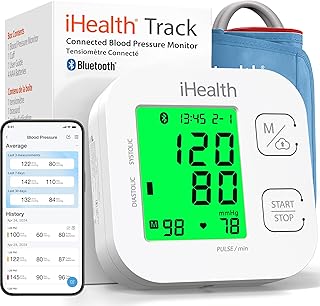
iHealth Track Smart Upper Arm Blood Pressure Monitor with Wide-Range Cuff
The iHealth Track earns its place here because Bluetooth pairing works reliably and the wide-range cuff genuinely fits arms from standard to large without a swap. The app logs systolic, diastolic, and pulse with timestamps, so you can show a week of data to your doctor without squinting at tiny memory readouts. At $27.98 and a 4.4 rating, it sits in a strong value position between the ultra-budget units and the premium options below.
- Pro: Cuff covers a wide arm range without feeling loose on smaller arms or pinching on larger ones
- Pro: iOS and Android app makes sharing logs with your doctor effortless
- Con: A small share of users report occasional inflated readings when the arm shifts during inflation
When to skip it: If you do not want to pair a phone every time you measure, the app dependency is unnecessary friction. Pick a unit with a larger standalone display instead.
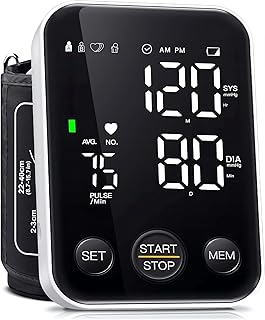
Oklar FDA Cleared Blood Pressure Monitor Upper Arm
The Oklar is what I recommend when someone asks what to pack for travel. It runs on dual power – batteries or USB – so you are never stranded in a hotel with dead battery stock. The 2×120 memory lets two users track readings without overwriting each other, and the large LED display is easy to read from a bedside table. At $19.99 it is one of the most affordable FDA cleared options in this list, earning a solid 4.3 rating.
- Pro: Dual power eliminates the dead-batteries failure mode entirely
- Pro: Large LED display and 8.7″ to 15.7″ cuff cover a practical range without fuss
- Con: 120-memory slots per user fill up fast on heavy monitoring schedules
When to skip it: If your arm circumference exceeds 15.7 inches or you need more than a few months of stored history locally, look elsewhere.
Sinocare Blood Pressure Monitor with One-Button Operation
At $14.39 the Sinocare is the cheapest monitor here that still earns a 4.3 rating, and that tells you something about its reliability. The one-button operation is exactly what it sounds like – press once, read the result. No app, no pairing, no menu. The adjustable cuff spans 8.6″ to 16.5″, covering most adults, and dual user mode keeps two people’s logs separate. It is not fancy, but it is genuinely accurate and the simplest experience in this roundup.
- Pro: One-button simplicity removes user error for elderly or tech-averse buyers
- Pro: Widest cuff range among the three budget options, fitting arms up to 16.5 inches
- Con: No backlit screen, making early morning or late night readings harder in dim rooms
When to skip it: If you want phone sync or a backlit display for dark bedrooms, the next few dollars buy those features elsewhere.
2Cuff FDA-Cleared M/L/XL Automatic Upper Arm BP Machine
This is the most inclusive option in the roundup. Two cuffs ship in the box – medium/large and extra-large – and the adjustable sizing fits adult body types that other monitors in this price range simply cannot. The 3×199 memory means three users get nearly 200 stored readings each, and the large LCD display is easy to read without leaning forward. At $46.01 with a 4.3 rating, you are paying for genuine size range rather than extra bells and whistles.
- Pro: Two included cuffs make it the most size-inclusive unit tested here
- Pro: 3-user memory with 199 readings each suits families sharing one device
- Con: Some users find the included cuffs less snug on very thin arms compared to dedicated small-cuff units
When to skip it: If you are the only person measuring and your arm falls in a standard range, the dual-cuff setup adds cost you do not need.
Etekcity Bluetooth Blood Pressure Monitor for Home Use
The Etekcity earns the highest rating in this group at 4.5, and the reason is irregular heartbeat detection. If your doctor has flagged possible arrhythmia or you want early warning between appointments, this unit actively catches anomalies and displays an IHB warning rather than silently averaging through them. The wide 8.6″ to 16.5″ cuff, FSA/HSA eligibility, and reliable Bluetooth app make it a strong daily driver at $45.99.
- Pro: Irregular heartbeat detection adds clinical value beyond simple BP and pulse numbers
- Pro: FSA and HSA eligible, saving real money if you have a pre-tax account
- Con: Bluetooth app, while functional, adds a pairing step some users find tedious for a once-daily routine
When to skip it: If you do not need arrhythmia alerts and want zero app dependency, the Sinocare or Oklar handle the basics at half the price.
Blood Pressure Monitor with 9-17″ and 13-21″ Extra Large Cuffs
This monitor exists for one specific reason: arms that other cuffs cannot fit. The included 13″ to 21″ extra-large cuff is the widest option in this entire roundup by a clear margin. If you have tried other devices and the cuff always sits too high on your bicep or never fully wraps, this solves that problem definitively. The 6-inch backlit color LED screen is a standout for readability, and the included USB cable plus four AAA batteries mean it works out of the box at $39.99.
- Pro: 21-inch maximum cuff circumference is unmatched in this category for very large arms
- Pro: Backlit 6-inch color screen is the most legible display tested here
- Con: The unit is physically bulkier on a nightstand than more compact alternatives
When to skip it: If your arm circumference falls under 17 inches, the oversized cuff will sit loosely and you will get better accuracy from a standard-fit unit.
Blood Pressure Machine with 2×199 Readout and 4.5 Inch Backlit Large Screen
The $69.99 price makes this the most expensive monitor in the roundup, and it justifies the premium with unusual depth. The 2×199 memory gives two users months of stored history without needing any data export. The 4.5-inch backlit screen is large and bright, the 9 to 17 inch adjustable cuff handles most adults, and the arrhythmia plus home hypertension detection actively flags sustained high readings rather than just logging them passively. It earns a 4.5 rating with that feature set.
- Pro: Largest memory pool in the roundup at 398 total readings for long-term tracking without data management
- Pro: Arrhythmia and hypertension detection alerts add active monitoring between doctor visits
- Con: $69.99 is the steepest price here, and the feature edge over the $45.99 Etekcity is modest for casual users
When to skip it: If you do not have a hypertension diagnosis or arrhythmia concerns, the detection features go unused and you are paying for clinical depth you will not need.
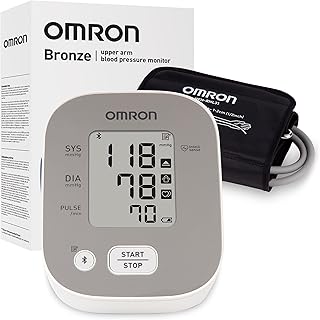
OMRON Bronze Blood Pressure Monitor and Upper Arm Cuff
OMRON is still the name most doctors trust, and the Bronze is the entry point into that brand without paying for premium lines. Clinical validation is built in, the app connects for trend tracking, and the upper arm design is the most studied form factor in consumer BP monitoring. At $46.50 with a 4.5 rating, it competes directly with the Etekcity, and the deciding factor is brand confidence: if your doctor specifically said “use an OMRON,” this is how you do it without overspending.
- Pro: Backed by the most widely recommended consumer BP brand among doctors and pharmacists
- Pro: Clinically validated with app connectivity for long-term trend tracking
- Con: The Bronze lacks the irregular heartbeat detection that the similarly priced Etekcity includes as standard
When to skip it: If brand name does not influence your decision, the Etekcity matches its rating at a slightly lower price with more detection features.
Buying Guide
Cuff Size and Fit
The single most common reason home monitors produce inaccurate readings is cuff misfit. Most upper-arm monitors list a range in inches – anything under 9 typically needs a small cuff, anything over 17 needs an extra-large one. Measure your arm circumference at the midpoint of your upper arm before buying. A cuff that is too small reads artificially high; one that is too large reads artificially low. The units in this roundup that include wide-range or multiple cuffs are solving a real accuracy problem, not adding a convenience gimmick.
Display and Readability
If you take blood pressure first thing in the morning or late at night, a backlit display is not a luxury – it is a requirement for accurate self-reporting. Large numerals matter for older users and anyone reading from a seated distance. Some monitors here use 4.5 to 6-inch backlit screens; others use smaller unlit LED panels. If you have ever fumbled for glasses on a nightstand just to read a number, prioritize backlighting over every other feature on this list.
Connectivity and Memory
Bluetooth and app sync make sense if you share data with a provider, track trends over weeks, or have a household member who manages your care. They add unnecessary friction if you only want a quick daily number. Memory capacity matters most for multi-user households or anyone who cannot offload data to a phone. Dual and triple user modes are standard on most units here; what varies significantly is slot count per user and whether the device warns you before overwriting old readings.
Our Verdict
Top pick: The Etekcity Bluetooth at $45.99 offers the best overall balance of accuracy, irregular heartbeat detection, wide cuff fit, and app connectivity. It earns a 4.5 rating without the premium price tag of the higher-end units.
Budget pick: The Sinocare at $14.39 is the cheapest monitor here that still performs reliably. One-button operation, a wide cuff, and a solid 4.3 rating make it the smart choice for anyone who wants accurate numbers without a single extra feature.
Another condition wins: If your arm circumference exceeds 17 inches, the extra-large cuff unit at $39.99 is the clear pick. No other monitor in this roundup fits arms that large, and cuff misfit renders accuracy meaningless regardless of everything else.
FAQ
Are upper arm monitors better than wrist monitors for home use?
Generally yes. Upper arm cuffs sit closer to heart level when you are seated normally, producing more consistent readings. Wrist monitors are more sensitive to arm position and vary more between measurements, though they have a place for travelers who prioritize portability over precision.
How often should I check my home blood pressure monitor for accuracy?
Every one to two years is reasonable if you use the device daily. Bring your monitor to a doctor’s appointment and compare its reading against their clinical device. If the systolic difference exceeds about 10 mmHg, the unit likely needs replacement or professional recalibration.
Does it matter whether I measure on my left or right arm?
Minor differences between arms are normal. If you consistently see a gap larger than 10 mmHg systolic between left and right, mention it to your doctor. For routine tracking, pick one arm and use it consistently so your data stays comparable over weeks.
Is Bluetooth connectivity on a blood pressure monitor worth the extra cost?
It depends on who reads the data. If you send logs to a physician or manage multiple users, app integration saves real time compared to transcribing numbers. If you just want a daily number, the pairing step is friction you can skip and spend saved on a unit with a better display or wider cuff instead.